
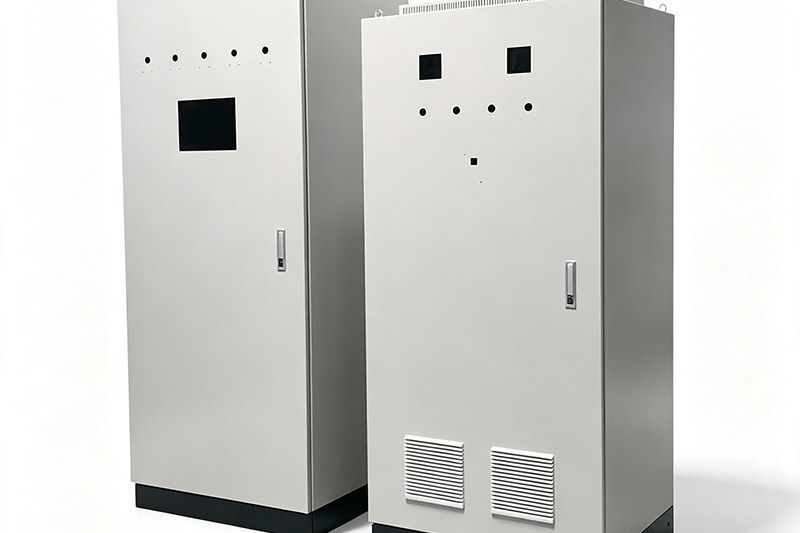
Outdoor cabinet coating failures often start with a film that is too thin, steel that was not cleaned before powder coating, or an oven cycle too short to cure the coating fully. The selected coating system must also suit the site’s exposure, especially in coastal environments.Three simple checks set the stage for a useful spec on outdoor enclosure coatings: What happened to that substrate before it was coated? Which corrosion grade applies to the site, and how will the finish be tested before shipping?
Profile: SanJun Hardware is a Chinese Manufacturer of OEM & ODM work of sheet metal fabrication from Guangdong with available 5,000 m² manufacturing area. More than 15 years experience. Much of this work is outdoor cabinets: power distribution enclosures, telecom cabins and chargers & storing housings. Each comes from the factory with a coating system chosen for its intended environment.
A coating is a barrier, not a suit of armor. Three failure lines account for most field complaints.
The first is undercutting. Water and chloride ions reach the metal through pinholes, scratches or scribe marks. This corrosion product expands, and the coating is lifted outward from a defect on the substrate. A single unsealed scratch can shorten service life.
The second is the edge. Sheared corners, drill holes, and thread pull-outs are where a powder coat sits thinnest. Edge coverage, not flat-panel thickness, usually decides where rust appears first.
The third is sunlight. Over longer periods of time, UV itself breaks the binder. Chalking, loss of gloss and color fading can appear on the surface. One cabinet will age well and still look abandoned a few seasons later. Poor pre-treatment and an extremely short cure cycle accelerate all three lines.
ISO 12944-2 divides atmospheres into corrosion categories and two of these are quoted by most buyers. Moderate coastal areas and industrial areas are included in C4. C5 is for highly aggressive marine air, and heavy industrial sites but it does not specify service life itself. The real world difference: a cupboard 500m from surf is no place in the same breath, as one tucked up an Inland shaded yard.
Corrosion resistance in C4/C5 – widely used to evaluate the corrosive ability of decorative and protective powder coatings for outdoor applications, our production is evaluated using a salt spray chamber. A C4 or a C5 rating is not just based on salt spray alone. Two cautions on grades. First and foremost, the category applies to the site, not the product: a coating system only suitable for C3 exposure should not be used in a C5 environment. 316 is more resistant to chloride pitting than 304. Even before we get into the coating question, that matters in coastal hardware.
Outdoor enclosure coatings are a stack of decisions, and the order matters more than the brand of powder.
Blasting and cleaning to remove mill scale, rolling oil and rust. You phosphate ferrous substrates to convert them into compatible surfaces with respect of coating adhesion; other substrate types require a suitable pre-treatment. Most of the time – adhesion problems are due to this step (not the powder). Instead of a visual pass, we validate the result with cross-hatch adhesion tests.
Polyester powder coat is the workhorse for outdoor cabinets: adequate mechanical resistance, affordable price and colour selection. The next major issue you face in polyester powder coat outdoor applications is UV exposure. For sites where UV and color retention matter more, fluorocarbon coatings are the step up. Providing a sacrificial layer of zinc under the topcoat Galvanizing on carbon steel means that protection is provided even if the finish has failed. You can powder coat or anodize aluminum bits; however, for internals that are coated and oddly shaped frames you have electrophoresis.
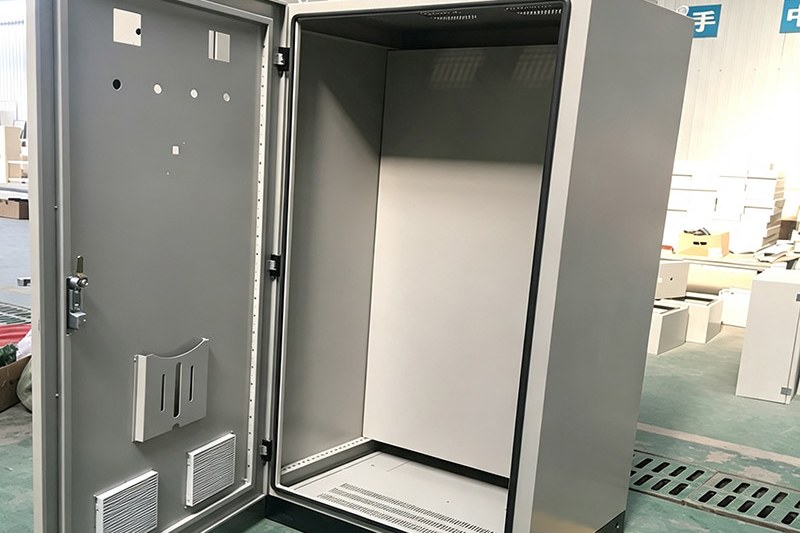
Thermoset powder can only realise its full performance rating after the correct oven time and temperature. Curing is a chemical process and not the same as drying. If the oven time or temperature is insufficient, the coating may remain under-cured (soft), and this can be one cause of premature coating failure on outdoor cabinets in coastal or industrialised areas. A digital coating thickness gauge measures build across the panel, rather than just at one corner of it. Automatic lines allow you to control finish quality on large doors.
When you specify outdoor enclosure coatings, ask for the report, not the promise. Four checks cover most of what a buyer can verify.
– Salt spray according to ISO 9227 / ASTM B117; a continuous mist of approximately 5% NaCl (approx. 35 °C). This is a quick, comparative testing method. Chamber hours do not equal years in the field; they only compare one coating system to another against a specific set of conditions.
– Cross-hatch adhesion: a grid cut through to the substrate, taped, and read against a rating scale. It exposes weak pre-treatment that salt spray alone will miss.
– Coating thickness: magnetic or eddy-current gauge on steel and aluminum. Thin spots at edges and inside corners are where the first rust starts.
– Weathering: exposure or accelerated testing for color and gloss retention when the cabinet face is brand-facing.
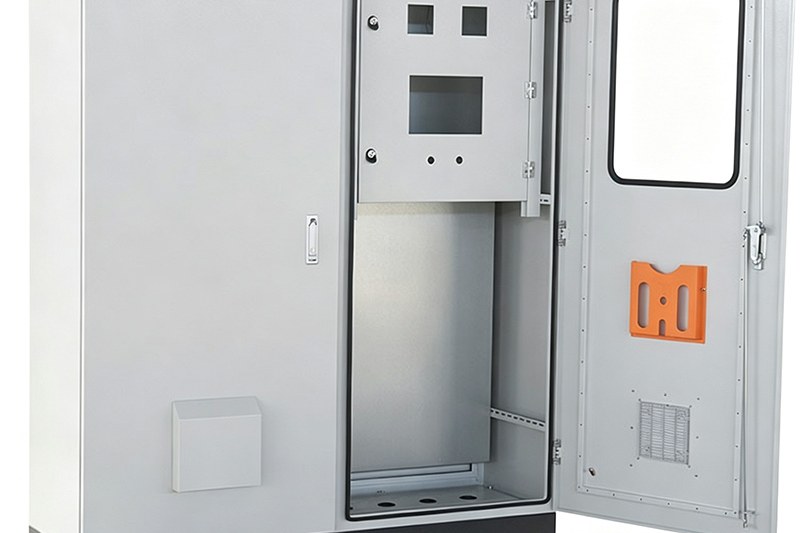
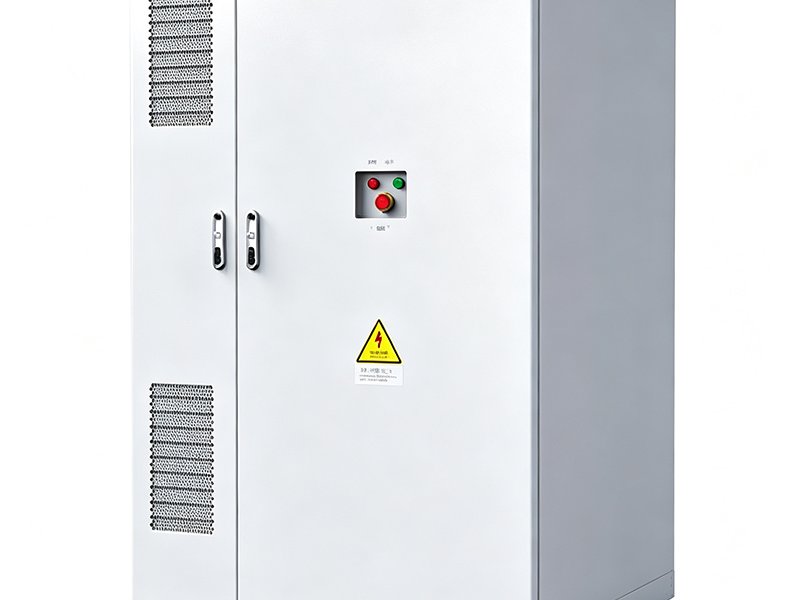
A power distribution cabinet for outdoor use illustrates how coating and structure are both called upon to take their share of the load: a sloped rain hood shields the door line, double EPDM seals assist water exclusion, exterior coatings work against corrosion. It is also important to note that any ASTM B117 salt-spray hour count should be measured separately from the IP65 rating. Hood design helps keep water away from the coating.
The substrate is where the coating begins. Indoor & Light Outdoor Duty: SPCC cold-rolled steel or Q235 carbon steel with Powder Coat. That ups a notch to galvanized steel for more protected outdoors locales. 304 stainless works in some cleaning applications; 316 would provide a higher level of resistance to coastal exposure, with / without topcoat. Aluminum provides weight savings, and the chassis can be anodized.
Then, the trip to your site. No amount of salt spray resistance is going to fix damage caused on the way in transit. All Enclosures are packed in plywood crates with foam inserts and wrapped & sealed in VCI anti-rust film using desiccant kept under the protective film against each coated face until installation. Under FOB, CIF or even DDP terms figure out who – which party handles each logistics step. Coating, packing and freight should have been booked together; correcting finish damage post-ocean transit takes a lot more time (and is therefore much worse in terms of cost) than it ever did to get the specification right.
Outdoor enclosure coatings can be determined at 3 locations; in the cleaning tank just prior to coating — your site during corrosion grade determinations and oven cycles that lock-in/ stabilize film. Locate those ones — then validate through salt spray, adhesion and thickness reports instead of promises. A cabinet with a suitable coating can maintain its appearance and protection for years; a poorly coated one may fail much earlier.
Kontak Perangkat Keras SanJun to review your site conditions, request a coating system recommendation, and get test reports before you commit to a batch.
A: No. A neutral salt spray test is an accelerated comparative test in a constant fog that is more severe than natural weather in many cases. You use chamber hours to compare two coating systems, not as a life predictor. The nature of field exposure and site grade is far more important.
A: Usually not. Powder coat should be the response one gets when thinking about climate controlled lobbies and equipment rooms; proper pre-treatment still comes before the powder. You increase the coating grade only when justified: into high humidity, washdown, condensation cycles or against a shaded outdoor wall that sweats every morning.
A: Potentially, with different routes. For steel, phosphating with powder coating or a separate galvanizing process before the final coat. Aluminum can be powder coated or anodized. Although commonly used for color/branding, paint is still not an ultimate solution as even stainless may corrode in harsh conditions.
A: Check out the documentation first – ie each of these production run reports should consist of salt spray, adhesion and thickness. Then using a coating thickness gauge, verify point measurements of film on doors and side panels; check edges that have been sheared; look inside corners to see if they are covered from the spray gun(s); peel apart one segment of protective film over an inconspicuous area, inspecting beneath for finish.


























Tinggalkan komentar