
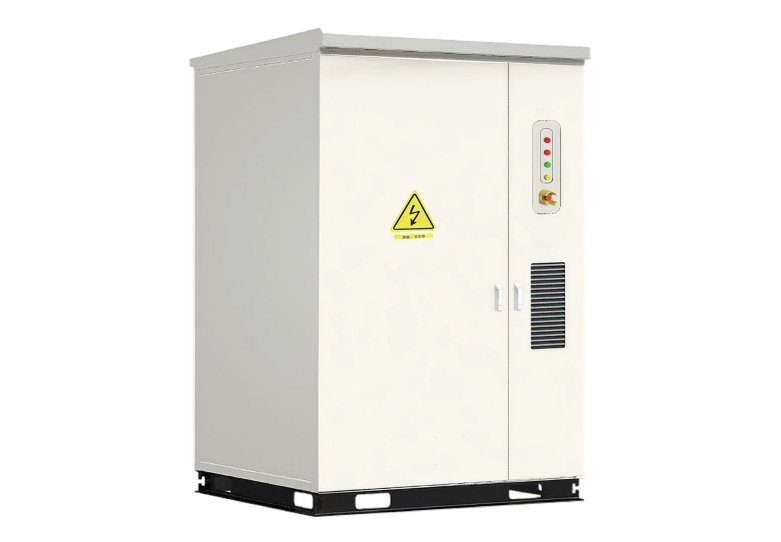
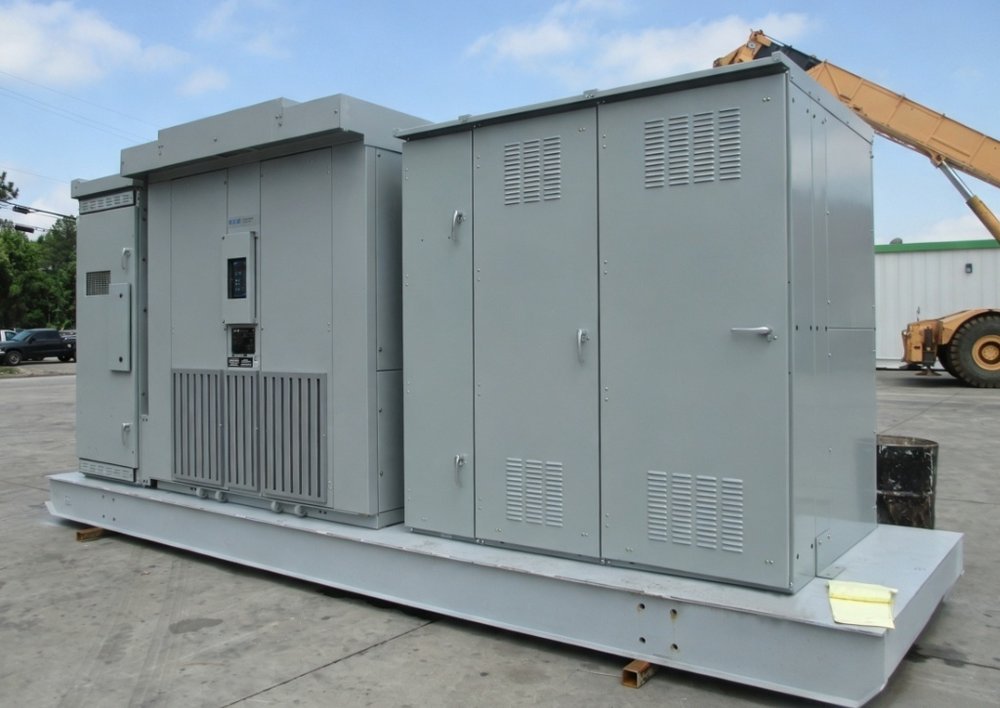
There are 3 critical design parameters in specifying an IP65 outdoor enclosure: how the door is closed, how openings, drainage and condensation are managed, and which seal goes in the seal groove. Each of these parameters has to be correctly specified or the other two cannot compensate to achieve an IP65 rated cabinet. How we approach each of these design parameters for the custom sheet metal cabinets that we design and build for outdoor sites is outlined below.
The two tests carried out for the IP65 classification are: one to prevent the entrance of dust into the enclosure and one to withstand water jets from any angle. IP65 does not account for the case of immersion, powerful high-pressure washdown or corrosion in harsh salt-laden environments.
Note that IP65 is a complete-enclosure rating. That means every seam around every door, every cable entry point, every vent, every screw, etc. has to maintain the total rating of the enclosure. The lowest-performing joint can determine the total rating.
Same 5 interfaces keep appearing over and over in our rework and audit work.
Door-to-frame perimeter. The gasket is affected by the hinge and latch geometry.
Cable glands and connector cutouts. A single grommet can be easily missed and compromise the seal.
Vent panels and filter fans. Here air and water management are going in opposite directions.
Panel-to-panel seams on large cabinets. Flatness and weld quality of these seams need to be controlled.
Fastener spacing on removable covers. The gasket needs to be evenly compressed and this is not possible if there are too few screws.
First list out the 5 critical points and then we can discuss the rest under IP65.
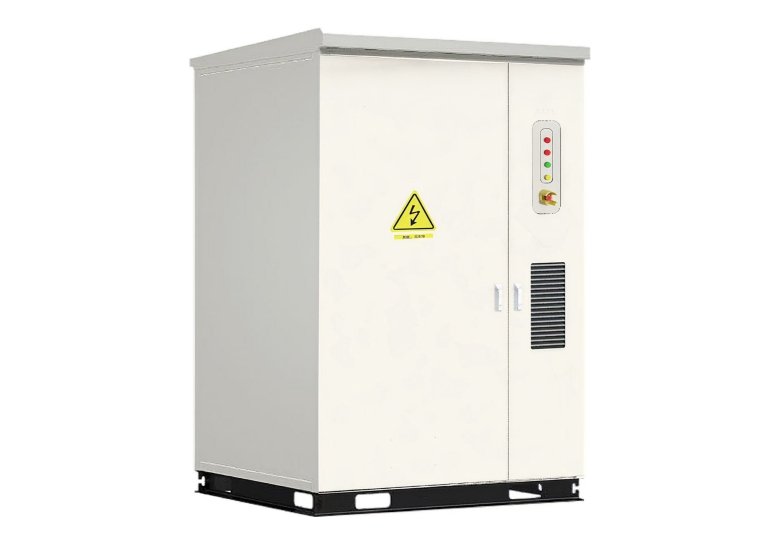
A door seal is only as good as the groove it is installed in. The depth and width of the groove, plus the corner radius, will determine the amount of compression that the seal is under. We set up the groove to have a 25% to 35% compression of closed-cell silicone or EPDM. If it is too tight the gasket will take a permanent compression set. If it is too loose the first thermal cycle will open up a leak.
Instead of having gasket runs intermittent of each other, a butt joint is a planned leak. This joint should be located at the top of the plate and sloped. In addition, seal the ends of this joint.
For most failures of IP65 cabinets in service, the problem is with the cables. Choose IP65 cable glands, sized to the actual cable diameter, not to the size of the hole they go through. A sealed bulkhead with individual grommets for multiple cables is far better than a foam filled slot. The through-wall connectors can also be potted for regular washdowns.
When panels are never to come apart, then a continuous weld by TIG-welding can do without a gasket. In case of panels that are to be made serviceable, then the seam consists of a gasket and is fixed by controlled torque of the fasteners. Mostly a hybrid solution is chosen: The static parts are welded, the access doors are gasketed. Porosity, undercut and unequal leg length all become leaks in water-jet tests.
An outdoor cabinet will get wet from time to time, whereas a sealed cabinet is the best way to protect your electronics against weather. The moisture in an outdoor cabinet forms as condensation when the cabinet warms up and then cools down again. Also, rain can enter the cabinet through vent openings and cable entry points. The key is to dry out any moisture quickly before it can start to cause problems.
The sloped or overhanging roof of an outdoor enclosure is its most basic drainage feature and, often, the most neglected. A flat roof encourages the formation of puddles and enables water to ascend up capillaries in walls. Just a few degrees of slope with a drip edge external to the seal is generally all that is required to make water run away from the door.
Ventilation points must be designed and constructed in such a way that they do not compromise the rating of the cooled storage cabinet enclosure. Angled slots with internal baffle angles can assist in preventing water entering directly into the vent cavity. Vent, drain and weep points must be fitted with suitable rated components and tested within the complete enclosure.
A drainage channel is provided in the vent cavity where water can collect. This channel leads to an appropriate drain point, which is rated to maintain the required enclosure protection.
By configuring the roof to slope, the vents to be baffled and the path of moisture to drain, the single outdoor enclosure can handle incident moisture in the field whilst the complete enclosure is tested to IP65.
Large day-night temperature variations can cause moisture to condense within a sealed box. Select a gasket for the box that is rated for the site temperature extremes. Arrange the hardware within the box so that any condensate will run to the lowest point of the box. If required for venting or drainage, select a proper rated vent or drain and ensure it is rated to provide the required level of enclosure protection.
For outdoor IP65 use we typically use silicone sponge, EPDM sponge or solid and neoprene materials.
Silicone sponge is a good material for handle and strip applications that have to go through temperature extremes, have to withstand UV, and compresses well.
EPDM is a standard material for door perimeter seals, in normal climate, offers weathering and ozone resistance.
Neoprene is very durable and has good chemical resistance. Long-term weathering and UV resistance in direct sunlight is however worse than for materials like EPDM or silicone.
There is no one material suitable for use outside as there are too many variables, such as site temperature, amount of UV exposure and required closure force. Therefore, choice of suitable hardware for use outside is complex.
The compression set is measured by determining the degree to which a test specimen fails to recover from the compression imposed in a test. The groove design must allow for sufficient working compression after long-term compression set, but must not compress the gasket too much.
Most door perimeters are sealed with strip gaskets. O-rings are used for closed circular joints and connector faces. D-section gaskets are used in deeper grooves where the hardware can deliver the required closure force without deforming the panel face. The gasket cross-section must correspond to the groove and to the molded corners or vulcanized joints on the hinge side of the panel.
We start at the drawing. DFM review covers groove dimensions, weld access, fastener spacing, panel flatness, and door-to-frame alignment. Material choice follows the site corrosion class: cold-rolled steel (SPCC or Q235) for standard use, stainless 304 or 316 for coastal or chemical exposure, aluminum for weight, galvanized steel as a middle ground.
The surface to be coated is prepared for coating, eg by sandblasting, cleaning, phosphating or passivating. The powder coating or the fluorocarbon coating can then bond to this surface. A good surface finish in itself is a protective layer against moisture.
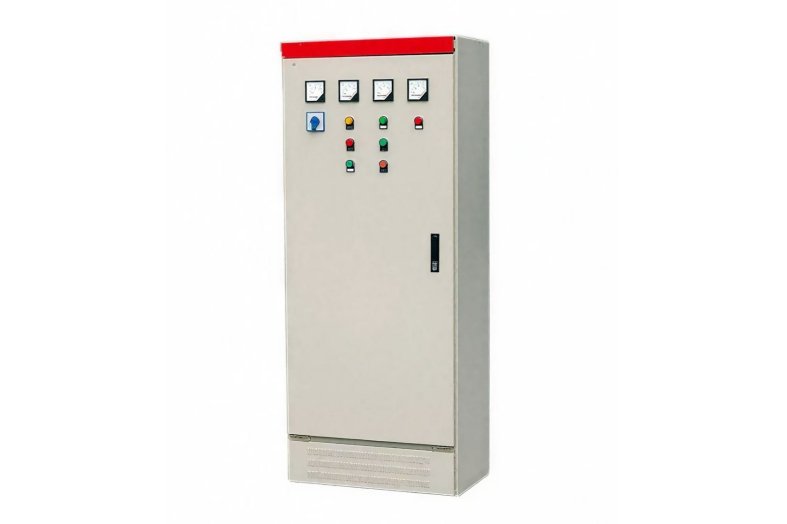
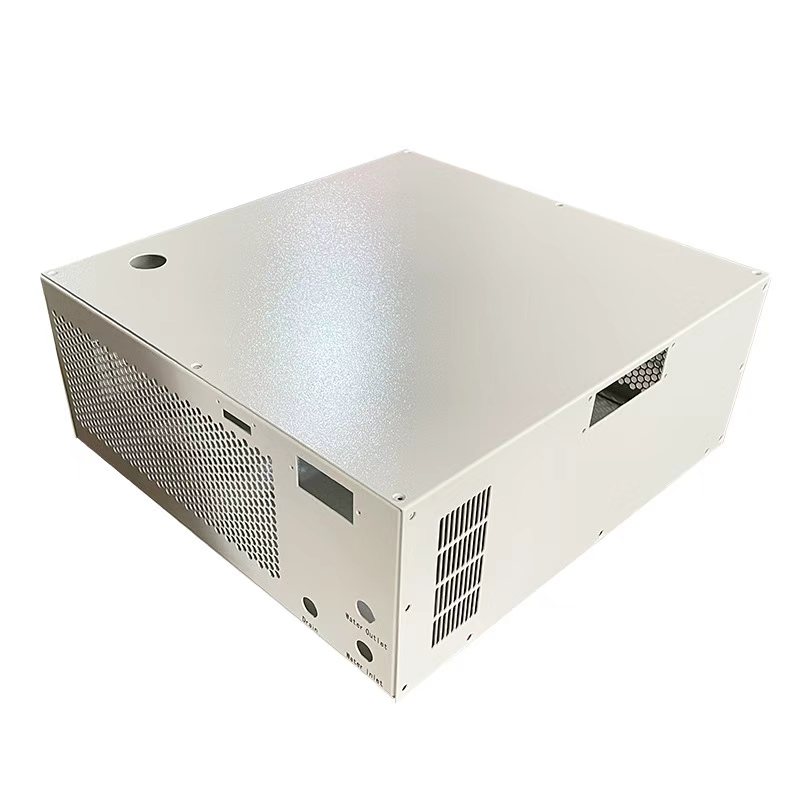
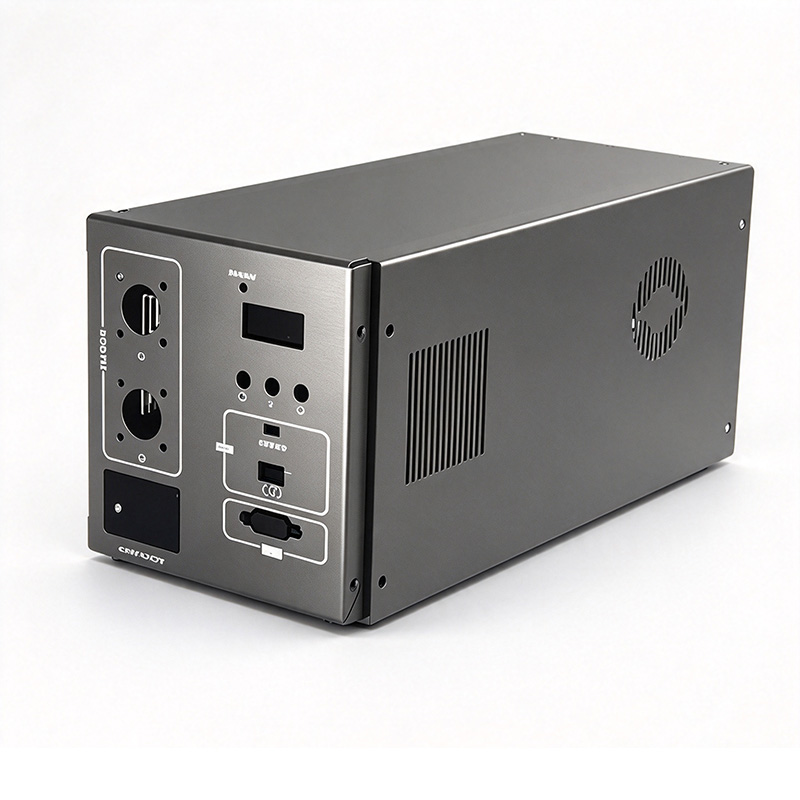
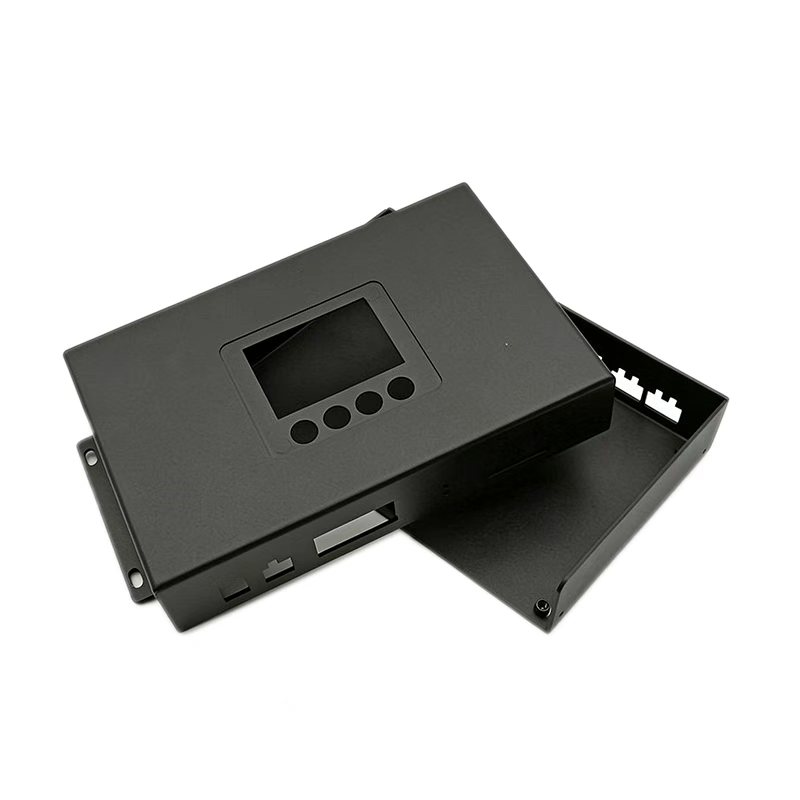
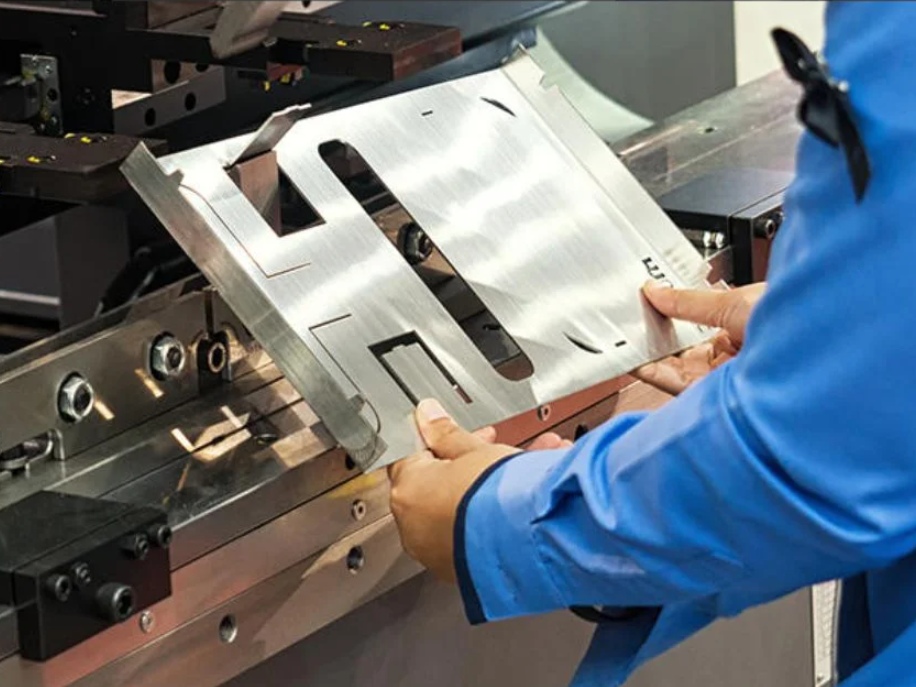
The enclosure was cut on our laser and formed on our Ausma press brakes. The static seams were then welded in long continuous lengths and access panels were gasketed and fixed. Repetitive joints were automatically riveted by American Hager automatic riveting machines. We are a professional sheet metal fabrication manufacturer, SanJun Hardware, based in a 5,000 m² facility in Guangdong, China with over 15 years experience as an OEM/ODM manufacturer.
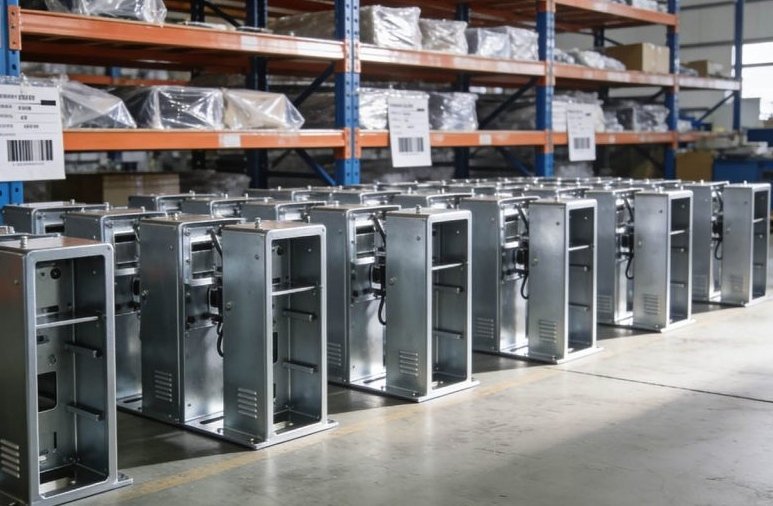
For our IP65 builds we carry out water-jet and dust tests prior to despatch. Where specified we also carry out salt-spray tests to determine corrosion resistance. The C4/C5 corrosion requirements are met by the coating system and by the relevant corrosion protection requirements. Cross-hatch adhesion tests are also conducted where required. The first article is CMM inspected to verify all critical dimensions. Quality controlled in accordance with ISO 9001.
The single problem of designing an outdoor enclosure to IP65 can be transformed into a design solution. Typically, the design of an outdoor enclosure to IP65 is viewed as a series of separate problems; the sealing of the enclosure, the provision of adequate drainage and the selection of an appropriate gasket for the door. The roof slope is determined from the wind exposure, the gasket selected on the basis of the door closure force and the vent baffle designed on the basis of the expected drainage path. Making any one of these design decisions therefore has significant implications for the other two.
At SanJun Hardware, we support you from free DFM check and one-piece prototype to mass production, surface finishing, assembly and worldwide shipping. We would be happy to perform a DFM check for your next IP65 outdoor housing. Please send us your 2D/3D CAD data and the required IP rating.
For IP65 cabinets it is required to seal all openings completely to prevent entry by dust and water jets from any direction. All door seams, cable entry openings, ventilation openings and screw openings must be sealed in a proper manner or equipped with corresponding parts. In order to check the tightness of a cabinet a water-jet and dust test is carried out. For cabinets which are used outside from the IP rating separate corrosion testing, for example by means of a salt-spray test, may be specified.
Most outdoor builds are specified using a silicone sponge or EPDM material and neoprene for lesser duty sites. Each material will have a temperature range, degree of UV degradation and amount of compression that can be achieved by the door hardware. Thus there is no one material to use for all outdoor sites and material is specified for individual sites.
Yes, real outdoor boxes suffer from condensation and wind-driven rain regardless of the quality of gasketing. This is mitigated by a sloped roof with drip edge, and proper design of vent cavities to allow water to run to a low point and drain. However, the same must be done to manage condensation and any incidental moisture while maintaining the required IP65 water-ingress protection.
Production time for standard items is 7-15 working days, custom made IP65 items with welded seams and special coatings can take up to 20-30 working days to produce. We can even produce a single prototype within a few days and offer a 12-24 months warranty, depending on the complexity of the drawings and the desired finish.

























Tinggalkan komentar