Optimize Airflow & Cooling with Custom Perforated Vent Patterns
Optimize Airflow & Cooling with Custom Perforated Vent Patterns
Introduction to Airflow Engineering in Custom Enclosure Fabrication
Effective thermal management in modern industrial enclosures requires balancing component heat dissipation with mechanical strength and environmental protection. Achieving optimal cooling performance depends directly on how the perforated ventilation pattern, airflow path, and ventilation openings are engineered into sheet metal structures.
Thermal Management Challenges in Heavy-Duty Industrial Enclosures
Enclosure designers must address complex thermal and structural requirements when housing high-power electronic components.
Heat concentration in high-density rack systems, energy storage units, and outdoor power stations requires high-volumetric airflow to maintain effective electronics enclosure cooling and avoid thermal throttling.
Poorly designed sheet metal ventilation holes create high aerodynamic drag and excessive static pressure drop, causing internal ambient temperatures to rise rapidly under full load.
As an integrated custom sheet metal enclosure manufacturer offering production and sales solutions, SanJun Hardware provides custom-engineered enclosures and structural components tailored to complex thermal requirements and enclosure airflow optimization.
Engineering the Trade-Off Between Open Area and Structural Integrity
Maximizing the ventilation open area ratio improves thermal throughput, but removing excessive material can compromise panel stiffness and structural integrity under physical load or vibration. Successful enclosure airflow optimization requires a precise mathematical and mechanical balance during the sheet metal vent design stage.
Calculating Open Area Ratios for High-Performance Enclosures
Selecting the proper perforated ventilation pattern, hole arrangement, and spacing determines both the ventilation open area ratio and final panel strength.
Staggered round sheet metal ventilation holes typically yield open area ratios between 40% and 60%, providing a balanced compromise for general electronics enclosure cooling.
Hexagonal geometries can increase the ventilation open area ratio while maintaining more uniform material distribution across adjacent metal bridges.
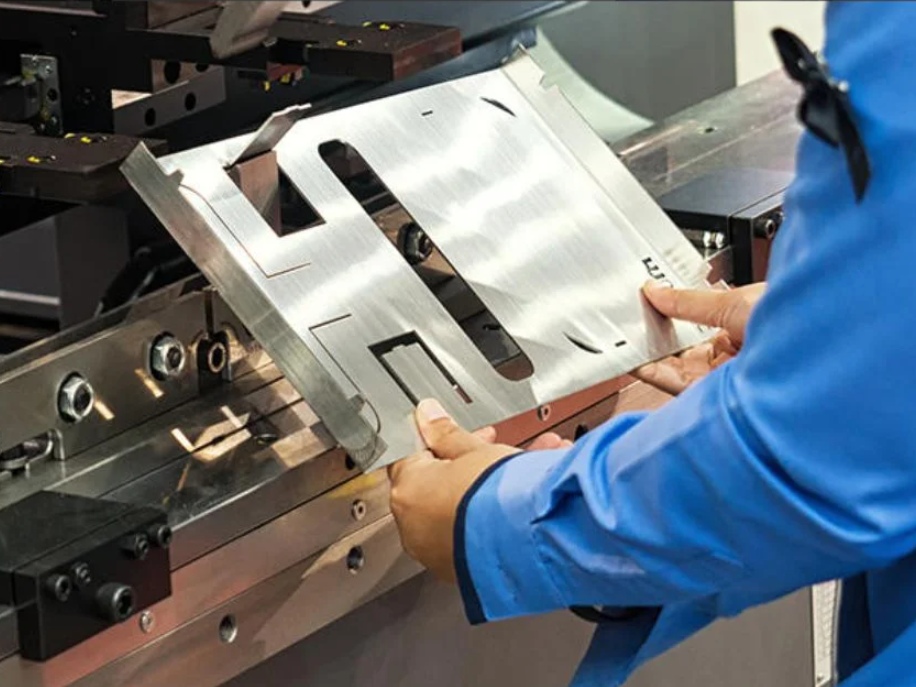
Implementing high-precision laser-cut ventilation holes ensures clean edges without burrs, maintaining consistent hole pitch, geometry, and dimensional accuracy across production runs.
Balancing Perforated Panel Pressure Drop and Structural Rigidity
High airflow velocities across dense perforated ventilation patterns generate air resistance that must be mitigated through structural design.
Reducing perforated panel pressure drop and overall static pressure drop prevents excessive localized turbulence and helps intake air move more effectively across sensitive circuit boards.
Strategic placement of formed stiffening ribs, flange bends, and unperforated border zones restores rigidity to panels with a high ventilation open area ratio.
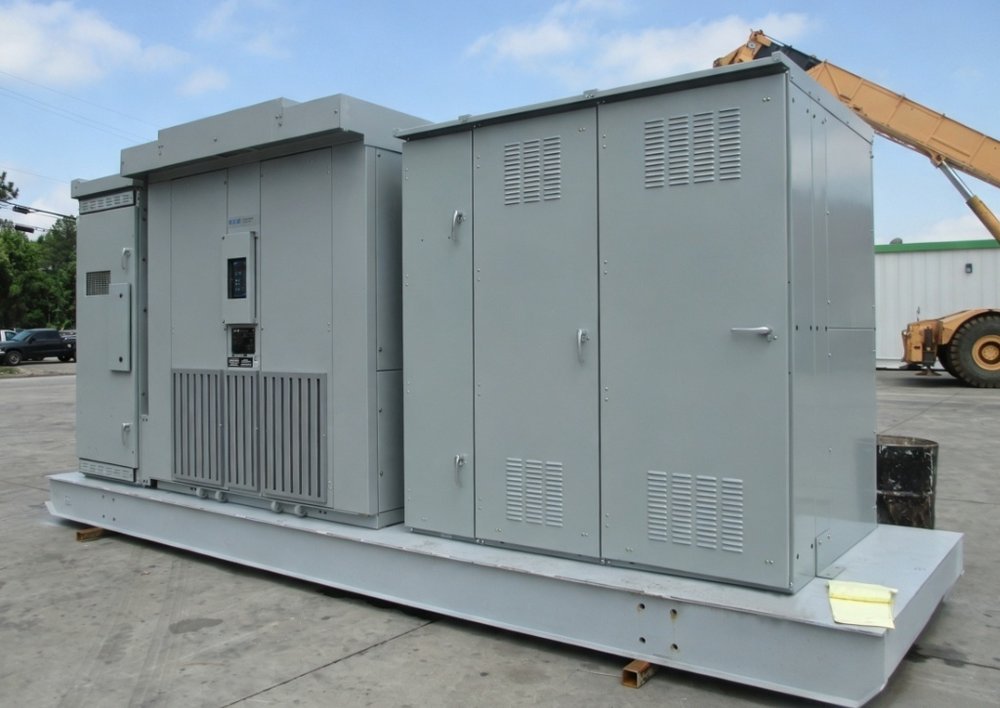
Applying these structural reinforcement techniques ensures long-term durability in heavy Telecom Communication Cabinets and modular Equipment Chassis/Cabinet structures.
Fan Curves and Static Pressure Optimization in Sheet Metal Vent Design
Selecting the right cooling fan is only half the battle; the sheet metal vent design and custom perforated vent pattern must be engineered to match the fan’s performance curve. Proper enclosure airflow optimization minimizes air impedance, allowing fans to operate closer to the intended fan operating point.
Matching Fan Operating Points with Optimized Vent Geometries
A fan operates at the intersection point where its performance curve meets the system impedance curve generated by internal components, grilles, filters, and sheet metal ventilation holes.
Restrictive perforated ventilation patterns increase system resistance, raising required fan static pressure while decreasing total delivered airflow (CFM).
Optimizing hole size, pitch, profile, and ventilation open area ratio can reduce static pressure drop and shift the fan operating point toward higher useful airflow.
Lower fan static pressure requirements can reduce aerodynamic turbulence and unnecessary fan loading in noise-sensitive installations.
Comparing Honeycomb Patterns and Louver Ventilation Designs
Choosing between different perforated ventilation pattern geometries depends heavily on whether the primary goal is maximum airflow throughput, structural support, or environmental shielding.
Honeycomb ventilation holes can provide high open area and uniform airflow distribution, making them suitable for server racks, power supplies, and other applications requiring efficient electronics enclosure cooling.
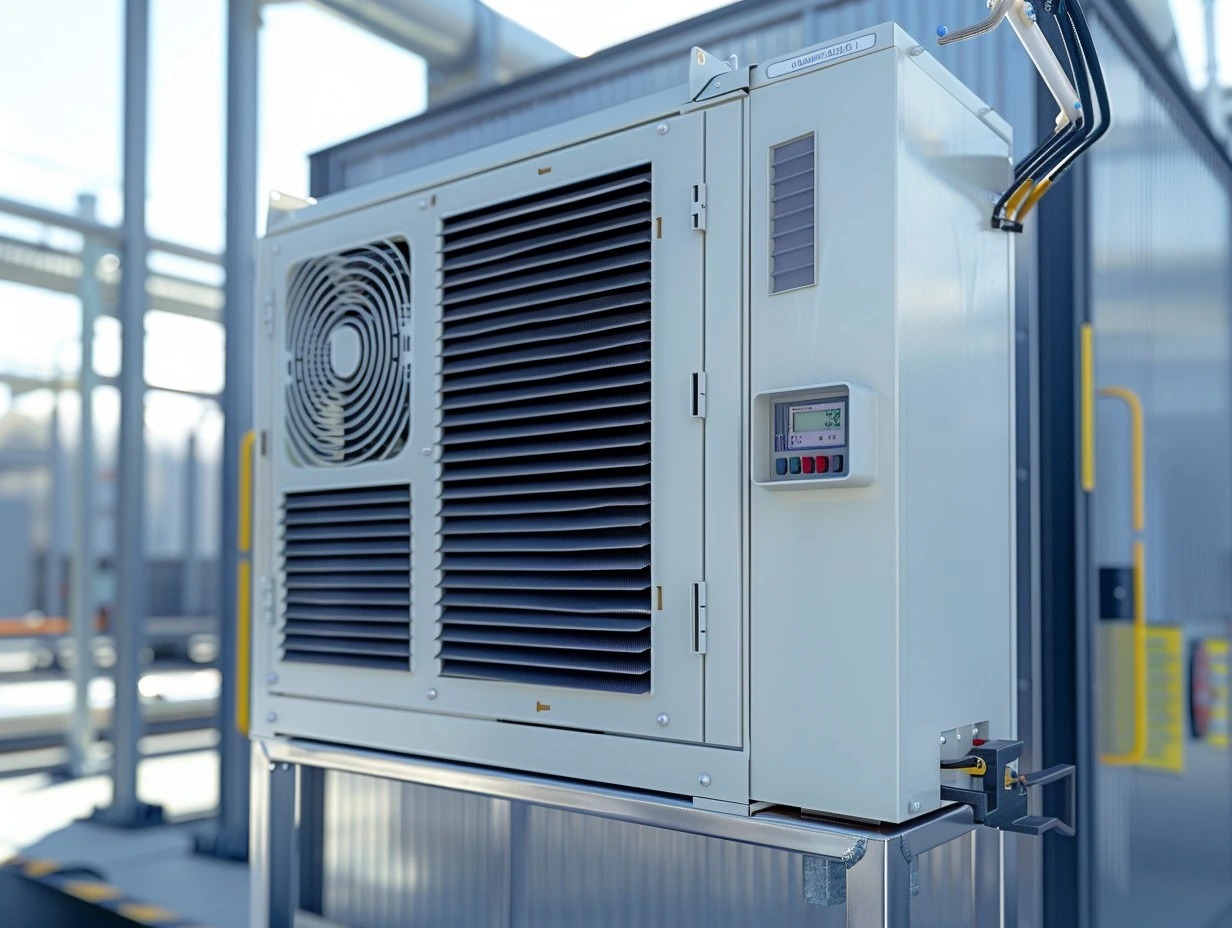
Louver ventilation design redirects incoming airflow and can reduce direct exposure to rain, spray, and wind-borne debris when integrated with suitable enclosure protection measures.
Utilizing a custom perforated vent pattern allows engineers to combine louver ventilation design on exposed exterior walls with honeycomb ventilation holes or high-flow perforated grids on internal baffle plates.
Application Scenarios and Manufacturing Precision
Thermal management requirements vary widely across different operating environments, demanding tailored sheet metal vent design and manufacturing solutions for each field deployment.
Application-Specific Thermal Solutions in Energy and Automation
Every industry presents unique environmental exposure and heat dissipation challenges that govern enclosure design choices.
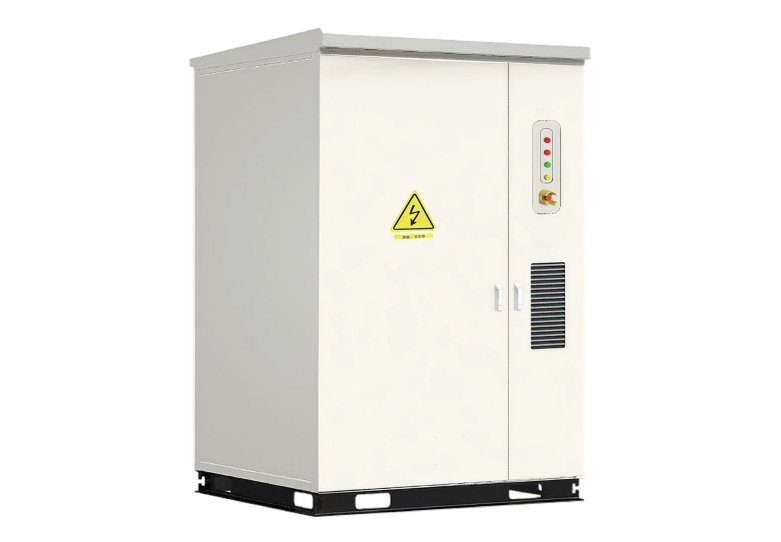
In Energy Storage Cabinet (BESS) installations, optimized sheet metal ventilation holes and engineered airflow channels can improve internal heat removal while preserving structural support for battery rack assemblies.
Outdoor DC Charging Pile Enclosure units can utilize louver ventilation design combined with internal baffle paths to support cooling while limiting direct water ingress.
Heavy-duty Industrial Monitor Enclosures and automation control chassis use reinforced perforated ventilation patterns to support airflow while maintaining structural rigidity under continuous machine vibration.
DFM Engineering and Precision Manufacturing at SanJun Hardware
Integrating thermal design with manufacturability ensures reliable production without unnecessarily inflating unit costs.
The engineering team at SanJun Hardware performs Design for Manufacturability (DFM) reviews to optimize the custom perforated vent pattern, material thickness, hole spacing, bending allowances, and ventilation open area ratio.
Advanced manufacturing facilities process electrolytic steel, galvanized steel, stainless steel, and aluminum alloy into Custom Precision Structural Parts, including panels with precision laser-cut ventilation holes.
Surface treatment options—including powder coating, electro-coating, and gasket integration—support long-term corrosion resistance and enclosure performance.
As a custom sheet metal enclosure manufacturer, SanJun Hardware can coordinate enclosure structure, sheet metal vent design, fabrication, surface finishing, and assembly requirements within one production process.
Partnering with SanJun Hardware for Engineered Sheet Metal Ventilation Solutions
Achieving optimal cooling without sacrificing structural strength or environmental protection requires a calculated approach to perforated ventilation pattern design and fabrication. Partnering with an experienced custom sheet metal enclosure manufacturer helps translate airflow requirements into production-ready structures.
Elevating Thermal Performance with Custom Fabrication
Tailored sheet metal fabrication solves complex thermal bottlenecks while preserving product reliability in demanding operating environments.
A custom perforated vent pattern can optimize fan static pressure, reduce unnecessary perforated panel pressure drop, improve airflow distribution, and support more efficient electronics enclosure cooling.
SanJun Hardware delivers end-to-end custom sheet metal solutions from initial CAD DFM review and enclosure airflow optimization to final assembly and surface finishing.
Contact SanJun Hardware to submit your drawings for vent-pattern evaluation, manufacturability review, and a production quotation.
FAQ
Q: How does perforated open area ratio directly impact fan power consumption?
A: A higher ventilation open area ratio can reduce static pressure drop, allowing the fan to operate at a more efficient fan operating point when the rest of the airflow path is also properly designed.
Q: What is the main structural risk of using a very high open area ratio on sheet metal panels?
A: Excessive material removal can reduce panel stiffness and make the sheet more susceptible to flexing, deformation, or distortion during forming and service.
Q: How do louvers compare to flat perforated panels regarding rain and dust protection?
A: Louver ventilation design uses formed angled openings to limit direct exposure to water and debris, while flat sheet metal ventilation holes may require secondary filters, screens, or baffles depending on the required protection level.
Q: Which hole geometry offers the best ratio of airflow to structural strength?
A: There is no single geometry that is best for every enclosure. Honeycomb ventilation holes, staggered round holes, and other perforated ventilation patterns should be compared based on required airflow, ventilation open area ratio, panel thickness, perforated panel pressure drop, and structural requirements.
Yes. We support 1PC MOQ, no mold tooling required. All custom sheet metal enclosures can be produced directly per your design.
Yes, we accept custom sheet metal fabrication strictly based on your 2D/3D drawings. We provide free DFM checking, follow your exact material, tolerance and finishing requirements. Both prototype and mass production are available with full quality control and export standard packaging.
Absolutely. Send us your product size, assembly function, usage scenario and performance demands. Our sheet metal team offers free structural design, solution tuning and DFM analysis.
You don’t need to prepare drawings; we finish all design work from sketch to production drawing to save your R&D cost and risks. We revise drawings repeatedly to meet your assembly needs perfectly.
We provide 24H DFM drawing review and formal quote after receiving your technical requirements.
Yes. We offer fast prototype sampling according to your drawings, helping you verify structure and size before bulk order.
All our products have obtained ISO9001, EMC, LVD and RoHS certifications.
We fully comply with global safety and quality standards, delivering stable, trustworthy solutions for all project applications.
We operate our own factory and provide one-stop full in-house production.
Strict process control and standardized quality management guarantee stable product quality and punctual delivery, building reliable long-term global partnerships.
We process a full range of standard and high-performance sheet metal materials, including stainless steel (304/316), aluminum (5052/6061), cold/hot rolled steel, galvanized steel, brass and copper. We can also source special materials according to your project requirements.
Our standard machining tolerance is ±0.1mm for laser cutting and bending. For high-precision parts, we can reach ±0.05mm based on material thickness and part structure. All dimensions are 100% inspected before delivery to meet your requirements.
Yes, we provide one-stop full surface treatment services, including powder coating, painting, anodizing, sandblasting, brushing, electroplating, passivation, polishing and heat treatment. We can customize colors and effects according to your design.
Yes, we always sign NDA (Non-Disclosure Agreement) before receiving any drawings or design details from customers. We strictly protect your intellectual property and keep all your projects confidential.
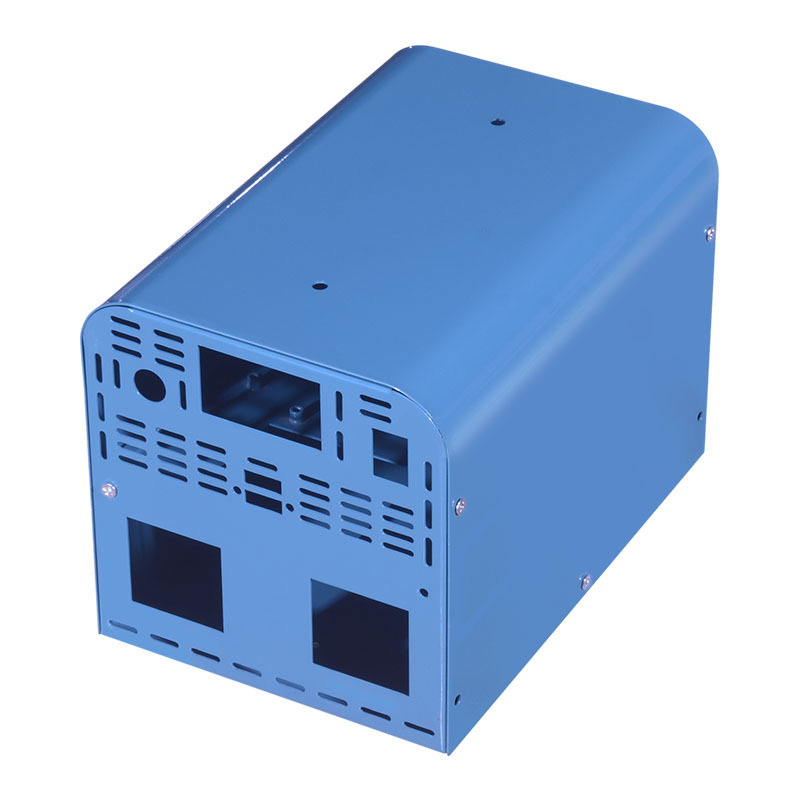
<p>Custom portable power station enclosure fabricated from cold-rolled steel with a durable blue powder-coated finish. Designed for outdoor mobile power stations, camping power packs and residential energy storage batteries, this sheet metal case combines laser-cut display windows, fan holes, vent louvers and USB/AC socket openings with rounded-corner bending and detachable panels for fast battery-pack assembly. We fabricate each enclosure to your internal layout – dimensions, color, cutouts, vent pattern and internal brackets are fully customizable. No mold cost, MOQ 1 piece, +/-0.1 mm tolerance, 8-10 day prototype.</p>
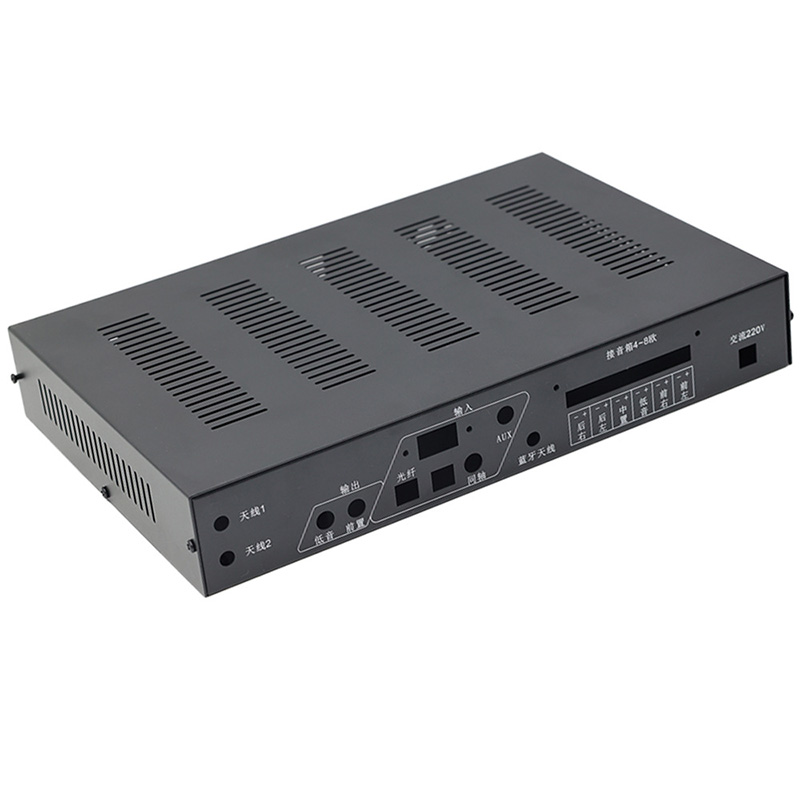
<p>Custom AV amplifier chassis fabricated from cold-rolled steel with a matte black powder-coated finish. Engineered for home theater, multi-channel audio power amplifiers and commercial sound systems, this sheet metal enclosure combines laser-cut top vent louvers, reinforced front-panel cutouts and precision silkscreen markings for fiber, coaxial, AUX and Bluetooth inputs, plus subwoofer and speaker outputs. We fabricate each chassis to your panel drawings – dimensions, vent pattern, connector openings, grounding tabs and mounting brackets are fully customizable. No mold cost, MOQ 1 piece, +/-0.1 mm laser-cut tolerance, 7-10 day prototype.</p>
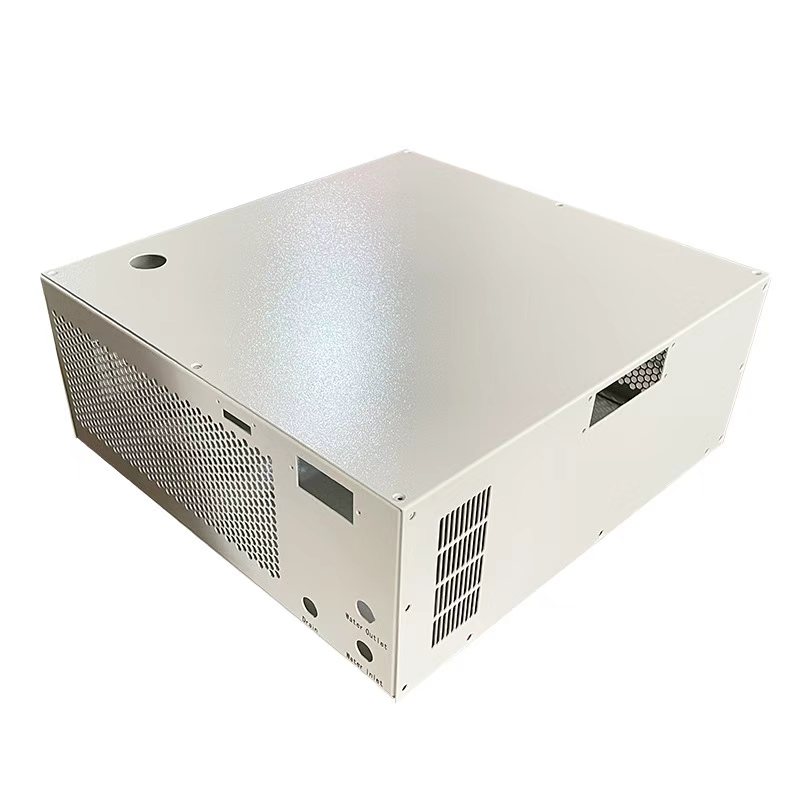
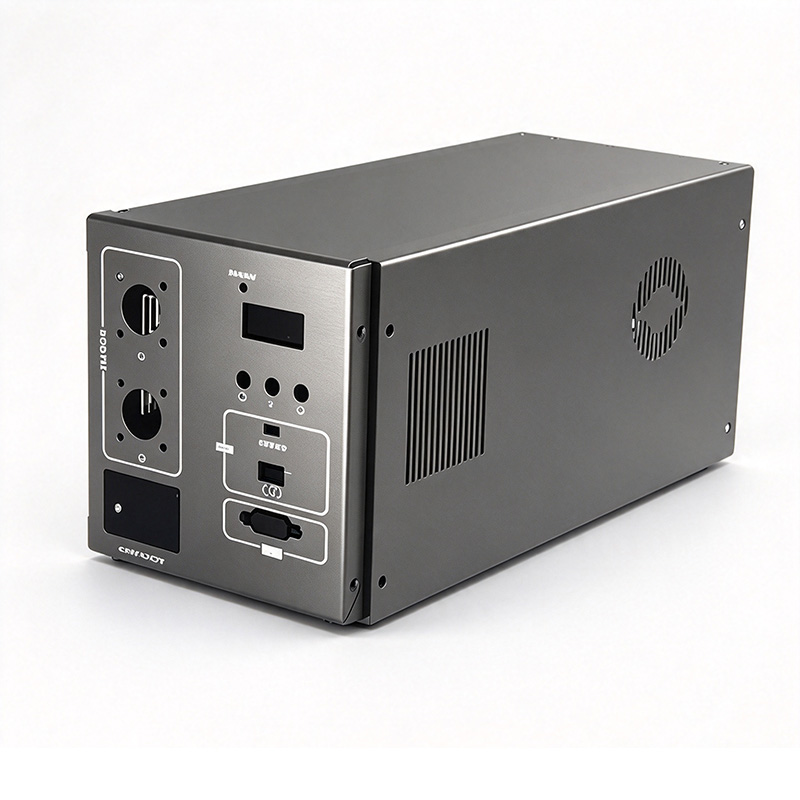
<p>Custom 6061 aluminum enclosure for portable power station and energy storage devices. Sand-blasted anodized finish, laser cut, precision bent. LCD, AC outlet, USB cutouts, silkscreen, MOQ 1.</p>



























Leave a comments