EV charger operators and manufacturers face consistent challenges that sheet metal design directly impacts:
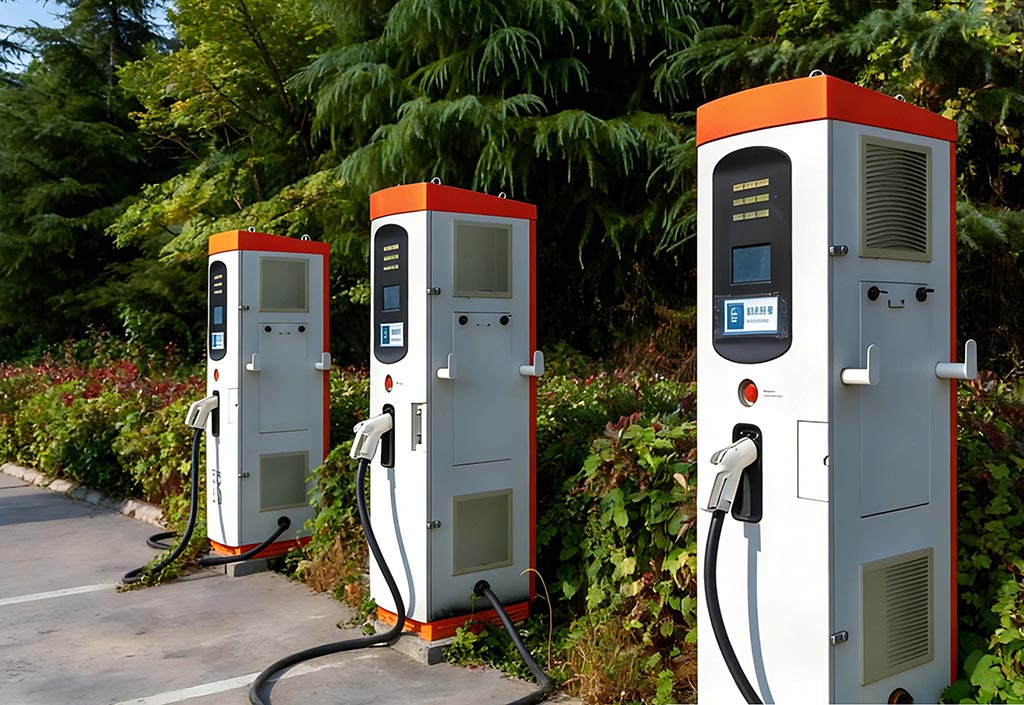
- High-Power Thermal Overload: 100kW+ fast chargers generate excessive heat, risking component failure or reduced lifespan without optimized airflow.
- Outdoor Environmental Degradation: Chargers installed in coastal, desert, or urban areas face salt spray, dust, UV radiation, and temperature fluctuations that corrode or damage standard sheet metal.
- Multi-Interface Incompatibility: Global markets require support for diverse charging standards (CCS, CHAdeMO, GB/T) and accessory cutouts (displays, card readers, QR scanners)—a one-size-fits-all sheet metal design fails to adapt.
- Global Regulatory Barriers: Different regions mandate strict safety (UL 62196), electromagnetic compatibility (CE EN 55022), and flame-retardancy (UL 94 V-0) standards that uncertified sheet metal cannot meet.
- Vandalism & Physical Impact: Public chargers are vulnerable to intentional damage (scratching, forced entry) or accidental impact (vehicle collisions), requiring robust sheet metal structures.
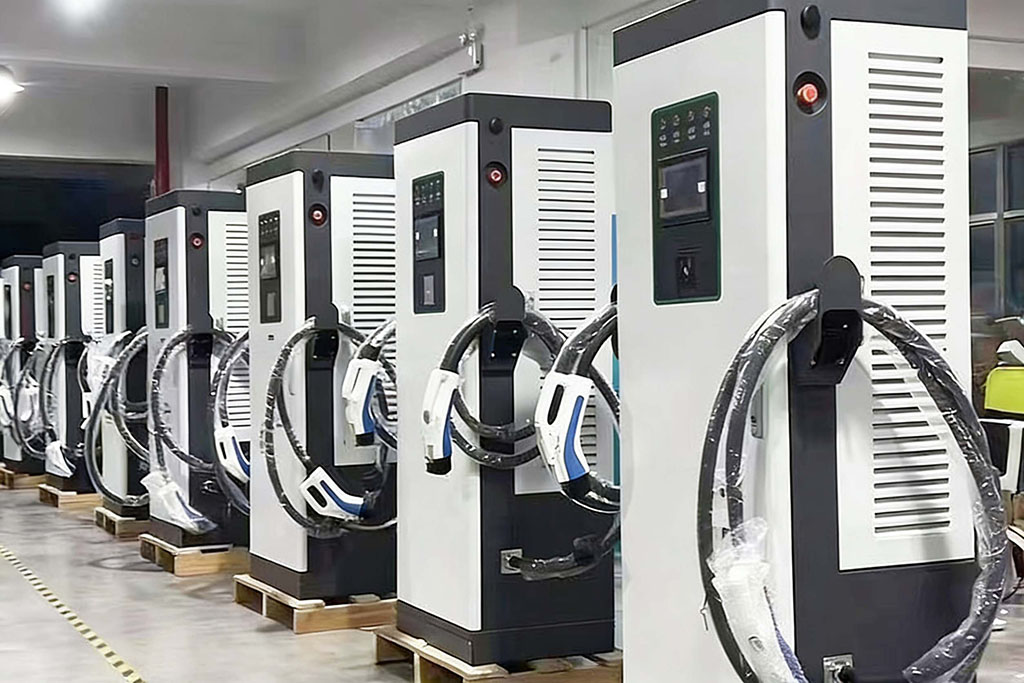
We tailor each design to resolve specific client pain points, with modular, scalable structures that align with charger power ratings (22kW AC to 350kW DC) and deployment environments:
For 100kW+ fast chargers, excessive heat is the top cause of operational downtime. Sanjun’s sheet metal design mitigates this via:
- Thermal-Optimized Materials:
- Main body: 1.5mm 6061-T6 aluminum alloy (thermal conductivity: 167 W/m·K) to facilitate heat transfer away from power modules.
- Frame: 2.0mm SPCC galvanized steel (tensile strength ≥350 MPa) for structural stability while maintaining heat dissipation pathways.
- Precision Ventilation Design:
3000W laser-cut louvered vents (5mm width, 15° angle) positioned to create unobstructed cross airflow; integrated flow-guiding channels (CNC-bent into sheet metal) direct cool air to hotspots (e.g., rectifier modules). CFD (Computational Fluid Dynamics) simulations validate a 15–20°C reduction in internal operating temperature during 150kW charging cycles.
- Integrated Heat Sinks:
CNC-bent aluminum heat sinks (attached to sheet metal via thermal adhesive) are customized to match each charger’s power module layout, boosting localized heat dissipation by 25%.
- Testing Validation: All designs undergo 500-cycle thermal cycling tests (-20°C to 60°C) to ensure no sheet metal warping or airflow blockage.
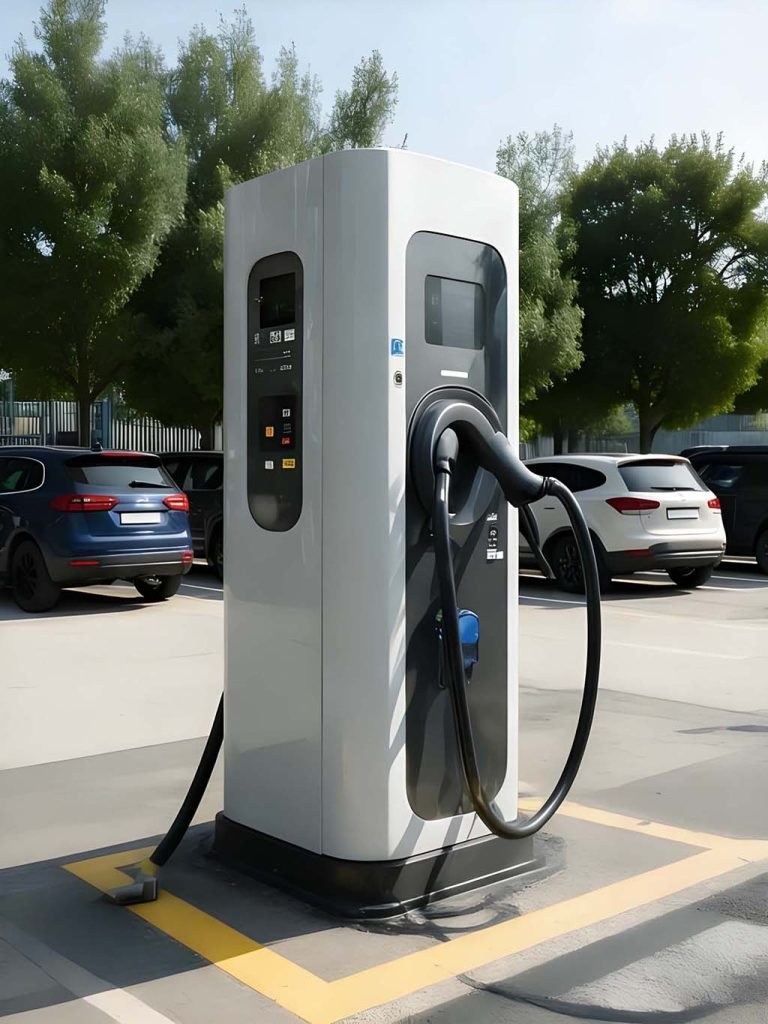
For chargers deployed in harsh outdoor environments (coastal regions, deserts, urban rain zones), Sanjun delivers sheet metal structures that meet IP65–IP66 ratings:
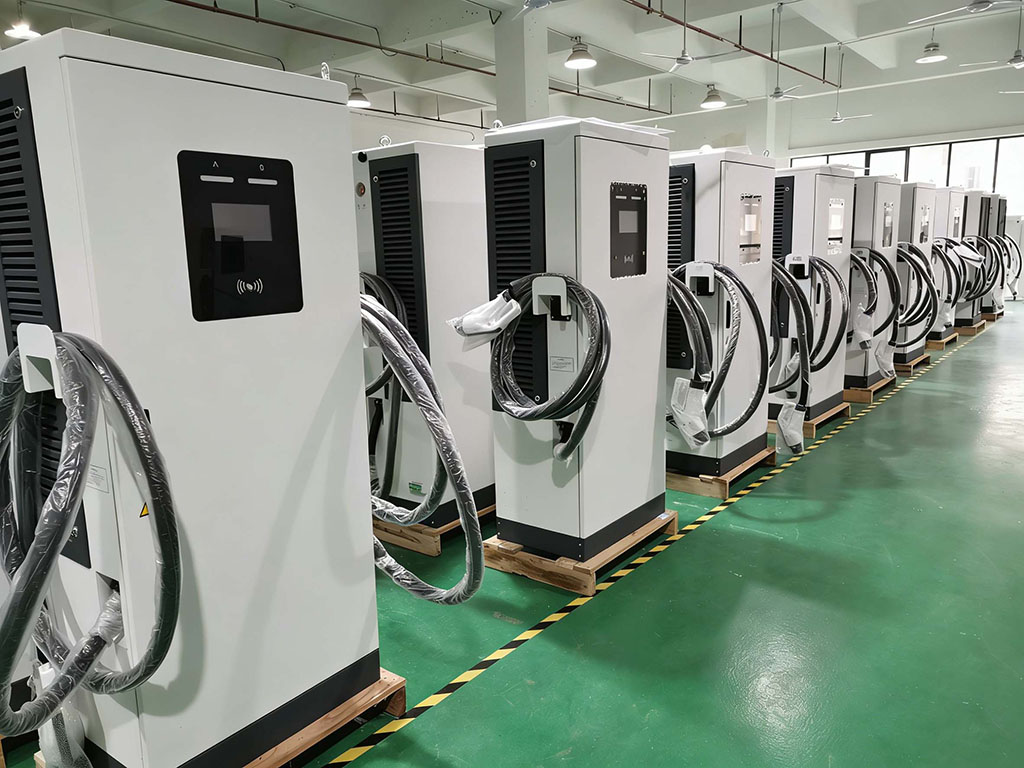
To support global charging standards and accessory configurations, our sheet metal designs prioritize flexibility:
- Precision Component Cutouts:
Laser-cut openings for charging guns (CCS2: 120mm×80mm; CHAdeMO: 130mm×90mm; GB/T: 115mm×85mm) with ±0.1mm tolerance—ensuring perfect alignment and no loose fits. Cutouts for displays (7-inch to 15-inch), contactless card readers, and QR scanners are fully customizable via client-provided CAD files.
- Modular Panel Design:
Removable sheet metal panels (secured with tamper-resistant screws) allow clients to swap components (e.g., upgrading from a magnetic stripe reader to NFC) without retooling the entire structure.
- Cable Management Integration:
CNC-bent sheet metal cable hooks (adjustable to 50–80mm diameter) and protective sleeves prevent charging cable wear; hidden 25mm×30mm wiring channels keep internal cables organized and shielded from dust.
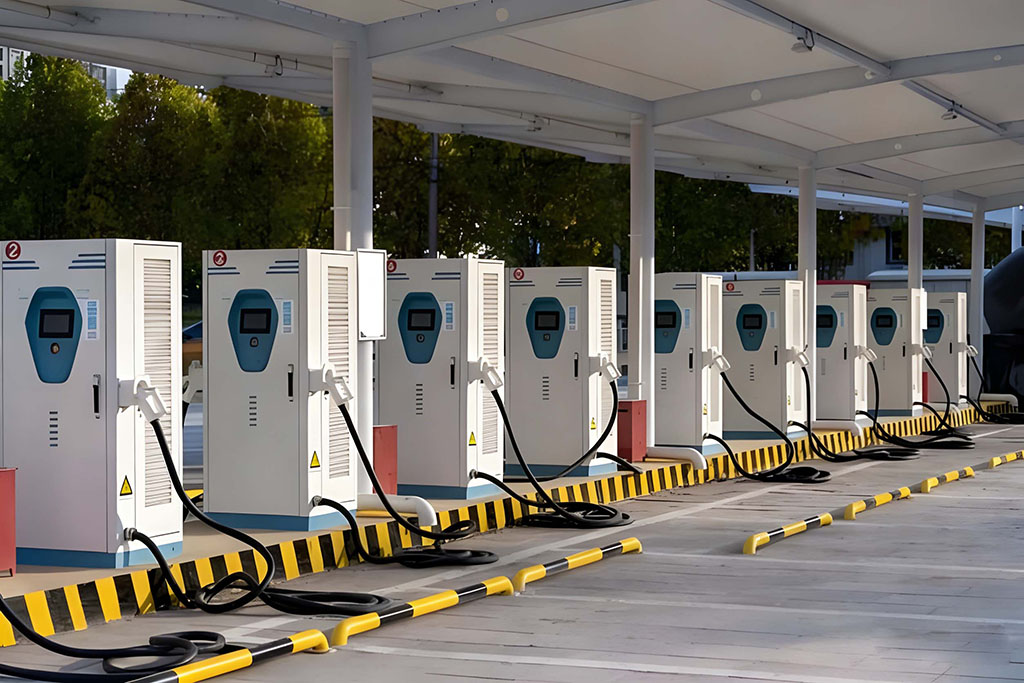
We design sheet metal structures to meet regional certification requirements out of the box, reducing client time-to-market:
- Safety & Flame Retardancy:
Internal sheet metal components use UL 94 V-0 rated galvanized steel (flame spread <100mm in 10 minutes) to meet IEC 62196 safety standards.
- EMI Shielding:
Sheet metal is integrated with grounding terminals (laser-cut into frame) to reduce electromagnetic interference, complying with CE EN 55022 (radiated emissions <30 dBμV/m).
- Regional Labeling:
Laser-engraved compliance logos (UL, CE, IEC, SAA) and safety warnings (localized to English, Spanish, German, or Mandarin) are applied directly to sheet metal surfaces—eliminating the need for adhesive labels that peel off.
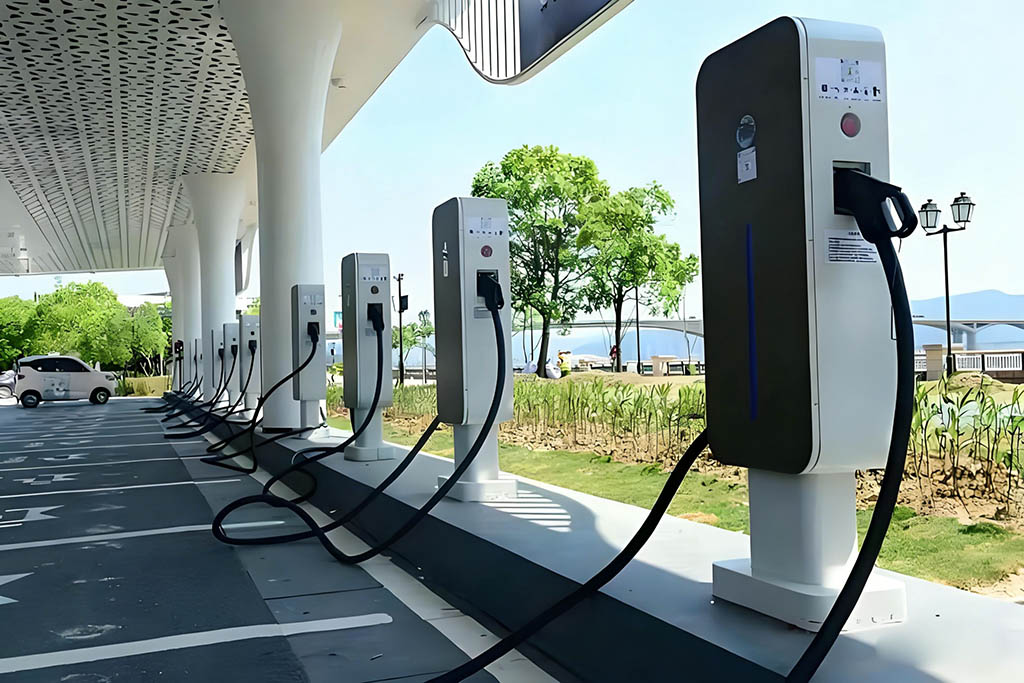
For public chargers, our sheet metal designs prioritize durability against intentional and accidental damage:
- Reinforced Structural Frame:
2.5mm thick SPCC steel frame with cross-bracing (welded via robotic systems) achieves an IK10 impact rating (resists 100kg force from 1m height)—protecting internal components from collisions or blunt force.
- Tamper-Resistant Features:
Charging gun ports and display panels are recessed 15mm into sheet metal to prevent prying; access doors use hidden hinges (instead of exposed pins) to deter forced entry.
- Vibration Resistance:
Shock-absorbing rubber pads (integrated between sheet metal and internal modules) pass IEC 60068-2-6 vibration testing—critical for chargers installed near busy roads.
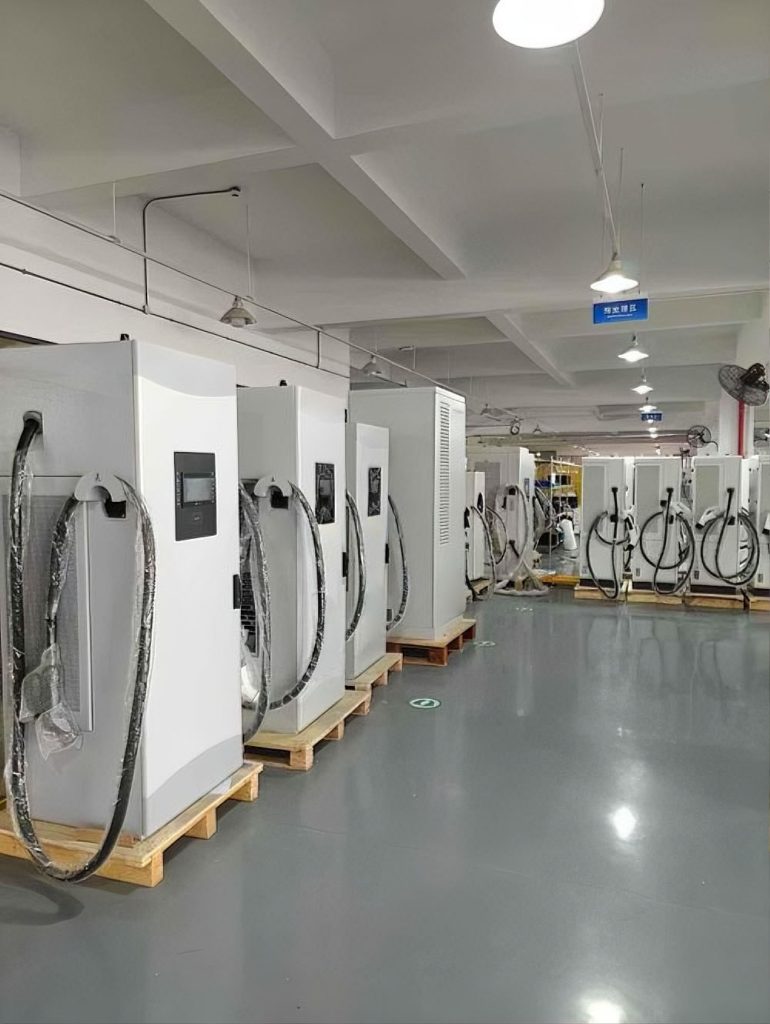
Sanjun’s end-to-end processes ensure consistent quality for global EV charger clients:
- Pre-Production DFM Review: Our engineering team analyzes client CAD files to optimize sheet metal design for manufacturability (e.g., adjusting vent placement to reduce laser cutting time) and regulatory compliance.
- Automated Manufacturing: 3000W fiber laser cutters and AMADA CNC press brakes deliver ±0.1mm dimensional accuracy; robotic welding reduces human error in frame assembly.
- 100% Quality Inspection:
- IP rating testing: Water spray (100L/min, 3m distance) and dust chamber (8 hours) for IP65 compliance.
- Thermal performance testing: Real-time temperature monitoring during 2-hour 150kW charging cycles.
- Dimensional verification: Coordinate Measuring Machine (CMM) checks for critical cutouts and frame angles.
- Global Shipping Packaging: Chargers are wrapped in waterproof vacuum bags, cushioned with EPE foam, and packed in ISPM 15-certified wooden crates—preventing sheet metal scratches or warping during transcontinental shipping.
We’ve delivered tailored sheet metal solutions for EV charger clients across global regions, resolving region-specific pain points:
- Client: A leading European EV charging network operator (serving 12 countries, 500+ public stations).
- Pain Points: 150kW chargers overheating in Mediterranean summer (35°C+ ambient), failing IP54 salt spray tests in coastal France, and needing CCS/CHAdeMO dual-gun compatibility.
- Sanjun’s Solutions:
- 6061-T6 aluminum body with louvered vents + integrated heat sinks (reducing internal temp by 18°C).
- 304 stainless steel front panels with UV-resistant powder coating (passing 1000-hour salt spray testing).
- Precision laser-cut dual-gun openings (CCS2 + CHAdeMO) with ±0.1mm tolerance.
- Outcomes:
- 0 thermal-related downtime in 12 months of deployment.
- Chargers passed CE EN 62196 and IP65 certification on the first attempt.
- 98% client satisfaction with durability and interface compatibility.
- Client: A U.S.-based residential EV charger manufacturer (supplying Canadian and U.S. suburban markets).
- Pain Points: Sheet metal cracking in Canadian -30°C winters, and oversized designs failing to fit 60cm-wide garage spaces.
- Sanjun’s Solutions:
- 1.2mm 304 stainless steel (low-temperature toughness: no cracking at -40°C) with 50μm cold-resistant powder coating.
- Compact modular sheet metal frame (reduced width to 55cm) with foldable cable hooks (saving 10cm of garage space).
- UL 62196-compliant laser-cut power port openings (NEMA 14-50P standard for North America).
- Outcomes:
- 0 sheet metal cracking reports across 2,000+ units deployed in Alberta (Canada).
- 30% faster installation time due to compact design.
- UL certification obtained 2 weeks ahead of client’s target timeline.
- Client: A Singaporean commercial charging operator (serving shopping mall parking lots in Malaysia and Thailand).
- Pain Points: 80% humidity + 35°C ambient temp causing sheet metal corrosion, and need for CCS2/GB/T dual interfaces + QR payment cutouts.
- Sanjun’s Solutions:
- 1.5mm 316 stainless steel (passing 1500-hour salt spray testing) with anti-humidity epoxy coating.
- Dual charging gun cutouts (CCS2 + GB/T) and 50mm×50mm QR scanner opening (aligned with local mobile payment norms).
- IK10-rated reinforced frame (resisting accidental cart collisions in mall parking lots).
- Outcomes:
- <1% corrosion rate across 800 units after 18 months of deployment.
- 95% of users reported seamless interface operation (dual guns + QR payment).
- Chargers passed Singapore’s LTA (Land Transport Authority) safety standards.
Q: How does Sanjun’s sheet metal design handle thermal management for 350kW ultra-fast chargers?
A: We use 2.0mm 6063-T5 aluminum (higher thermal conductivity than 6061) and add CNC-bent heat dissipation fins to the sheet metal body, paired with forced-air flow optimization via CFD—reducing internal temperatures by 22°C.
Q: Can Sanjun’s sheet metal designs meet North American UL 62196 standards?
A: Yes. Our sheet metal materials (UL 94 V-0 steel/aluminum) and grounding structures are pre-engineered to meet UL 62196 safety requirements, with test reports available for client certification submissions.
Q: What’s the lead time for a custom EV charger sheet metal order (100 units)?
A: Prototyping (5 units): 8–10 days; mass production + quality testing: 20–25 days; global shipping: 7–12 days (depending on region).
Q: How durable is the sheet metal for public chargers in high-vandalism areas?
A: Our IK10-rated frame and recessed components resist most blunt force and prying attempts; we also offer optional 316 stainless steel panels (for extreme vandalism risk) that pass 1500-hour salt spray testing.
Sanjun’s custom sheet metal solutions transform EV charger design from a logistical challenge to a competitive advantage—delivering thermal efficiency, global compliance, and long-term durability. Contact our team to share your charger specifications and receive a tailored design proposal.
Would you like me to compile a detailed EV Charger Sheet Metal Technical Specification Sheet (including material grades, dimensional tolerances, and compliance certifications) to support your client proposals?

























Leave a comments