
Nullam dignissim, ante scelerisque the is euismod fermentum odio sem semper the is erat, a feugiat leo urna eget eros. Duis Aenean a imperdiet risus.
Nullam dignissim, ante scelerisque the is euismod fermentum odio sem semper the is erat, a feugiat leo urna eget eros. Duis Aenean a imperdiet risus.
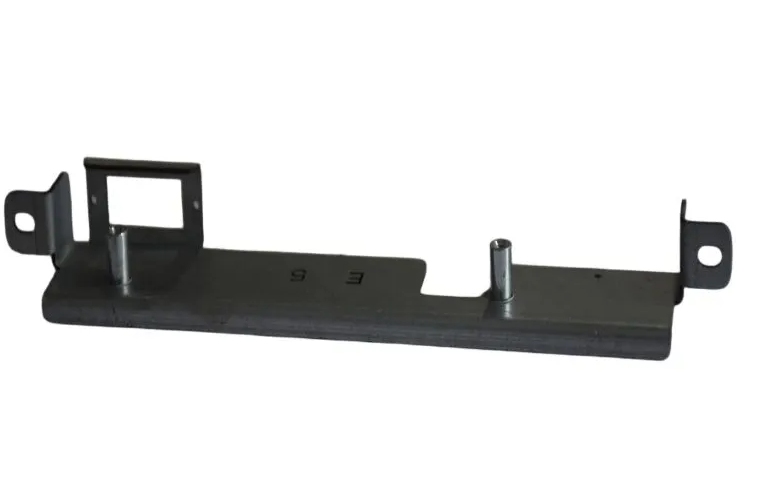
Sheet metal parts form the core of countless products we use every day. They turn circuit boards and mechanical drawings into real, working items that last. A well-made sheet metal housing often decides whether a medical device feels trustworthy, an outdoor kiosk survives years of weather, or a classroom podium stands up to daily student use. The jump from a perfect 3D model to hundreds or thousands of good parts on the shelf comes down to following proven design rules that match real factory capabilities. When engineers respect those rules, brackets, enclosures, and frames come out right the first time, cost less, and reach the market faster.
Fabricators start with flat sheets of metal – usually stainless steel, aluminum, or cold-rolled steel – and cut, bend, and join them into finished pieces. The result is strong, light when needed, and almost always cheaper in volume than machined or cast alternatives. Factories can make thousands of identical parts quickly, assembly lines run smoothly, and the final product costs less while lasting longer.
San Jun Hardware opened its doors in 2010 as a factory that both makes and sells precision sheet metal components. Today, we run a 5,000 m² shop filled with AMADA CNC press brakes, 3000 W laser cutters, and modern welding stations. We supply customers worldwide in display, education, medical, power, home appliance, and new-energy fields. Our main promise is simple: deliver exactly what the drawing asks for, at a fair price, without forcing customers to pay for expensive tooling.
Pick the wrong material and the part fails in the field; pick the right one and it works for years. At San Jun Hardware, we regularly stock and process:
Cold-rolled steel – easy to form, strong enough for furniture frames and machine guards.
Stainless steel – fights rust and looks clean, perfect for hospitals and food equipment.
Galvanized steel – zinc coating keeps outdoor pieces from rusting.
Aluminum – light and good at moving heat away, common in electronics and battery boxes.
For outdoor battery enclosures, for example, we often suggest 5052 aluminum because it handles heat cycles and stays light.
Good parts start on the computer screen. A few basic rules save money and headaches later.
Bend Radii and Reliefs
Keep the inside bend radius at least equal to material thickness (example: 1.5 mm steel → minimum 1.5 mm radius). Smaller radii crack the outside surface. We also add small relief notches at the ends of bend lines so the flat pattern stays accurate.
Hole and Feature Placement
Never put a hole closer than 2× material thickness from a bend line. On our brakes, the distance from a hole edge to the bend line needs to stay at least 3 mm plus the bend radius, otherwise the hole distorts. Our typical position tolerance between a hole and a nearby bend is ±0.2 mm.
Part Simplification
Every extra jog or deep draw adds a forming step and sometimes a second tool. Whenever possible, use the same bend radius throughout the part and keep flanges the same length – the turret press and brake can run faster, and tooling stays cheaper.
Everything begins with a clean blank. We cut most parts on 3000 W fiber lasers or CNC turret punches. For 0.5–2.0 mm material, laser cutting holds ±0.1 mm on the flat pattern (before bending). Straight dimensions that do not cross bend lines also stay within ±0.1 mm, which means tabs and slots line up perfectly when the part is folded.
After cutting, blanks go to the CNC press brakes. Metal always springs back a few degrees, so we slightly over-bend and let it relax to the correct angle. Standard bending tolerance across one or more bends is ±0.4 mm on flange length and ±1° on angle unless the drawing calls for tighter.
Many enclosures need several pieces joined together. We use MIG for thicker steel, TIG for stainless and aluminum, and spot welding when appearance matters. Final assembly includes PEM nuts, studs, rivets (on our Hager automatic riveting press), and hinges, so the finished box is ready to accept electronics or screens right away.
A bare metal part rusts or scratches quickly. Finishing protects it and makes it look professional.
Powder coating – tough colored finish, any RAL or Pantone shade, matte or semi-gloss.
Anodizing – only on aluminum, builds a hard oxide layer up to 20–25 μm thick.
Zinc or nickel plating plus passivation on stainless – extra corrosion protection without changing the look stays the same.
For outdoor kiosks, we almost always powder-coat after welding because the coating seals every seam against rain.
Countersinks, threaded holes, and locating pins all need tight control. Our machined countersink major diameter usually stays within ±0.254 mm, so every screw sits flush.
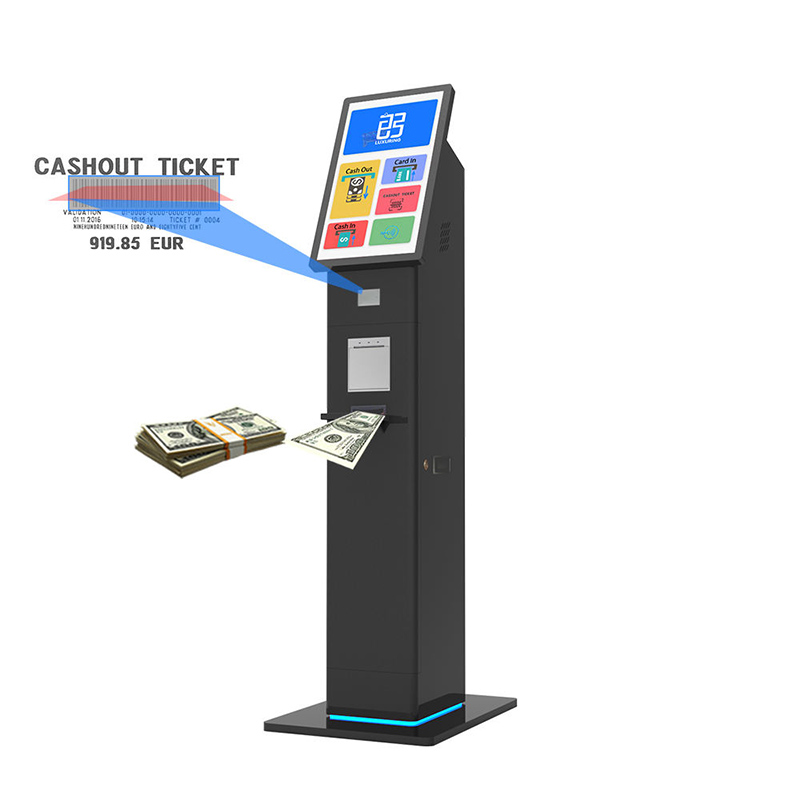
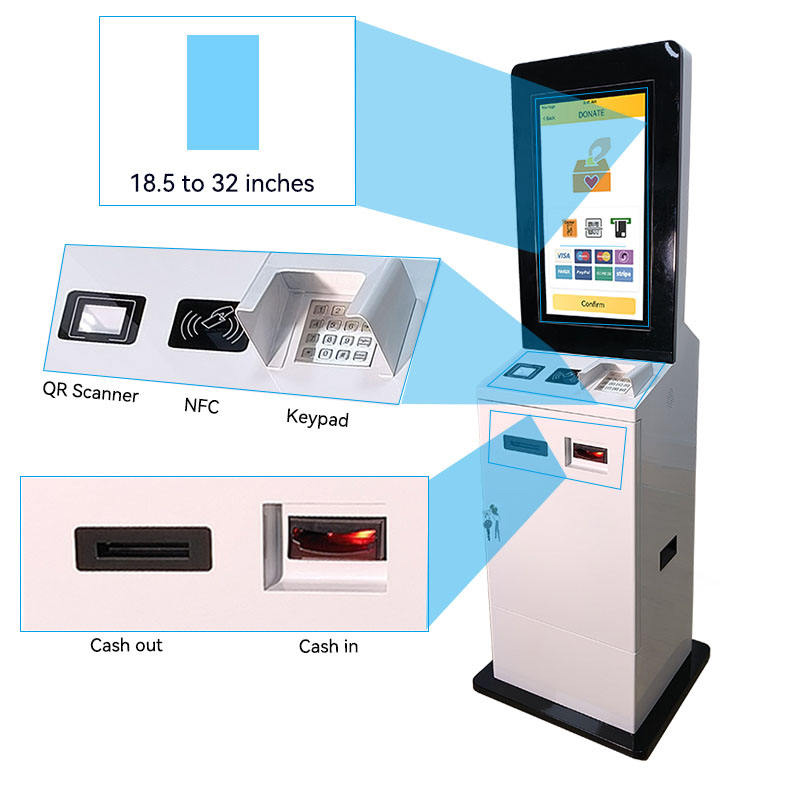
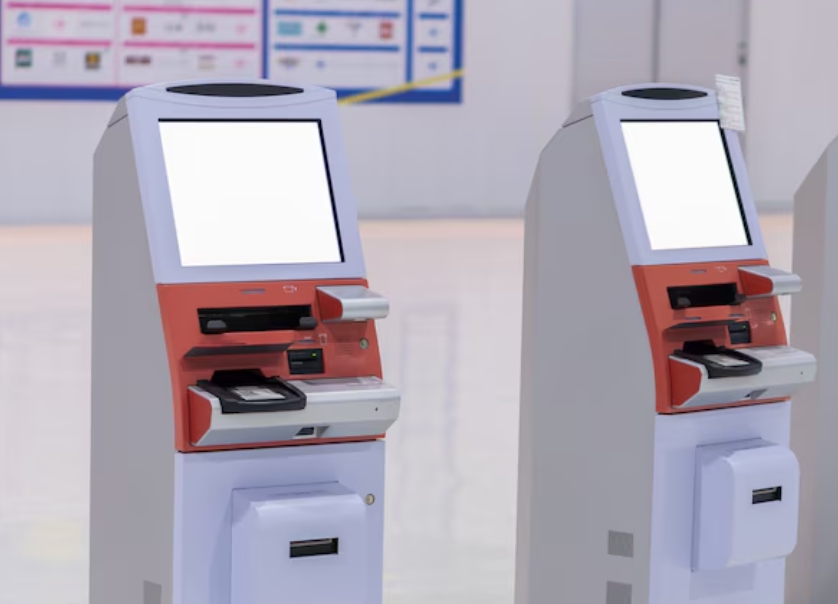
In restaurants, you see our 24″, 27″, and 32″ self-service ordering kiosk shells every day. The folded cold-rolled steel body is powder-coated white or silver, all edges are rounded for safety, and the internal brackets are placed so printers and payment modules drop in without extra hardware.
In hospitals, the same basic shell gets upgraded with 304 stainless steel and seamless welds. These units handle registration, bill payment, and report printing on 17–32 inch screens while staying easy to wipe down between patients.
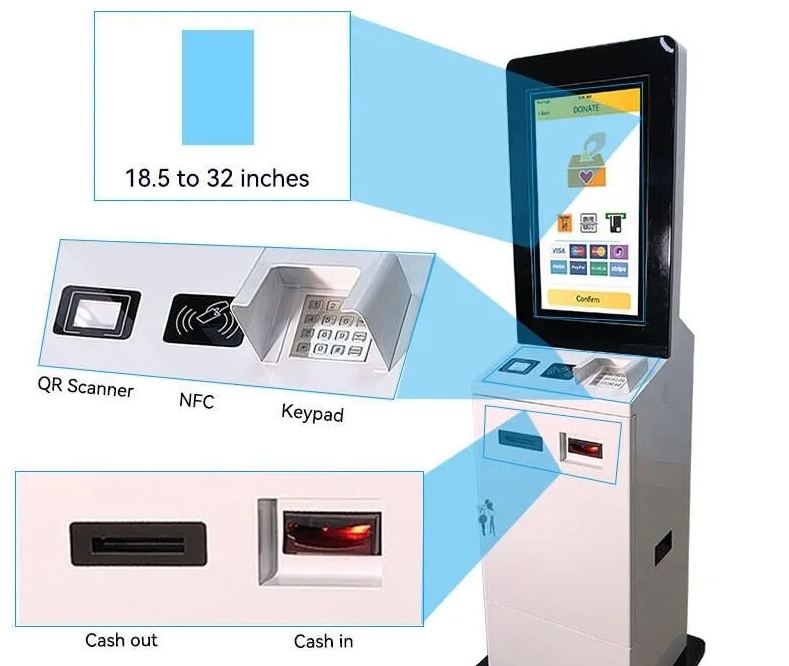
Outdoor Custom Digital Signage Shell IP65 units face rain, dust, heat, and vandals. We build the cabinets from thicker aluminum or galvanized steel, add gasket channels around every door, and slope the top so water runs off.
The same construction ideas go into outdoor self-service payment terminals that stay reliable through winter snow and summer heat.
Vending machines and smart bookcases need strong lockable doors, ventilation slots placed just right, and shelves that do not sag under weight. Our intelligent self-service cabinets carry CE marks for EMC, LVD, and RoHS because every weld and coating meets European rules.
Good sheet metal design is part art, part science, and part hard-won shop-floor experience. At San Jun Hardware, we keep investing roughly 10% of yearly profit back into new machines and training so we stay ready for tomorrow’s projects. Send us a STEP file or even a hand sketch, and we normally return a firm quote within 24 hours and first-article samples in 7–12 days. Our ISO9001:2008 quality system and full in-house production mean the parts you approve in the sample run are the same parts you receive in every production batch.
A: Laser and CNC punching, CNC bending, stamping, MIG/TIG/spot welding, powder coating, anodizing, plating, and full assembly.
A: Normal quotes go out within 24 hours. Mark the email “urgent” or call us, and we’ll move it to the top of the list.
A: Full IP65 water and dust protection, –40 °C to +60 °C operation, IK10 vandalism resistance, 150 km/h wind survival, and long-life anti-UV coating.
A: Cold-rolled steel, electrolytic plate, galvanized steel, stainless steel (304/316), and several aluminum alloys.
























Leave a comments