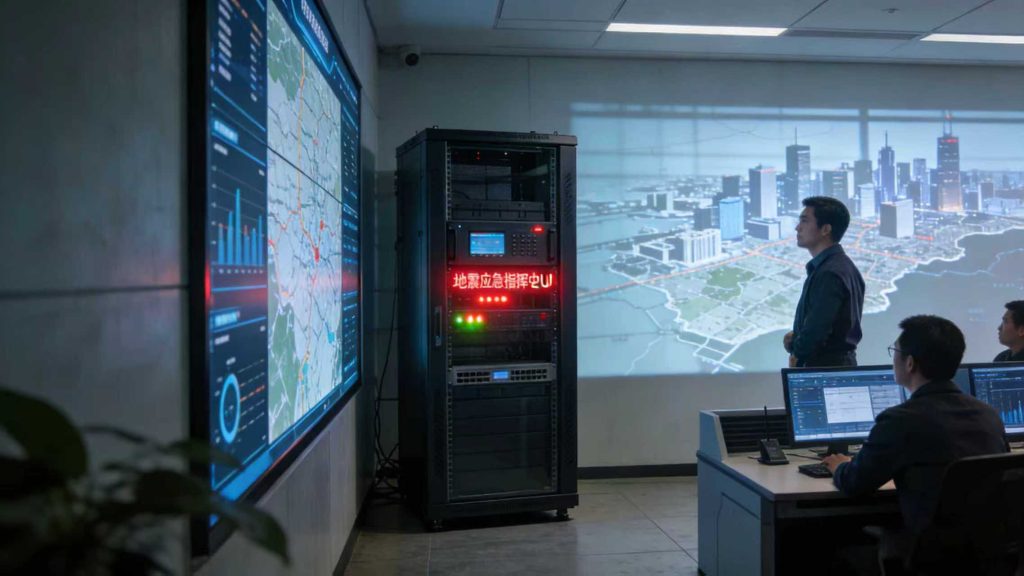
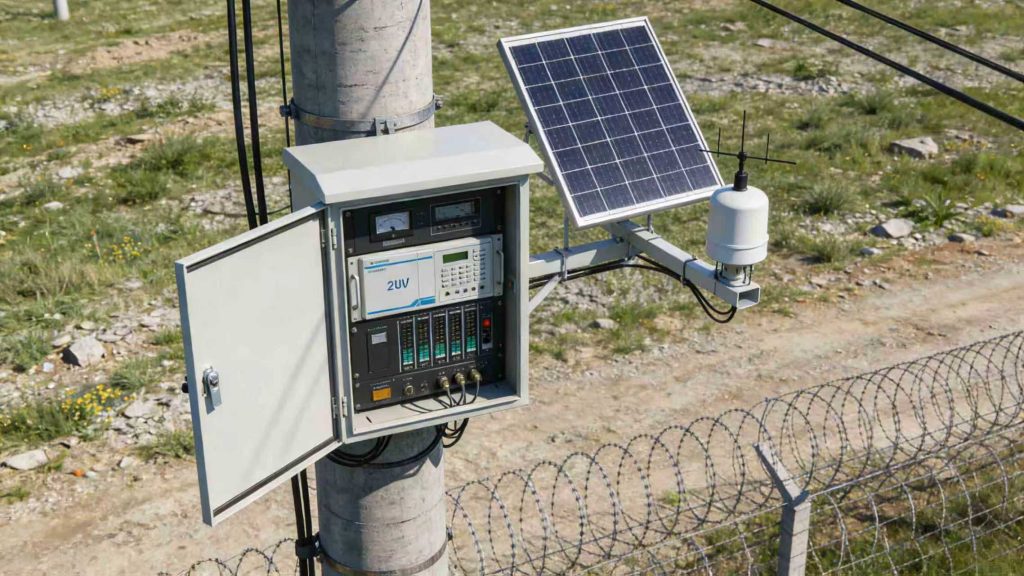
A leading seismic early-warning technology provider launched a 2025 deployment project, requiring 1,500 2U rackmount enclosures for its cabinet-type seismic warning terminals. These terminals would be installed in emergency command centers, public infrastructure (e.g., schools, hospitals), and semi-outdoor seismic monitoring stations. Core requirements tailored to the seismic industry included:
- Compliance with EIA-310 19-inch rack standards (88.9mm height) for seamless integration into standard control cabinets;
- Precise alignment of front-panel interfaces (seismic sensor data ports, warning signal output ports, power sockets—matching the multi-interface layout in the images);
- Enhanced heat dissipation (to manage 45W operating heat of terminal components in enclosed cabinets);
- Vibration-resistant structural design (to maintain stability in monitoring sites with minor ambient vibrations);
- Industrial-grade corrosion resistance (for semi-outdoor deployment in diverse environmental conditions);
- Uniform dimensional accuracy across 1,500 units to enable batch assembly of terminal components.
The client selected Sanjun Hardware for its proven precision in sheet metal customization, advanced production equipment (4000W fiber lasers, 8-axis CNC brakes), and rigorous quality control (validated in prior industrial equipment projects).
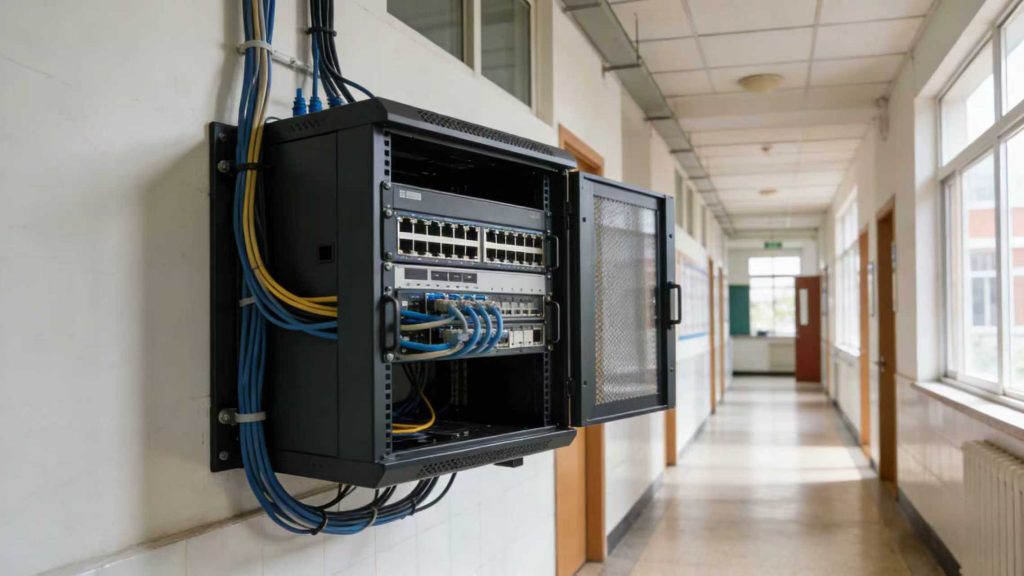
Sanjun’s production focused on the 2U enclosure’s key parts (main enclosure frame, front interface panel, heat-dissipating louver structure, rackmount handles) to meet seismic equipment-specific demands:
- Main Enclosure Frame: 1.2mm SPCC cold-rolled steel (520MPa tensile strength) – balances structural rigidity for rackmount installation and vibration resistance.
- Heat-Dissipating Louvers: 1.0mm 6061-T6 aluminum alloy – improves thermal conductivity (critical for enclosed cabinet deployment) while reducing overall weight.
- Front Interface Panel: 1.2mm SPCC steel – supports high-precision hole cutting for multi-port alignment without deformation.
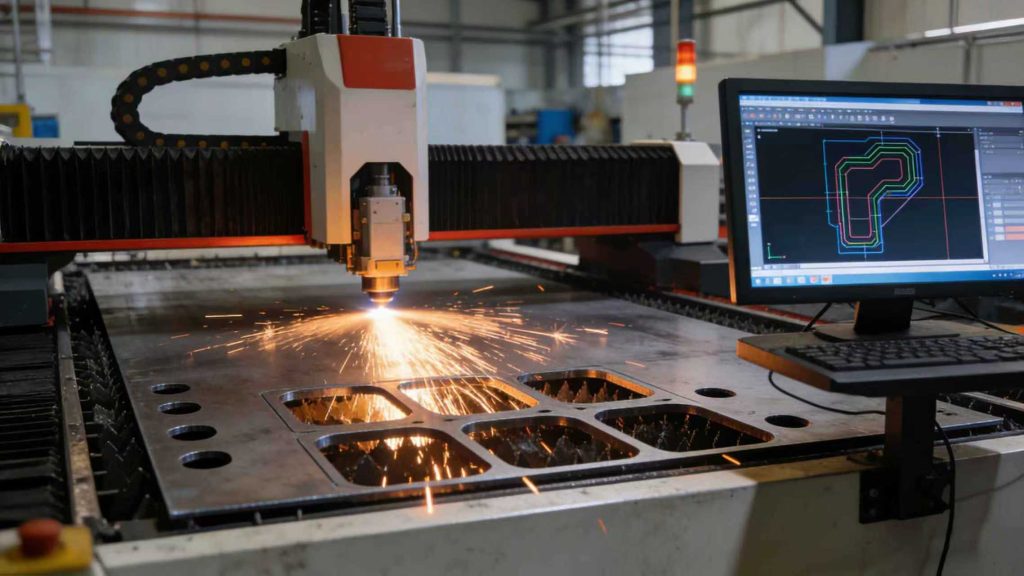
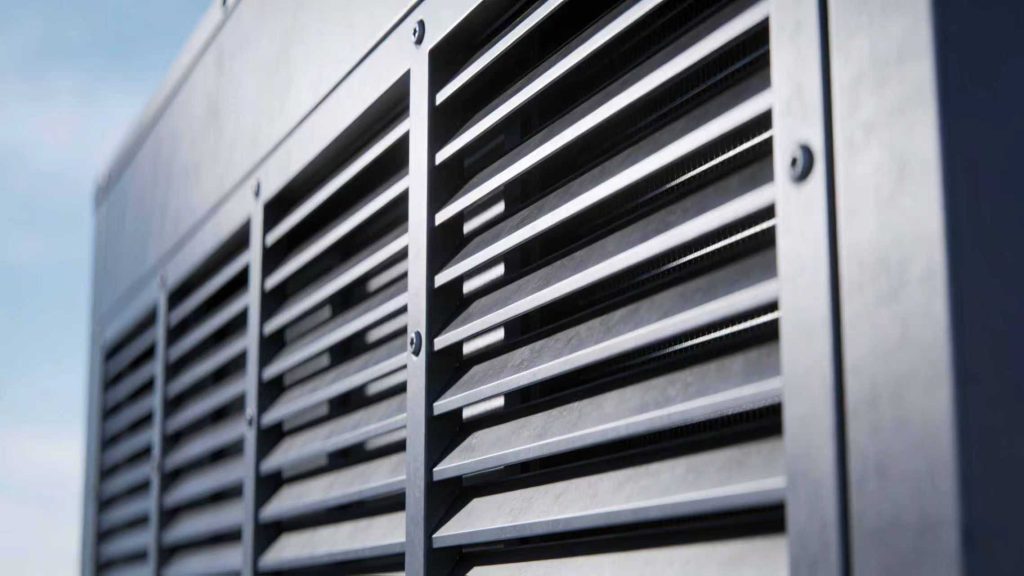
- Laser Cutting: A 4000W fiber laser (±0.05mm tolerance) cut front-panel interface holes (seismic data ports, signal outputs, power sockets) and angled louvered heat slots (the elongated slots in the images). Burr-free edges (Ra ≤0.8μm) eliminated secondary processing that could disrupt interface alignment.
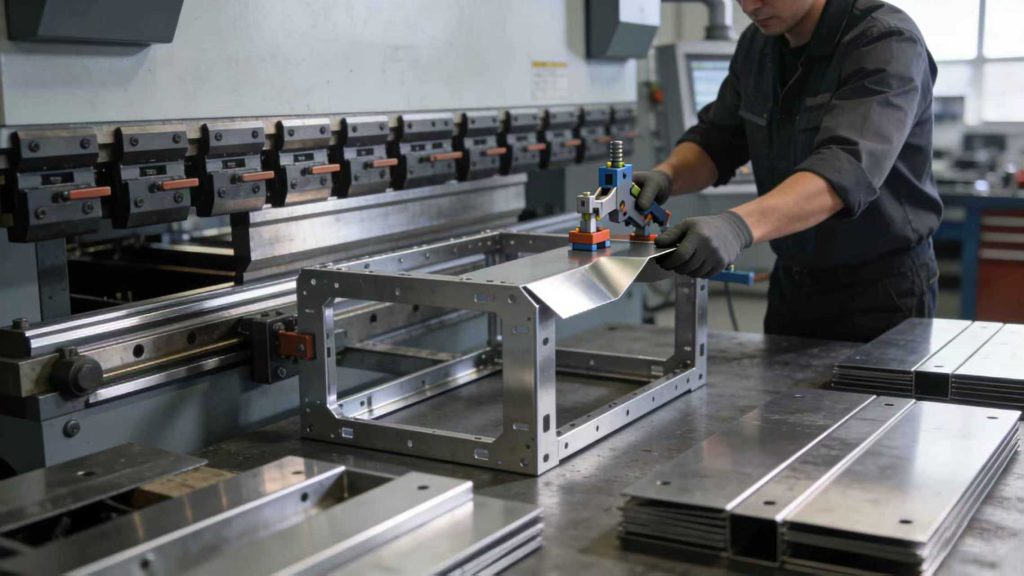
- CNC Bending: An 8-axis AMADA brake formed the 2U standard height (88.9mm) and integrated vibration-resistant reinforcing ribs into the main enclosure frame. Custom 3D jigs prevented springback, ensuring compliance with EIA-310 rack dimensions.
- Welding: Fiber laser welding (1500W) joined main enclosure frame seams – narrow welds (≤1mm) minimized thermal deformation, preserving the enclosure’s flatness (≤0.1mm/m) for stable rackmounting and vibration resistance.
- Surface Treatment: Electrostatic powder coating (matte black/grey, matching the images) – 60μm thickness, cured at 180℃ for 20 minutes, achieving 9H pencil hardness and 480-hour salt spray resistance (suitable for semi-outdoor monitoring sites).
- Dimensional Inspection: A Coordinate Measuring Machine (CMM) verified front-panel interface positions (±0.03mm tolerance) and rackmount dimensions (EIA-310 compliance).
- Functional Testing: Vibration resistance (tested to 1.5g amplitude, matching seismic monitoring site conditions) and heat dissipation efficiency (airflow through louvers reduced internal temperature by 12℃ under 45W load).
The front panel’s multi-port layout (seismic data, signal outputs) needed to align perfectly with internal circuit boards – misalignment would delay terminal assembly.
Solution: Custom positioning jigs for laser cutting + 100% post-cut CMM inspection of front panels, ensuring hole position tolerance ≤±0.03mm.
The 2U enclosure required vibration-resistant structural design (for monitoring sites) while fitting EIA-310 rack dimensions – adding reinforcing ribs risked exceeding standard height.
Solution: Optimized CNC bending to integrate micro-reinforcing ribs within the 88.9mm 2U height; 3D vibration simulation confirmed stability under 1.5g amplitude without compromising rack compatibility.
The compact 2U space limited airflow, but excessive heat slots could weaken structural rigidity (critical for vibration resistance).
Solution: Angled louvered heat slots (30° tilt to prevent dust buildup, per the images) + aluminum alloy louver material – improved airflow by 20% while maintaining structural rigidity via targeted reinforcing ribs.
Uniform dimensions across 1,500 enclosures were required for seamless batch assembly of seismic terminal components.
Solution: Automated loading/unloading for laser cutting and bending + 100% dimensional checks with precision gauges – batch dimensional deviation was controlled to ≤0.1mm.
- Delivery: 1,500 2U seismic early-warning enclosures were delivered 3 days ahead of the 40-day deadline, with a 100% pre-delivery inspection pass rate.
- Field Performance: After 7 months of deployment across 200+ sites, the enclosures showed 0 cases of interface misalignment, 0 thermal overheating issues, and 0 structural instability in vibration-prone monitoring areas.
- Client Collaboration: The seismic technology provider signed a follow-up order for 2,000 additional 2U enclosures, citing Sanjun’s “seismic-industry tailored precision and structural reliability” as key differentiators.