Project Background
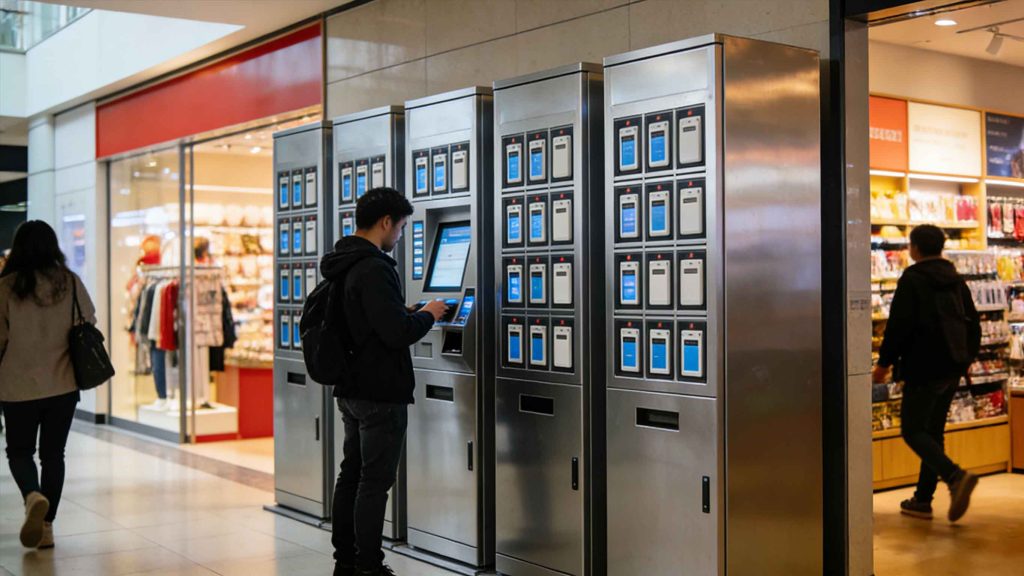
A leading global shared mobility service provider launched a 2025 large-scale deployment project, aiming to install 2,000 shared power bank cabinets across 150+ high-traffic scenarios in Southeast Asia, including shopping malls, transportation hubs, and scenic spots. The project had strict requirements tailored to the tropical and subtropical climate characteristics and high-frequency use scenarios: first, the cabinet must achieve IP55 waterproof and dustproof level to resist sudden heavy rains and sandstorms; second, it needs excellent heat dissipation performance to ensure stable operation of internal battery modules and circuit boards under 35-45℃ high-temperature environment; third, the structural design must meet anti-theft standards, with the door panel and main frame having strong anti-prying ability; fourth, the overall weight should be controlled within 45kg to facilitate on-site installation and relocation; finally, the surface finish must have UV resistance to avoid fading and aging under long-term strong sunlight. After evaluating 9 sheet metal suppliers, the client selected Sanjun Hardware (established in 2010, specializing in precision custom sheet metal for industrial equipment) for its rich experience in outdoor electronic equipment sheet metal customization, advanced production equipment (such as 4000W fiber laser cutting machine, AMADA 8-axis CNC press brake), and mature quality control system.
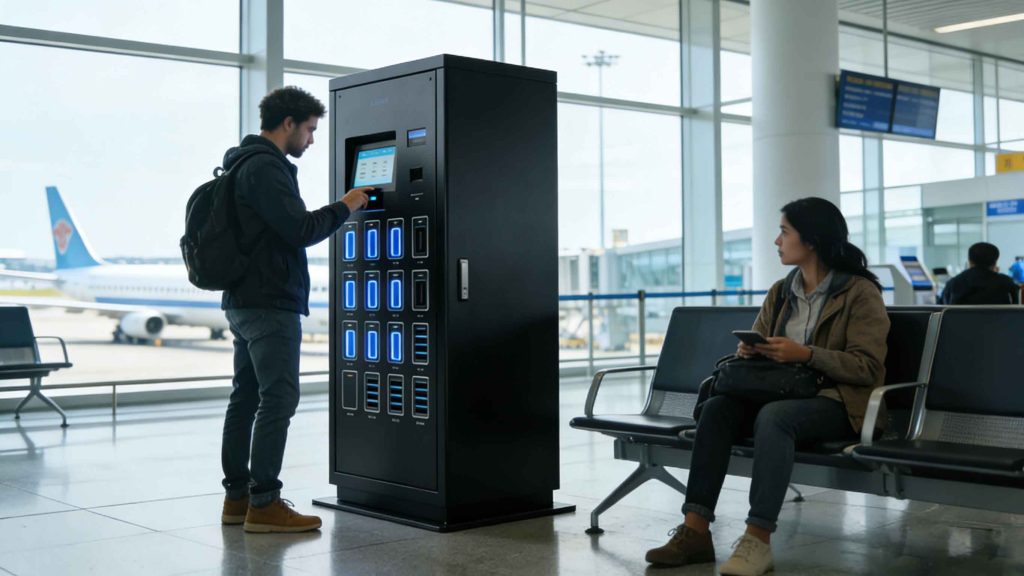
Manufacturing Process of Core Sheet Metal Components
Sanjun Hardware customized a comprehensive production plan based on the client’s demand characteristics, focusing on three core sheet metal components of the shared power bank cabinet: the main cabinet body, the anti-theft door panel, and the internal battery module bracket, integrating material science, precision craftsmanship and environmental adaptation design.
1. Material Selection: Balancing Durability, Lightweight and Environmental Adaptability
-
Main Cabinet Body: 1.5mm 304 stainless steel (JIS G 4305) was selected. Compared with ordinary cold-rolled steel, it has excellent corrosion resistance and oxidation resistance, which can effectively resist the humid and hot environment in Southeast Asia. At the same time, its tensile strength of 520MPa ensures the structural stability of the cabinet.
-
Anti-theft Door Panel: 2.0mm SPCC cold-rolled steel with galvanized layer was adopted, and after powder coating, the overall anti-prying performance was enhanced. The surface was treated with UV-resistant matte black powder coating, which not only meets the aesthetic requirements but also resists sunlight aging.
-
Internal Battery Module Bracket: 1.2mm 6061-T6 aluminum alloy was chosen. It is 35% lighter than stainless steel, which helps to control the overall weight of the cabinet. Its good thermal conductivity also contributes to the heat dissipation of the battery module, and the tensile strength of 276MPa can stably support the internal components.
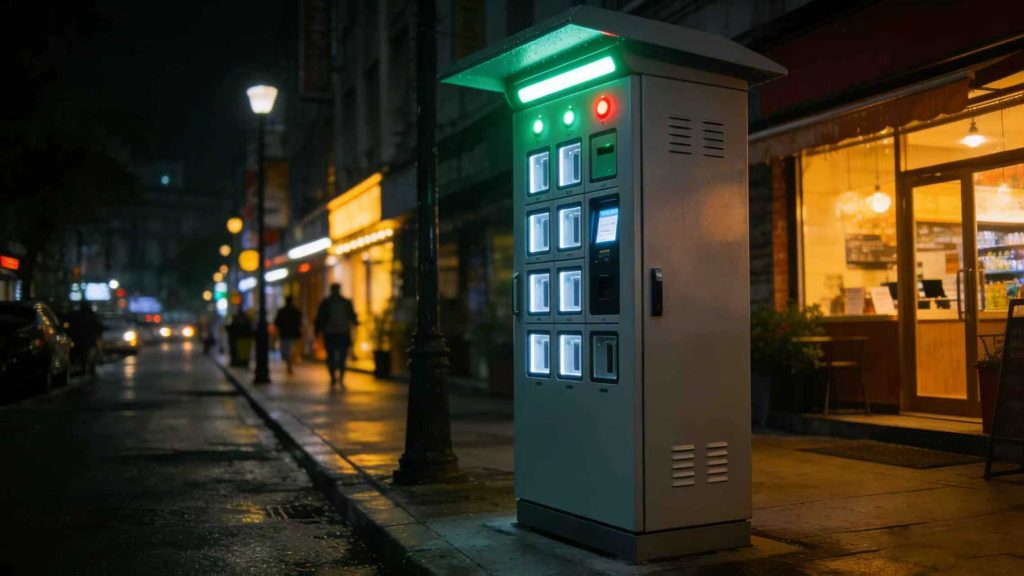
2. Core Craftsmanship: Precision Manufacturing Ensures Performance
(1) Laser Cutting: Precision Foundation for Component Matching
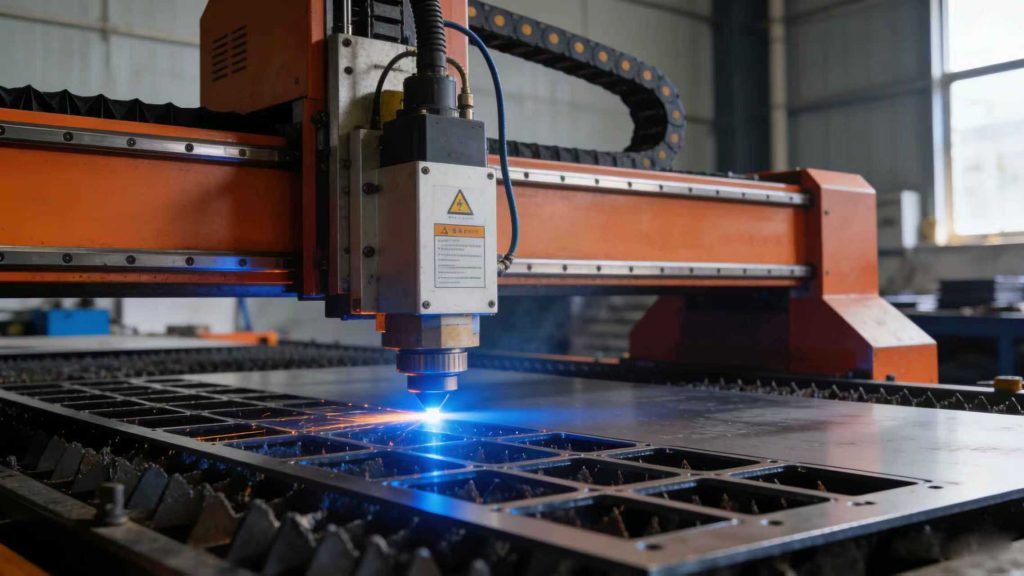
Sanjun Hardware used a 4000W fiber laser cutting machine with a tolerance of ±0.05mm to process key components:
-
For the main cabinet body, 6mm-diameter heat dissipation holes were cut in a matrix arrangement (spacing 12mm) to form a scientific heat dissipation channel, ensuring that the internal temperature does not exceed 40℃ under high-temperature environment.
-
The anti-theft door panel was cut with a 300mm×500mm rectangular opening for the touch screen, and the edge was processed with a 2mm chamfer to avoid scratching the screen during installation.
-
The internal battery module bracket was cut with 15mm×20mm positioning slots, ensuring that the battery module can be accurately installed without deviation, and the burr-free cutting edge (Ra ≤0.8μm) avoids damaging the battery case.
(2) CNC Bending: Structural Stability and Sealing Guarantee
An AMADA HG 1303 8-axis CNC press brake with a bending tolerance of ±0.1° was used for forming processing:
-
The main cabinet body was bent into a fully enclosed structure with 6 bends, and the corners were bent into R8mm rounded shapes to enhance structural strength and avoid sharp edges that may cause safety hazards during installation.
-
The anti-theft door panel was bent with a 5mm edge folding design, which forms a tight fit with the cabinet body when closed, laying a foundation for IP55 waterproof and dustproof performance.
-
Custom 3D-printed bending jigs were used for the internal brackets to avoid springback phenomenon, ensuring that the flatness of the bracket is ≤0.1mm, which is conducive to the stable installation of the battery module.
(3) Welding: Strong Connection and Sealing Optimization
Targeted welding processes were adopted according to the material and structural requirements of different components:
-
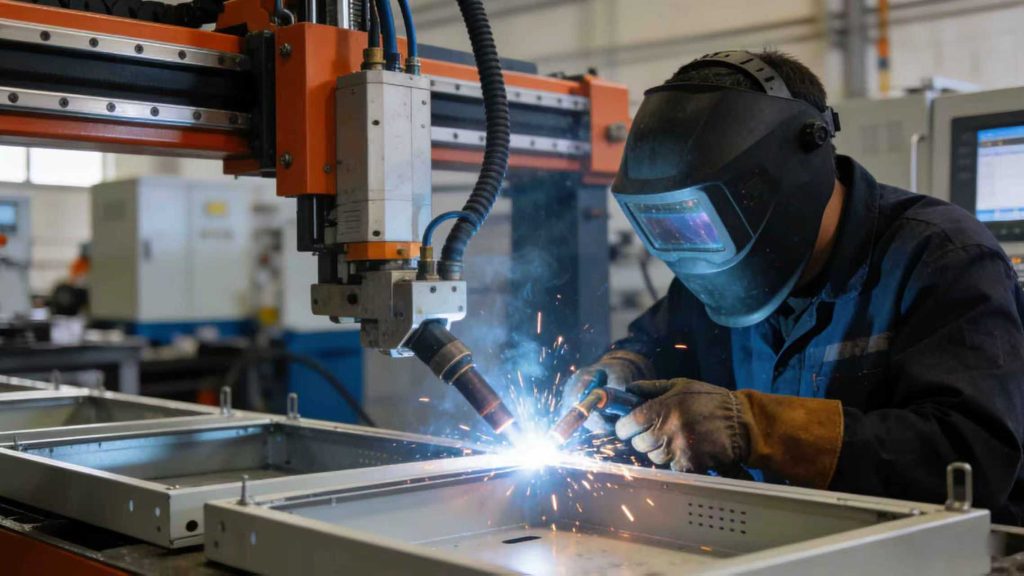
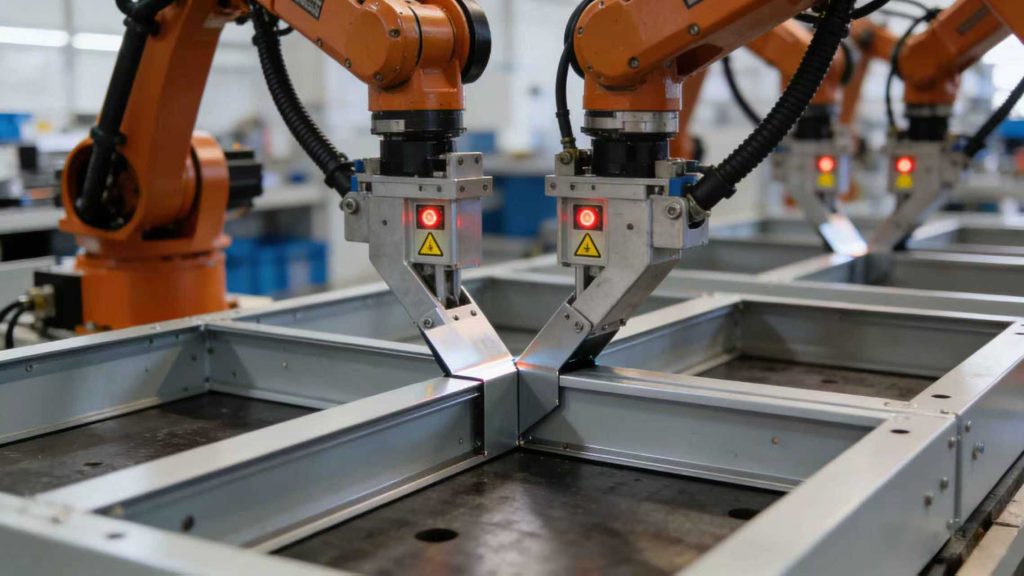
Main Cabinet Body: Gas Metal Arc Welding (GMAW) was used for welding seams, with a welding seam width of 3mm and no porosity or slag inclusion. After welding, robotic grinding was performed to make the welding seam smooth and flat, ensuring that the sealing strip can be closely attached to achieve IP55 level.
-
Internal Aluminum Brackets: 1500W fiber laser welding was used, with narrow welding seams (≤1mm) and small heat-affected area, which effectively avoided thermal deformation of aluminum alloy materials and ensured the dimensional accuracy of the brackets.
(4) Surface Treatment: Multi-layer Protection Against Harsh Environment
A three-stage surface treatment process was adopted to enhance the environmental adaptability of the cabinet:
-
Main Cabinet Body (304 Stainless Steel): First, nitric acid passivation treatment was carried out to form a 5μm thick oxide film on the surface, enhancing corrosion resistance; then, UV-resistant matte black electrostatic powder coating (thickness 60μm) was applied, which has excellent sun protection and anti-fading performance.
-
Anti-theft Door Panel (SPCC Steel): Galvanizing treatment (zinc layer thickness 8μm) was first performed for anti-corrosion base protection, then electrostatic powder coating was applied, and the coating adhesion reached grade 0 (ISO 2409).
-
Internal Aluminum Brackets: 20μm thick anodizing treatment was carried out (complying with ISO 10079 standard), which enhanced the hardness and wear resistance of the surface and improved thermal conductivity.
3. Quality Control: Strict Inspection Covering Full Process
Sanjun Hardware implemented a three-stage quality inspection system to ensure that each cabinet meets the client’s requirements:
-
Dimensional Inspection: A coordinate measuring machine (CMM) was used to perform 100% full inspection on key dimensions of the cabinet body, door panel and brackets, such as the flatness of the cabinet body (≤0.1mm/m), the size of the touch screen opening (±0.05mm), etc.
-
Environmental Adaptability Test: Random sampling of 10 units per batch was conducted for IP55 waterproof and dustproof test (complying with IEC 60529 standard) and high-temperature aging test (45℃ constant temperature for 72 hours), ensuring stable operation in harsh environments.
-
Structural Performance Test: The anti-theft door panel was subjected to anti-prying test (can withstand 500N lateral force without deformation) and the cabinet body was subjected to load-bearing test (can bear 80kg weight without structural damage), verifying the safety and durability of the structure.
Project Challenges & Sanjun’s Professional Solutions
During the project implementation, Sanjun Hardware faced four key challenges, and successfully resolved them through professional technical capabilities and rich project experience.
1. Challenge: Balancing IP55 Waterproof Performance and Heat Dissipation Requirements
The IP55 waterproof requirement requires the cabinet to have a good sealing performance, while the heat dissipation of the internal battery module requires sufficient heat dissipation channels. Excessive sealing will lead to poor heat dissipation and affect the service life of the battery; excessive heat dissipation holes will reduce the waterproof performance.
Solution: Sanjun Hardware’s R&D team conducted fluid dynamics simulation analysis to optimize the layout of heat dissipation holes. They adopted a “louver-type inclined heat dissipation hole” design, with the holes inclined downward at 30° to prevent rainwater from entering. At the same time, a waterproof and breathable membrane was installed inside the heat dissipation holes, which can block water molecules while allowing air circulation. In addition, a heat conduction plate was added inside the cabinet to guide the heat generated by the battery module to the heat dissipation holes. The test results showed that the internal temperature of the cabinet was controlled within 38℃ under 45℃ environment, and no water seepage occurred after 24 hours of continuous spray test, fully meeting the IP55 waterproof and heat dissipation requirements.
2. Challenge: Controlling Overall Weight While Ensuring Structural Strength
The client required the overall weight of the cabinet to be ≤45kg for convenient on-site installation, but the outdoor use scenario required the cabinet to have sufficient structural strength and anti-theft performance, which easily led to weight exceeding the standard if the material thickness was increased.
Solution: Sanjun Hardware optimized the material matching and structural design. First, 6061-T6 aluminum alloy (lightweight and high-strength) was used for internal non-load-bearing components such as battery brackets to reduce weight. Second, the main cabinet body adopted 1.5mm 304 stainless steel, and a “reinforced rib” structure was added at key stress points (such as the connection between the cabinet body and the door panel, the bottom of the cabinet) through CNC bending, which increased the structural strength by 40% without increasing the material thickness. Finally, the anti-theft door panel used 2.0mm galvanized steel with a hollow design inside, reducing weight while ensuring anti-prying performance. Through the above measures, the final weight of the cabinet was controlled at 42kg, which was 3kg lower than the client’s requirement, and the structural strength test fully met the standard.
3. Challenge: Ensuring Dimensional Consistency in Mass Production of 2,000 Units
The project required the production of 2,000 units of cabinets, and the dimensional deviation between different units would lead to difficulties in on-site installation and replacement of parts. The client required the dimensional deviation of key components between batches to be ≤0.2mm.
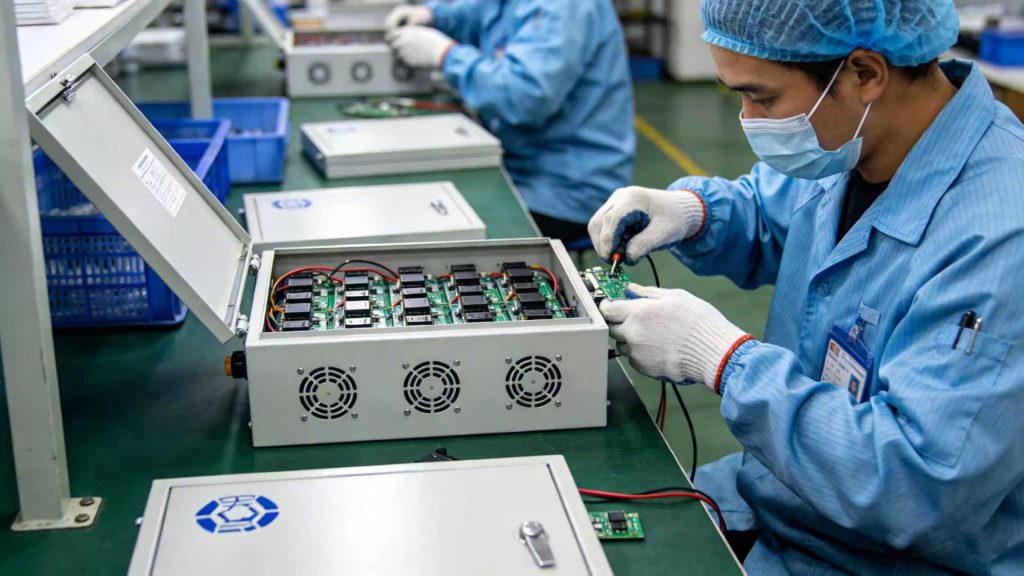
Solution: Sanjun Hardware adopted a full-process automated production and inspection mode. First, automated loading and unloading equipment was used for laser cutting and CNC bending processes to avoid dimensional deviations caused by manual operation. Second, custom positioning jigs were made for each key process to ensure the consistency of processing positions. Third, a “batch sampling + full inspection” quality control mode was implemented: 10% of each batch of products were sampled for comprehensive dimensional inspection with CMM, and key dimensions of all products were inspected with precision gauges. In addition, a digital production management system was used to record the processing parameters of each unit, which was convenient for tracing and adjusting in time if deviations were found. Finally, the dimensional deviation of key components between batches was controlled within 0.15mm, which was better than the client’s requirement of ≤0.2mm.
4. Challenge: Resisting UV Aging in Tropical Climate
The cabinets were deployed in Southeast Asia’s tropical climate, with long-term strong sunlight and high UV intensity, which easily caused the surface coating to fade, crack and age, affecting the appearance and service life of the cabinets.
Solution: Sanjun Hardware selected high-quality UV-resistant polyester powder coating (with UV absorber content ≥3%) and optimized the surface treatment process. Before coating, the substrate was subjected to strict derusting, degreasing and phosphating treatment to ensure the adhesion of the coating. The coating thickness was controlled at 60±5μm, and the curing temperature and time were precisely controlled (180℃, 20 minutes) to enhance the stability of the coating. In addition, accelerated aging tests were conducted (simulating 3 years of outdoor sunlight exposure) on the sample coating, and the results showed that the color difference ΔE ≤1, no cracking or peeling, fully meeting the long-term outdoor use requirements.
Project Outcomes
-
Delivery Performance: Sanjun Hardware completed the production and delivery of 2,000 shared power bank cabinets in 45 days, which was 5 days ahead of the client’s 50-day deadline, with a 100% pass rate in pre-delivery inspection.
-
Field Operation Performance: After 8 months of on-site operation in Southeast Asia’s high-temperature, high-humidity and strong UV environment, the cabinets showed excellent performance: 0 cases of water seepage, 0 cases of coating fading or aging, 0 cases of structural deformation or damage, and the internal battery modules operated stably with no overheating failures.
-
Client Cooperation: The client highly recognized Sanjun Hardware’s professional capabilities in precision manufacturing, environmental adaptation design and mass production control. In 2025, it signed a follow-up cooperation agreement, entrusting Sanjun Hardware with the sheet metal customization business of 3,000 additional shared power bank cabinets, covering more Southeast Asian countries.
This case fully demonstrates Sanjun Hardware’s core competitiveness in the field of shared power bank cabinet sheet metal customization. By integrating advanced production equipment, professional technical solutions and strict quality control systems, Sanjun Hardware effectively solves the pain points of outdoor electronic equipment sheet metal products in harsh environments, providing reliable sheet metal support for global clients in the shared mobility industry.