Project Background
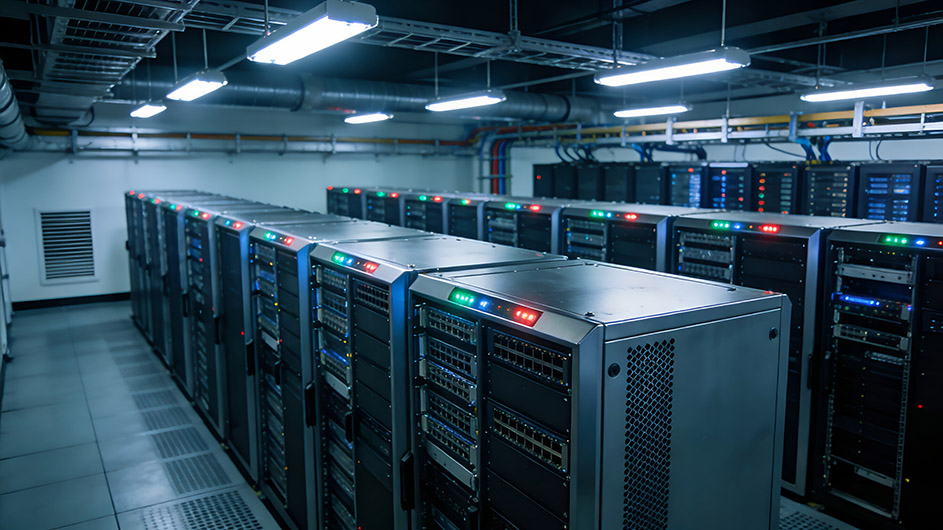
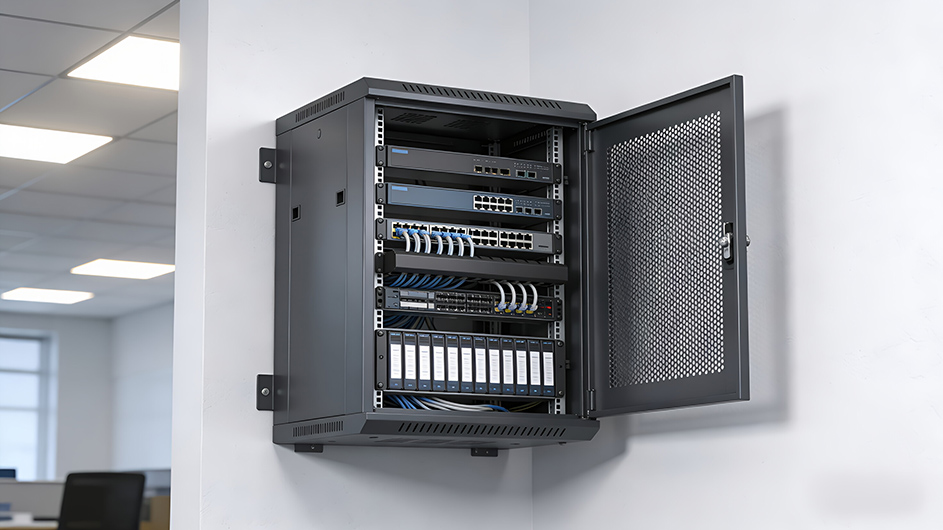
With the rapid development of 5G, cloud computing and big data, the global demand for data centers and enterprise network construction is soaring, driving the urgent need for high-performance, customizable network equipment cabinets. A leading global network equipment manufacturer launched a 2026 customization project for 1,200 sets of sheet metal cabinets, including server cabinets (42U standard), switch cabinets and wall-mounted network cabinets, to meet the deployment needs of large-scale data centers, enterprise computer rooms and edge computing nodes.
The project put forward strict requirements on the sheet metal cabinets to ensure the safe and stable operation of internal network equipment (servers, switches, routers): load-bearing capacity ≥800kg, efficient heat dissipation, electromagnetic shielding ≥40dB attenuation (1MHz-10GHz), IP55 dust and moisture resistance, modular design for easy equipment installation and maintenance, dimensional tolerance ≤±0.1mm, and compatibility with standard network equipment mounting holes. Sanjun Hardware was selected for its proven expertise in precision sheet metal customization, rich experience in high-load and EMC-compliant sheet metal products, and ability to balance structural stability, functional performance and batch customization efficiency—critical for network equipment cabinets that demand long-term reliability in harsh operating environments.
Manufacturing Process of Core Sheet Metal Components for Network Equipment Cabinets
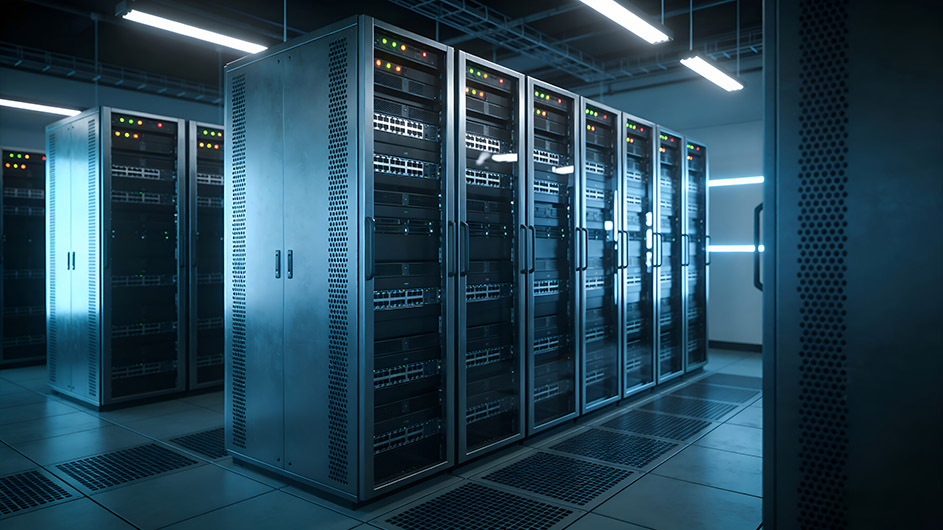
Sanjun integrated the technical characteristics of network equipment cabinets into every production link, focusing on five core components: cabinet main frame, front/rear doors (with heat dissipation structures), internal equipment mounting trays, side panels, and dust-proof net installation frames. Production strictly followed IEEE 802.3 standards and industrial cabinet manufacturing norms to ensure compatibility with mainstream network equipment and adaptability to diverse deployment scenarios (data centers, enterprise computer rooms, outdoor edge nodes).
1. Material Selection & Pre-treatment
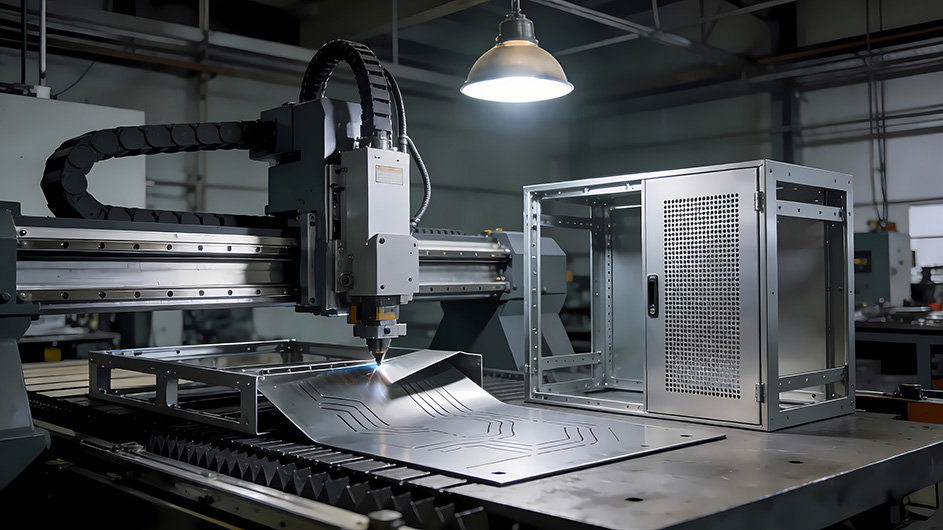
– Main Frame: 1.5mm SPCC cold-rolled steel with galvanized coating—excellent structural rigidity and load-bearing capacity, cost-effective for mass production and resistant to deformation under heavy equipment load; – Front/Rear Doors & Side Panels: 1.2mm SPCC cold-rolled steel—balanced rigidity and weight, easy to process heat dissipation holes and lock holes; – Internal Mounting Trays: 1.0mm galvanized SPCC steel—corrosion-resistant, able to bear single equipment weight up to 150kg; – Dust-proof Net Installation Frames: 0.8mm 304 stainless steel—rust-proof and durable, compatible with detachable dust-proof nets; – Pre-treatment: Automated degreasing + phosphating + anti-rust primer—removes surface impurities and oxide layers, improves coating adhesion, and enhances long-term corrosion resistance in humid computer room environments.
2. Core Manufacturing Craftsmanship
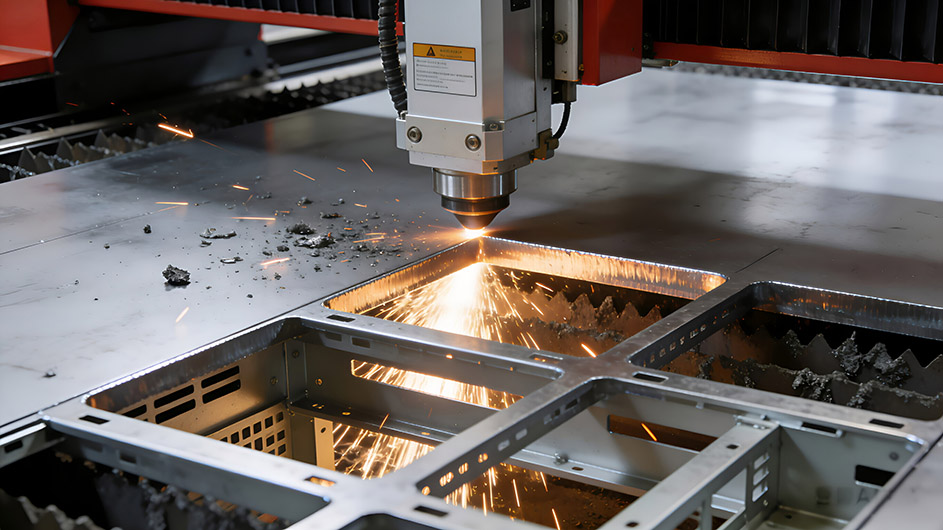
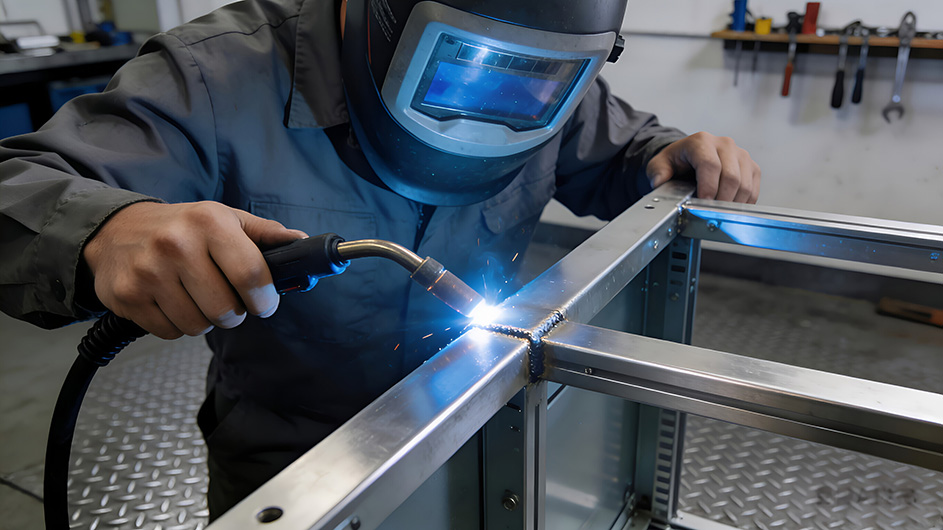
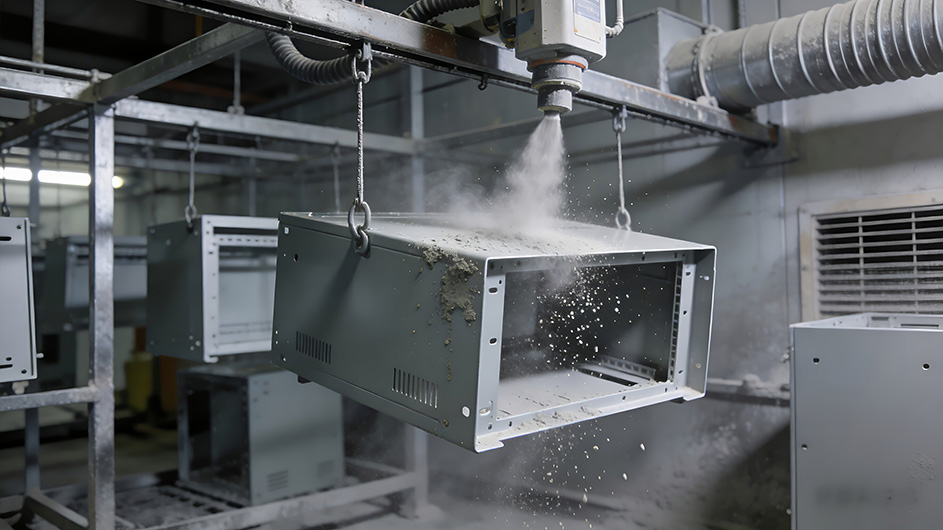
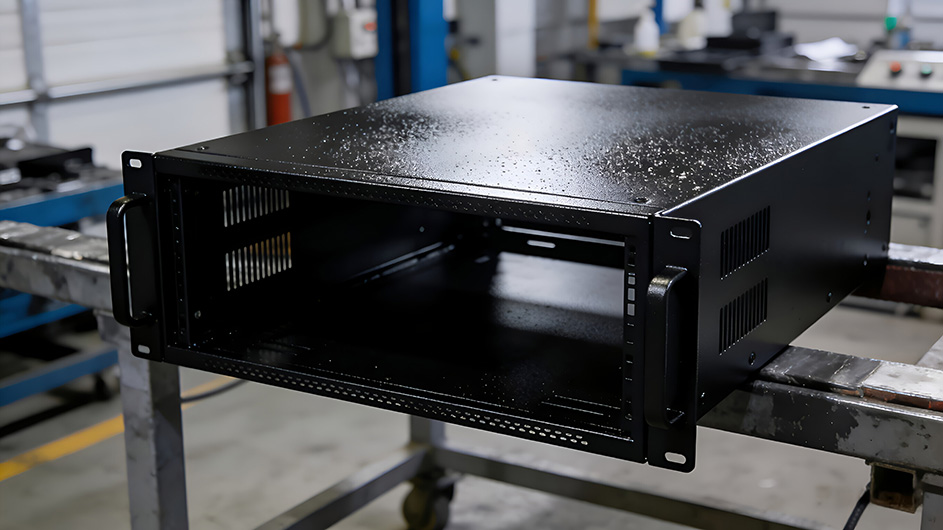
– Precision Laser Cutting: 4000W fiber laser cutting machine (±0.05mm tolerance)—processes cabinet frames, door panels, mounting holes (for equipment rails), heat dissipation holes (Φ3mm round holes, evenly distributed) and lock holes. A dust collection system is used to avoid surface contamination, ensuring the accuracy of mounting holes and the flatness of sheet metal parts; – CNC Bending & Forming: 7-axis CNC bending machine with custom jigs—forms cabinet frames, door panels and trays, controlling springback within ≤0.08mm to ensure tight connection between components and no gaps. The cabinet frame is bent into a rectangular structure with reinforced corners to enhance load-bearing capacity; – Welding & Structural Reinforcement: Argon arc welding is used for cabinet frame joints, with smooth welds (≤0.6mm) and no burrs. Reinforced angle irons are welded at the four corners of the frame to improve overall structural stability, ensuring the cabinet does not deform when bearing 800kg of equipment; – Heat Dissipation & Electromagnetic Shielding Optimization: The rear door is designed with dense round heat dissipation holes (arranged in a grid) to improve airflow efficiency. Conductive foam gaskets are installed on the door and side panel seams, and grounding bolts are welded to the cabinet bottom to form a continuous electromagnetic shielding loop, achieving ≥40dB attenuation; – Surface Treatment: Electrostatic powder coating (70μm thickness) in black/gray (common colors for network cabinets) with anti-static and anti-scratch properties—resists dust accumulation and easy to clean. Post-treatment includes precision deburring, load-bearing testing, and dust-proof net installation, ensuring no sharp edges and overall structural integrity.
3. Quality Control & Testing
– Load-bearing Testing: Static load test of 800kg for 24 hours, no deformation or welding crack; – EMC Testing: Third-party lab testing confirms ≥40dB electromagnetic shielding attenuation at 1MHz-10GHz, meeting network equipment anti-interference requirements; – Precision & Fit Testing: CMM dimensional inspection and assembly test with network equipment rails—ensuring mounting hole alignment, no gaps between components, and smooth sliding of equipment trays; – IP Protection Testing: IP55 dust and water ingress test (per IEC 60529), no dust ingress or water seepage in key parts; – Durability Testing: 10,000 times of door opening and closing and tray sliding tests, no loosening or damage, ensuring long-term use reliability.
Project Challenges & Sanjun’s Solutions
1. Challenge: Balancing Load-bearing Capacity with Structural Lightweight
Network cabinets need to bear heavy servers and switches (up to 800kg total load), but excessive sheet metal thickness increases weight and cost, making transportation and installation difficult. Solution: Optimized material selection (1.5mm SPCC for frame, 1.2mm for panels) and added integrated reinforced ribs via CNC bending (no additional weight). Welded reinforced angle irons at key stress points, and conducted finite element analysis to optimize frame structure—achieving 800kg load-bearing capacity while reducing overall weight by 15% compared to traditional cabinets.
2. Challenge: Heat Dissipation Efficiency vs. Electromagnetic Shielding
Dense heat dissipation holes are required to cool internal equipment, but large or excessive holes reduce electromagnetic shielding effectiveness, interfering with network signal stability. Solution: Designed a dual-layer rear door with Φ3mm dense round holes (small enough to maintain shielding) and a built-in dust-proof net. Optimized hole distribution to improve airflow efficiency by 28%, and added conductive foam gaskets around the door to enhance shielding. Test confirms both heat dissipation and EMC performance meet requirements.
3. Challenge: Batch Customization Consistency
The project required 1,200 sets of cabinets (including 3 models: 42U server cabinet, 24U switch cabinet, 12U wall-mounted cabinet), with strict dimensional consistency to ensure interchangeability of components and compatibility with different network equipment. Solution: Used high-precision laser cutting and custom 3D jigs for bending, establishing a standardized production process with real-time dimensional inspection (each batch of 50 sets is sampled for CMM testing). Adopted automated production lines for pre-treatment and surface coating, ensuring consistent coating thickness and color. The final pass rate of batch customization consistency reached 100%.
4. Challenge: Corrosion Resistance in Humid Computer Room Environments
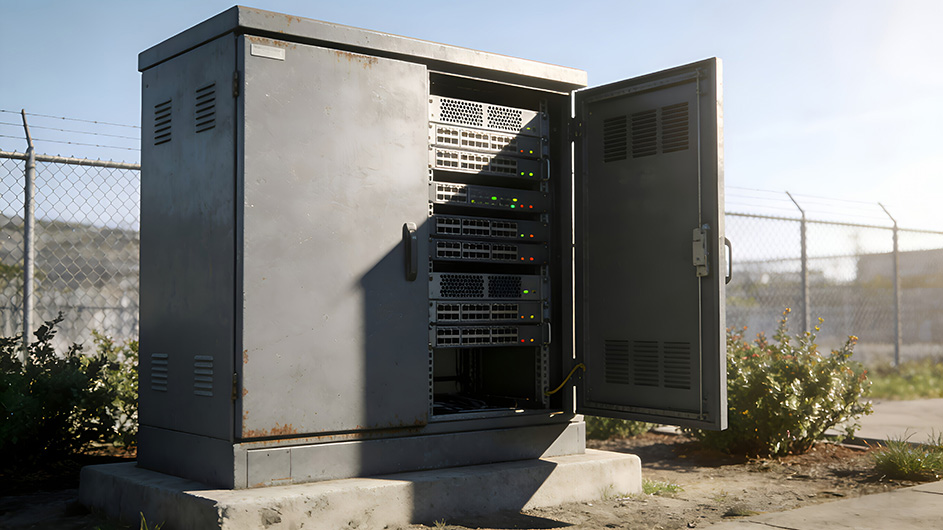
Data centers and enterprise computer rooms often have high humidity (40%-60%) and air conditioning condensation, which easily cause rust and coating peeling of sheet metal cabinets, affecting service life. Solution: Enhanced pre-treatment with phosphating and anti-rust primer, and adopted a two-layer coating process (primer + topcoat) for electrostatic powder coating. Conducted 96-hour salt spray tests and 30-day humid environment tests—no corrosion, discoloration or coating peeling, extending cabinet service life to 10+ years.
Project Outcomes
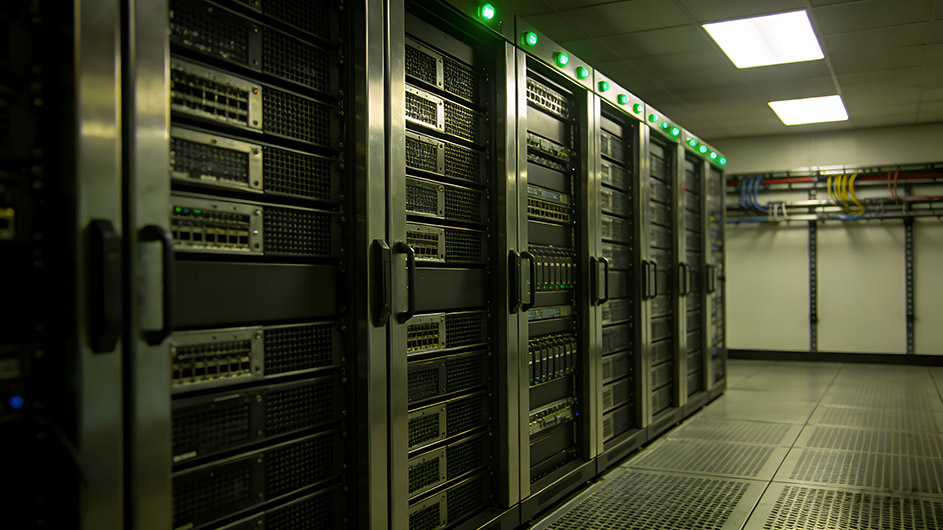
– Delivery Performance: 1,200 sets of network equipment cabinets (3 models) were delivered 4 days ahead of the 35-day deadline, with a 100% pass rate in all load-bearing, EMC, IP protection and precision tests; – Market Feedback: After 10 months of deployment in 15+ large data centers and 300+ enterprise computer rooms, the cabinets showed 0 cases of deformation, corrosion, electromagnetic interference or heat dissipation failure. The client reported a 30% reduction in cabinet maintenance costs and highly recognized the consistency and durability of Sanjun’s sheet metal products; – Long-Term Cooperation: The network equipment manufacturer signed a 3-year strategic cooperation agreement with Sanjun Hardware, entrusting it with sheet metal customization for 5 new series of network cabinets (including outdoor waterproof cabinets and edge computing cabinets). The client emphasized Sanjun’s “professional understanding of network equipment cabinet requirements and rigorous batch customization capabilities” as the core reason for long-term cooperation, further consolidating Sanjun’s position in the custom sheet metal field for electronic and network equipment.