
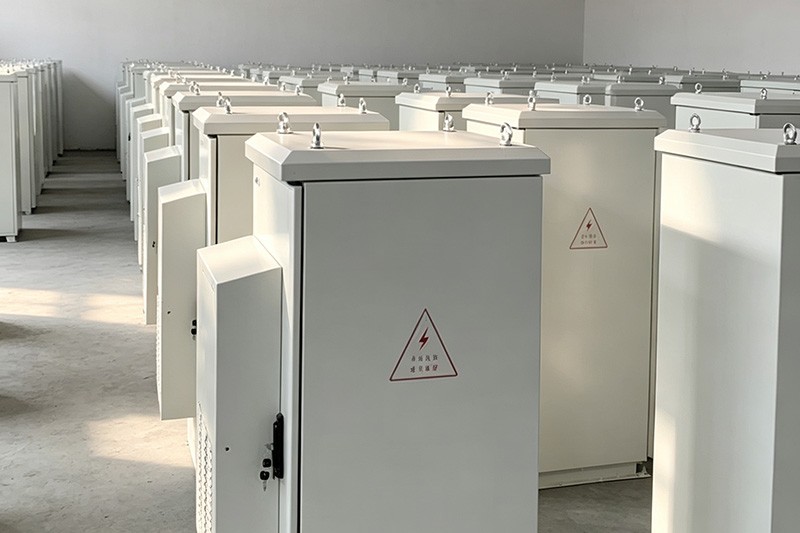
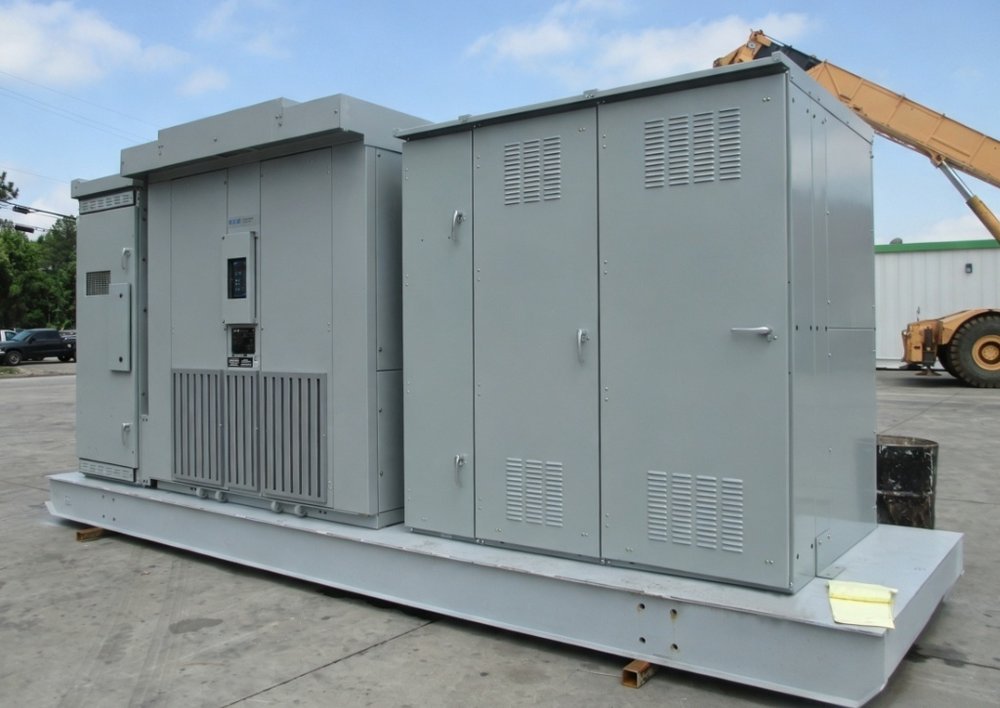
Telecom cabinet enclosures have tough lives. Most are left to the elements for years, on roadsides, on rooftops, or on poles, with little or no cleaning ever applied. Three primary problems affect the ability of the cabinet’s electronics to withstand such service: Dust gets in, Water / Condensation gets in, or Heat cannot escape. Addressing these three problems as separate entities typically has the effect of making the other two worse.
A sealed cabinet to keep dust out of the interior will trap heat. An open cabinet to allow heat to escape will let in dust and humid air which will collect as liquid on cool nights. Finding a balance between protecting against ingress, allowing for adequate airflow to keep a check on temperature and for condensation to run off surfaces are the key issues in the design of a cabinet.
SanJun Hardware is a leading custom sheet metal fabrication manufacturer based in Guangdong, China with a 5,000 m² ISO 9001 certified workshop. We have many years of experience designing and manufacturing outdoor cabinets for telecom, power distribution and new energy applications. Here we detail how these three influences have shaped our custom 5G base station cabinets and outdoor telecom enclosures.
Dust in the outside air is pulled into the cabinet by positive pressure. That dust settles on fan blades and on filter surfaces and can travel slowly to connectors and to circuit boards. The worst dust is fine and conductive and, in the presence of moisture, will find a path to leakage or to tracking on live parts.
Airflow loss is a bigger day-to-day problem than dust management. A loaded filter can fill up the intake and then, as temperature in the case rises, the fans work harder and eventually fail. So, dust management is a thermal problem as well as a cleanliness problem.
Condensation occurs when surfaces inside a cabinet drop below the dew point of the surrounding air. As daytime air which is full of moisture is allowed to flow into the cabinet, at night the sheet metal cools down. Then the moisture in the air can deposit on busbars, terminal blocks and circuit board surfaces.
Repeated wetting and drying of electrical contacts promotes corrosion. In coastal or humid locations, this can happen relatively quickly, but even in relatively dry locations, condensation can occur due to normal temperature variations causing surfaces to drop below dew point.
The cabinet has two sources of heat: the equipment in the cabinet and the sun on its skin. A roof or wall surface in direct sun can be quite a bit above ambient temperature and, when enclosed, become a hot oven.
Vents are sometimes a solution but every hole is an invitation. Choosing the correct size, position and filter to vent a load is not a case of using previous examples as a guide to the required solution.
Water rarely soaks through the sheet metal. It finds the interfaces: the door seal, a seam, a cable gland, or a roof joint. That is where the sealing effort belongs.
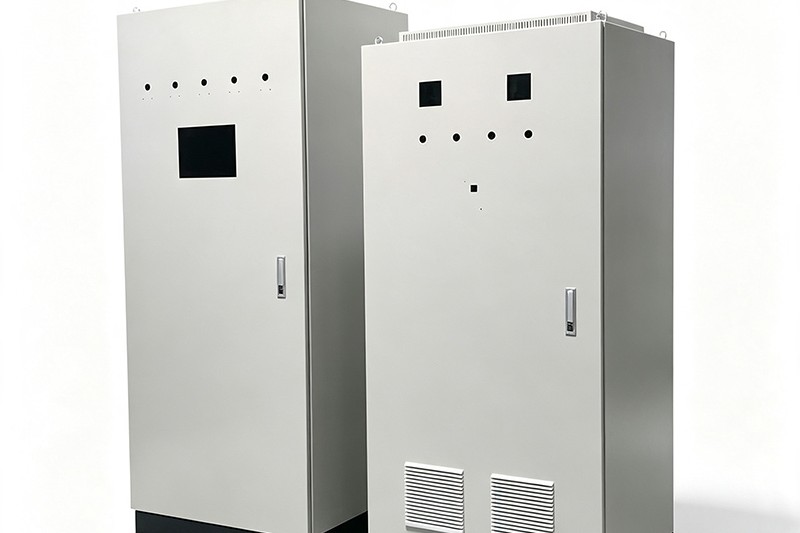
A continuous gasket in a properly formed sealing groove allows for an even compression of the door seal. Corners and splits are the areas of weakest structure, so it is best to position the joints away from corners. The latch pull should pull the door against the seal uniformly, rather than at one point.
Sealed glands with strain relief are required for all cables entering the cabinet. Smooth surfaces without ledges, sealed or welded seams and covered fasteners complete the route through the cabinet wall.
A sloped roof with an overhang or rain eaves is the first layer of protection for an outdoor cabinet. Water runs off and does not collect, and dust cannot collect on a surface.
Even with internal drainage in mind, any cavity prone to wetting needs to be able to drain, and therefore the positions of the vent openings will avoid allowing water running down a wall to enter it.
Airflow follows heat, with cool air entering at the low end and warm air leaving at the high end. The cool intake and hot exhaust outlets are positioned at opposite ends of the airflow path, through the hottest parts of the components rather than around them.
Natural convection cooling can handle relatively low loads. For higher loads, fans are required and must be cut out in the panel prior to shipping and not drilled in the building.
A fan without a filter is a dust pump. A filter without service access is a heat trap. By mounting the fan-and-filter assemblies on the cabinet wall they are serviceable from outside the main enclosure without having to open it.
Perforated panels and louvered openings can be used for passive venting, but only where the load permits. The amount of open area versus protection required depends on heat load and site exposure to dust and rain.
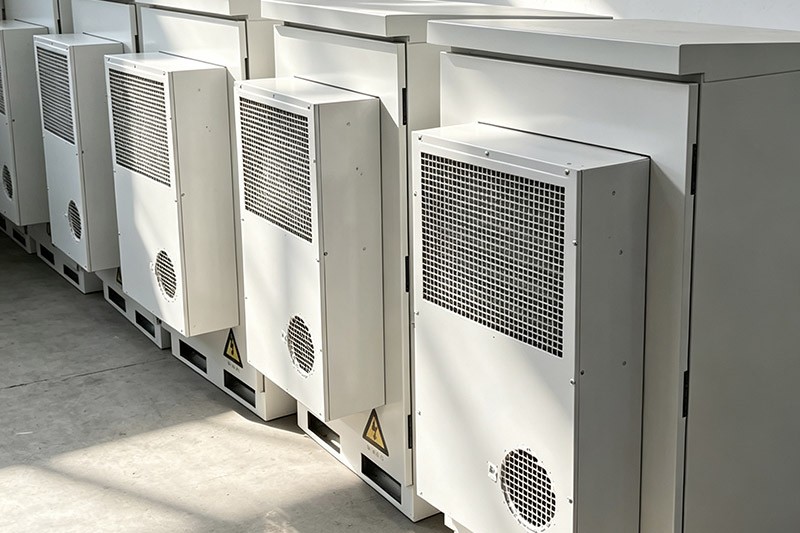
Controlling condensation in cabinets has two main goals – keeping humid air out of the cabinet and keeping surfaces within the cabinet warm. The first aim can be achieved by good sealing. The second by installing a thermostat controlled anti-condensation heater near sensitive components, and by shielding cold spots such as mounting plates near to exterior walls.
For cold nights a small thermostatically controlled heater can be switched on to maintain a surface temperature above the dew point. Where a heater is not acceptable, then ventilation can be switched on and off to remove moist air as outside conditions dictate.
The same amount of care goes into the assembly of the components which are stored in a dry cabinet, sealed surfaces are cleaned before the cabinet is closed and the components are packed with desiccant in the transit packaging in order to prevent moisture in sea freight from entering the units.
That balance was established as part of the design. A good supplier can review your drawings for manufacturability, suggest alternate materials or gauges, and test seal claims rather than simply stating them to be so.
At SanJun Hardware, we can work from your drawings, 3D models or even from your sketches for custom telecom and power cabinets. With laser cutting, CNC punching and CNC bending we can precisely control the vent patterns and the position of holes. We develop the sealing concepts for the required IP protection class and check them against your project specifications. We inspect our parts on our CMM and check the coating thickness. The coating systems we use are suitable for C4/C5 corrosivity environments. We can also perform salt spray tests, which are separately specified if required.
We can also support your network equipment cabinets projects from prototypes to production in volume. The lead time for network equipment cabinets depends on the design of the cabinet and the order quantity. For current telecoms projects we quote the lead time for the prototype and the production lead time separately. We respond to RFQs within 24 hours.
Dust, condensation and airflow are not three separate problems that need to be solved one after another. Rather, they form one problem that needs to be balanced in the design of the telecom cabinet enclosure and subsequently in the sealing, venting and drainage details. These are matters of everyday detail for the fabricator.
Send us your cabinet drawings or module layout and we’ll do a DFM review, suggest suitable materials and provide you with a quote. Our standard enclosures come with a 12- to 24-month warranty.
A: Yes. The rating applies to the completed enclosure. For example IP65 is for dust tight, water spray rating. So ventilation uses vent or fan assemblies within the enclosure which are designed so that the complete enclosure can maintain the required protection. The required vent area is based on the actual heat transfer as per the rating of the completed cabinet which is tested to the agreed protection.
A: Condensation occurs when an internal surface falls below the dew point of the air inside the enclosure.Such cases can be prevented by sealing the enclosure as tightly as possible to prevent entry of humid air. Where necessary, anti-condensation heaters or controlled ventilation may be included in the cabinet. The cabinet must be completely assembled in a dry environment. In the packaging, the enclosures are protected from humidity by desiccant.
A: For cost effective solutions for outdoor sites, galvanized steel in combination with cold-rolled steel with powder coating is the most common solution. For coastal areas or very humid climates, the more expensive stainless steel 304/316 is often required. Light weight aluminum is used for pole mounted units. Ferretería SanJun fabricates products in SPCC, Q235, galvanized steel, 304/316 stainless steel and aluminum. The sheet gauge is in the 1.0 mm to 2.0 mm range and thus covers most cabinet types.
A: We make prototypes in quantities as low as one, and then confirm how many of each you want to produce as your project develops. The lead time for prototypes and for production is outlined for you in our quotes, and we respond to all RFQs within 24 hours.
























Deja un comentario