
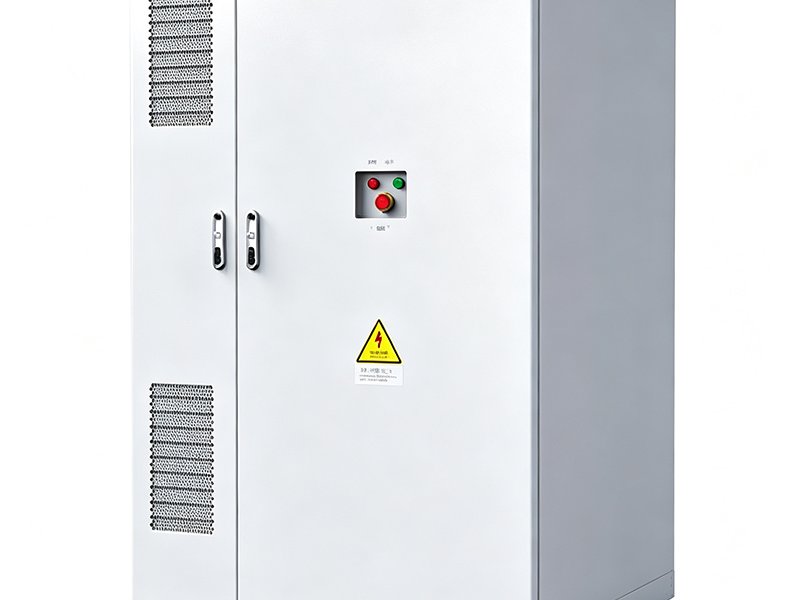
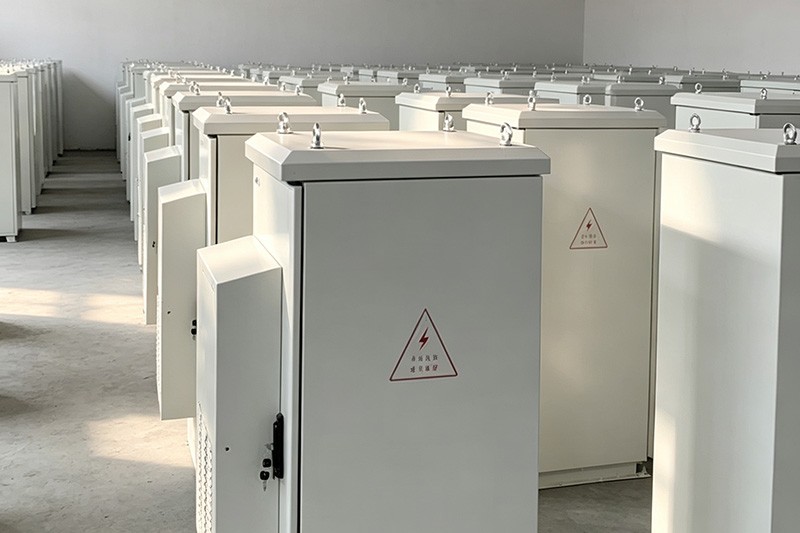
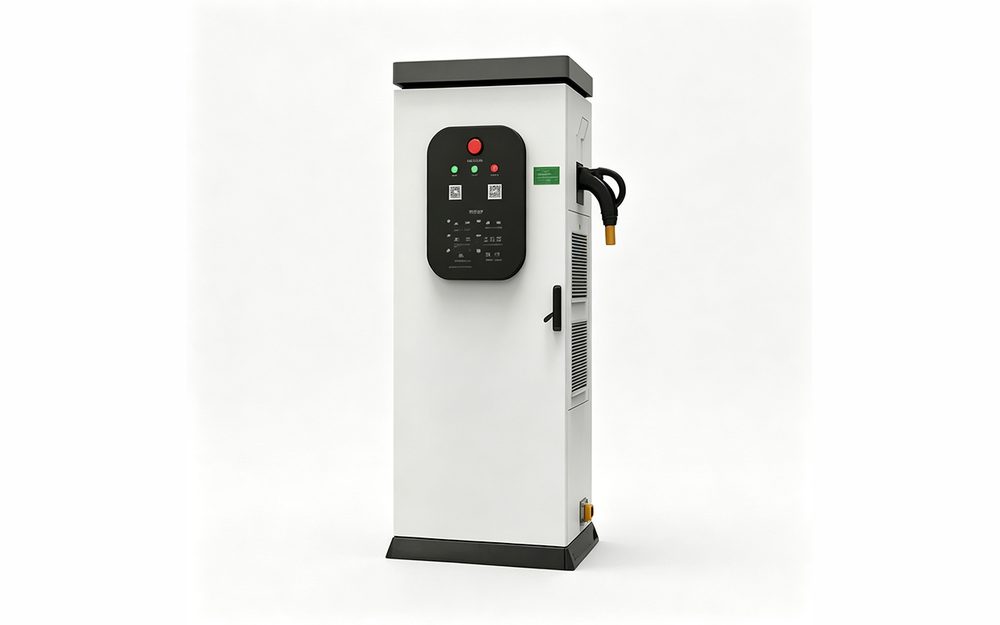
A BESS enclosure requires several things: The heat needs to be removed from the battery modules. The battery modules need to be protected from rain, dust and humidity. And the enclosure needs to be openable after several years. Most vendors treat these requirements as add-ons. This means that a venting area is sealed when it should be opened and a sealed area has no air flow when it should. At SanJun Hardware we treat all of these requirements as one package right from the start. This results in a custom made BESS enclosure as a complete system.
First, the heat generated by the battery racks and power modules while charging and discharging significantly reduces the lifespan of the batteries and may even trigger over-temperature protection. Then, there is the outdoor cabinet, exposed to the harsh weather. Water and fine dust easily penetrate all openings. Occasionally, a module needs to be replaced, or a connector needs to be tightened. All of these issues are dealt with by the enclosure. Get one of these wrong and the other two may also be affected.
A custom BESS cabinet is not a simple box with vents for cooling and a door for service access. Three competing objectives need to be met: openings for cooling, a tight surface for sealing and access for service. A fabricator that can move sheet metal and cut and bend it and weld it and finish it in one facility can resolve these conflicting objectives on paper before any metal is cut – far cheaper and faster than by means of prototype.
Air flow enters an enclosure through intakes, travels through ducts and leaves through exhausts passing over the hottest components. Liquid cooling systems also require a sheet metal shell that contains cold plates, manifolds and the battery frame. Structural members must comply with the cooling design.
How much heat an enclosure needs to move and which cells are practical to move heat from determines fan count, vent area required, and whether or not forced air is required. We go through this as part of the design-for-manufacturing review to design appropriate cutouts, brackets and mounting points to meet the thermal requirements of a design, rather than as an afterthought.
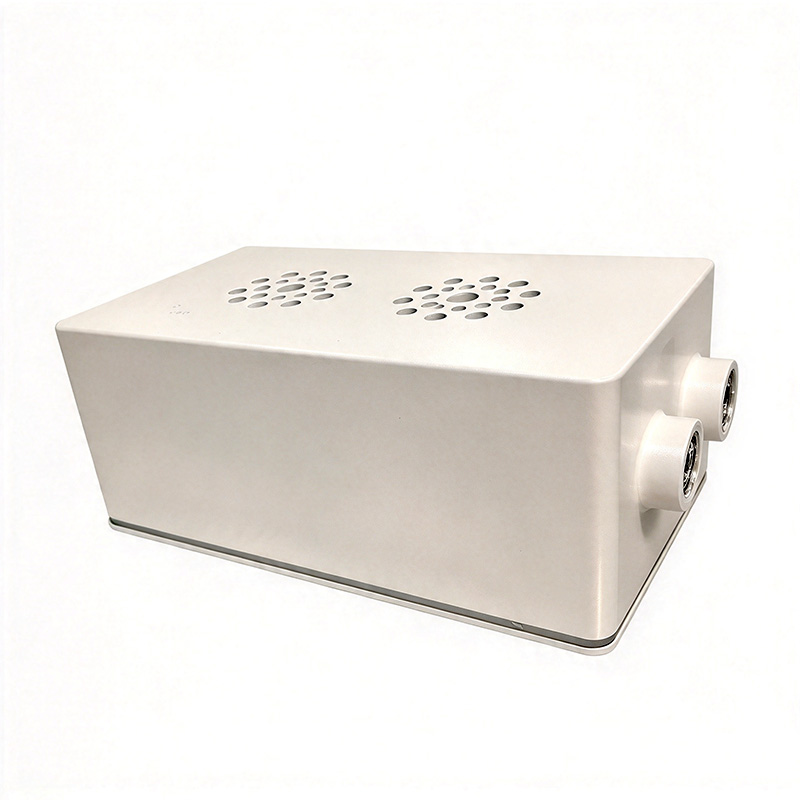
This leads to a conflict between ventilation and sealing of the cabinet. While opening the cabinet front plate for airflow purposes leads to water entering through the smallest opening, closing it tight leads to problems with heat exiting the cabinet. The enclosure is typically designed to achieve IP65 or IP66 using silicone gaskets and sealed doors. Airflow can be provided through filtered vents or by a separate climate path.
Use of tongue-and-groove type door seals and continuous gaskets on weather side surfaces of joints, drainage channels and roof downfalls are considered. Early identification of surfaces and areas to seal and to vent is required and the corresponding sheet metal parts must be designed to form two independent closed areas that never cross over each other. A typical target IP rating for an outdoor BESS enclosure is IP65.
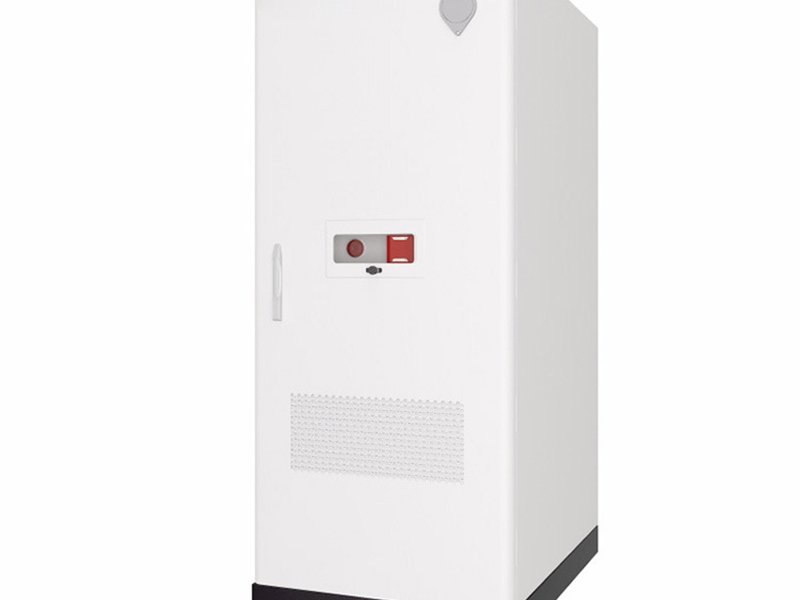
The battery enclosure also functions as a barrier for safety. A compartmentalized structure is designed so that in the event of a fault in one part of the system the other parts are not affected. Use of fire resistant materials or physical fire barriers can also prevent the spread of heat from one module to another. The mounting system for the battery racks must also be designed to support their weight over time – not only during transportation but also under the varying thermal cycles of the seasons. The system must not lose tension over time.
Similar consideration is given to access. The design of quick-disassembly panels and fasteners, and a service access path that exposes the first module first, enables what would have been a long teardown for maintenance to be scheduled as a service activity. The internal partitions, brackets and door geometry are designed as a single structure by SanJun Hardware, as this is an energy storage cabinet build and not just a box for electrical components.
Material choice follows the site. Cold-rolled steel SPCC or Q235 gives cost-effective strength for indoor or mild locations. Galvanized steel and stainless 304 or 316 suit coastal or humid sites where corrosion is the real enemy. Aluminum reduces weight when the cabinet is roof- or pole-mounted.
An outdoor finish must last, to withstand the weather. To achieve this, the surface of the panel must be coated with a powder coating or fluorocarbon coating. In extreme outdoor locations such as near the coast, the coating must be able to resist salt spray and the coating system should be selected for the required corrosion environment, such as C4 or C5 where applicable. After that, an anti-UV topcoat can be applied to prevent color and gloss fade caused by sunlight. Here, the finish is not just for show and is an integral part of the cabinet’s corrosion protection.
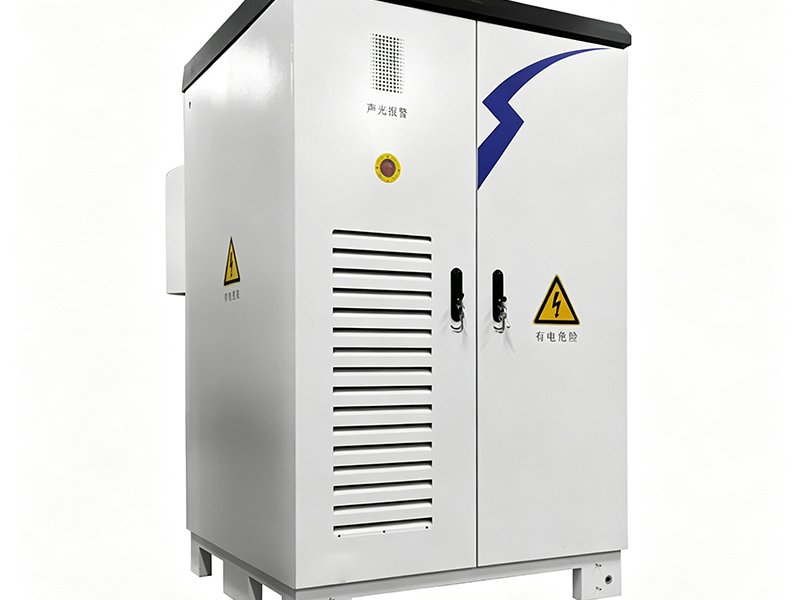
SanJun Hardware is a sheet metal fabrication manufacturer with over 15 years of experience in OEM and ODM production. Their 5,000 m² production floor is equipped with the latest fiber laser cutting machinery as well as CNC punching and bending machines. Other processes that are conducted in house are welding and riveting. SanJun Hardware also has a CMM to check parts and a salt-spray test cell to test the corrosion resistance of products. The company holds ISO 9001 approval and every year SanJun Hardware invests around 10% of the annual profit in engineering.
Our design-for-manufacturing process for a BESS project starts with the customer drawings and goes through a free CAD design review prior to the commencement of production. We can make prototypes from a single sample and any upfront sampling charges can be offset against the subsequent volume orders. Standard parts are generally shipped within 7-15 working days. Custom-made enclosures can take anywhere up to 20-30 working days or more, depending on their complexity and they come with a 12-24 month warranty against any manufacturing defects.
Designing thermal, seal and service decisions within the integrated design of a BESS enclosure is critical to delivering a successful project. Sheet metal cabinets are integrated systems and it is critical that all requirements are met. We would be happy to conduct a design-for-manufacturing review of your BESS enclosure drawings.
The sealed parts of a BESS enclosure for outdoor use are typically specified to IP65 in order to prevent ingress of dust and to withstand low pressure water jets. For washing down or extreme weather exposure it is often specified to IP66. The housing must be rated, any ventilation openings must be designed as separate filtered ventilation paths. The rating for a site must first be clarified with the site.
It is typical that the enclosure body is sealed to an IP65/66 rating by means of gaskets and seals to the doors whilst airflow for cooling is passed through filters and around a ducted fan or through a liquid-cooling loop that is mounted within the enclosure. This allows for the heat to be extracted from the electrical equipment and at the same time keep the electrical space free from rain and dust. This must be a design consideration from the outset and not an afterthought once the enclosure has been completed.
Cold-rolled steel SPCC or Q235 fits mild, indoor-style sites where cost matters most. Galvanized steel and stainless 304 or 316 suit humid or coastal locations where corrosion drives failures. Aluminum helps when the cabinet is mounted overhead or on a pole and weight is a constraint. The coating, not just the base metal, carries the weather load, so powder or fluorocarbon finish with salt-spray validation matters.
Standard production sheet metal parts from existing tooling typically ship within 7-15 working days. A custom designed BESS enclosure, drawn up specifically for the customer, can take anywhere between 20-30 working days and beyond depending on the complexity of the part, the required finish and the number of validation tests that are required, i.e. salt-spray test or IP test etc. The sampling charge for a prototype can be deducted from the subsequent production order and the production schedule confirmed during the DFM review.
























השאר תגובה