In the fast-paced hardware development industry, getting a product to market on time matters as much as how well it performs. Yet many hardware engineering teams hit unexpected issues during manufacturing. Their timelines slip because of small layout mistakes. When custom designs ignore the limits of factory floors, companies end up with costly re-work, failed prototypes, and lines that sit idle.
As a top one-stop OEM/ODM precision manufacturer founded in 2010, 三骏五金 turns complex designs into solid metal parts. We work from our 5,000-square-meter facility. It has advanced Pradi machining centers, AMADA EM2510 and Tailife XP1250 CNC punch presses, plus Ausma CNC press brakes. We supply high-quality infrastructure parts around the world. Knowing where designs often clash with shop-floor needs helps you get your next project into production faster and more smoothly.
Misjudging Material Selection and Thickness Constraints
Choosing the wrong material specifications or forgetting mechanical limits can stall a project before the lasers even start cutting.
Tight Bend Radii and the K-Factor Oversight
When designing sharp corners without considering the precise properties of cold-rolled steel, galvanized steel, or stainless steel, the metal will crack or deform during the bending process.
- The Physics of Sheet Bending: Every metal alloy elongates when shaped under a press brake; this requires calculating an exact K-factor to adjust the flat expansion layouts.
- The Factory Constraint: Attempting a tight inside bend radius smaller than the material’s thickness creates severe structural stress and fractures.
- Our Optimization Solution: Through San Jun Hardware’s upfront Design for Manufacturing(DFM) review service, our engineering specialists evaluate your 3D models to match bend radii with available industrial tooling, completely avoiding cracking and dimensional rework.
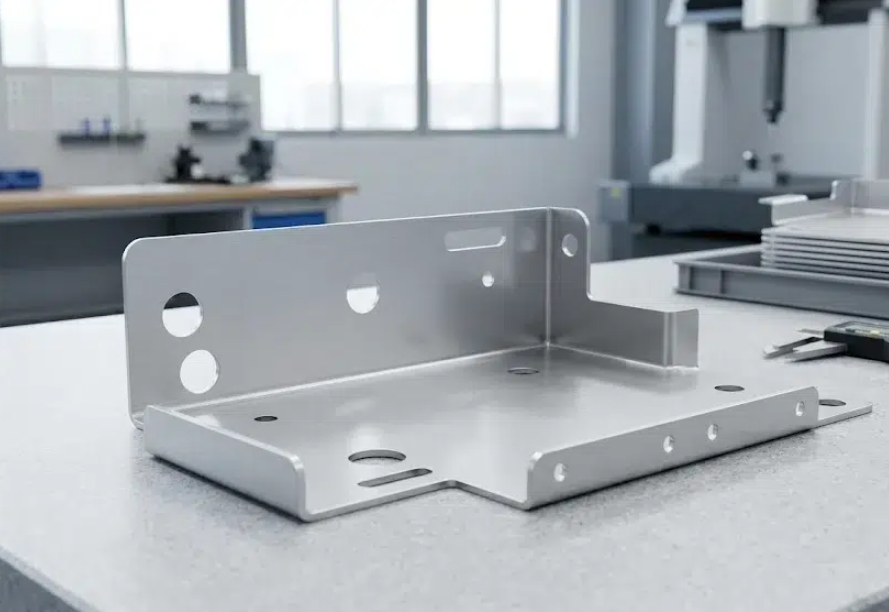
Uniform Material Thickness Deviations
A common design flaw is incorporating multiple distinct thickness parameters within a single, integrated structural component.
- The Secondary Operations Trap: Mixing different thicknesses forces the manufacturing floor to execute multiple raw material setups, laser calibrations, and distinct bend tooling changes.
- Welding Complications: Joining significantly thick framing to ultra-thin skins increases the risk of thermal burn-through during TIG/MIG welding operations.
- The Streamlined Approach: Standardizing on a uniform gauge across the assembly accelerates throughput, allowing automated nesting software to optimize sheet usage and speed up production.
Inaccurate Tolerance Allocation and Hole Placement
Improper spacing and unrealistic dimensional expectations are leading causes of assembly interference on production lines.
Excessive Cumulative Tolerances in Multi-Bend Enclosures
Engineers often apply generic, tight machining tolerances ±0.05mm to every single dimension across a vast enclosure, which increases production costs and lead times unnecessarily.
- Tolerance Stack-Up: In complex projects like an Industrial Display Equipment Enclosure, every single bend introduces minor variations that accumulate, leading to misaligned mounting points.
- Case Study: A multinational commercial electronics client faced a two-week delay because their mounting holes drifted by 1.2mm due to tolerance stack-up across a multi-angled chassis. San Jun Hardware resolved this by deploying our advanced automated riveters and implementing a master-datum assembly system, keeping positional cutouts to an exact ±0.1mm tolerance with a 100% assembly pass rate.
- Cost-Efficient Engineering: Focus tight tolerances only on critical mating interfaces, allowing for realistic commercial allowances on exterior cosmetic panels.
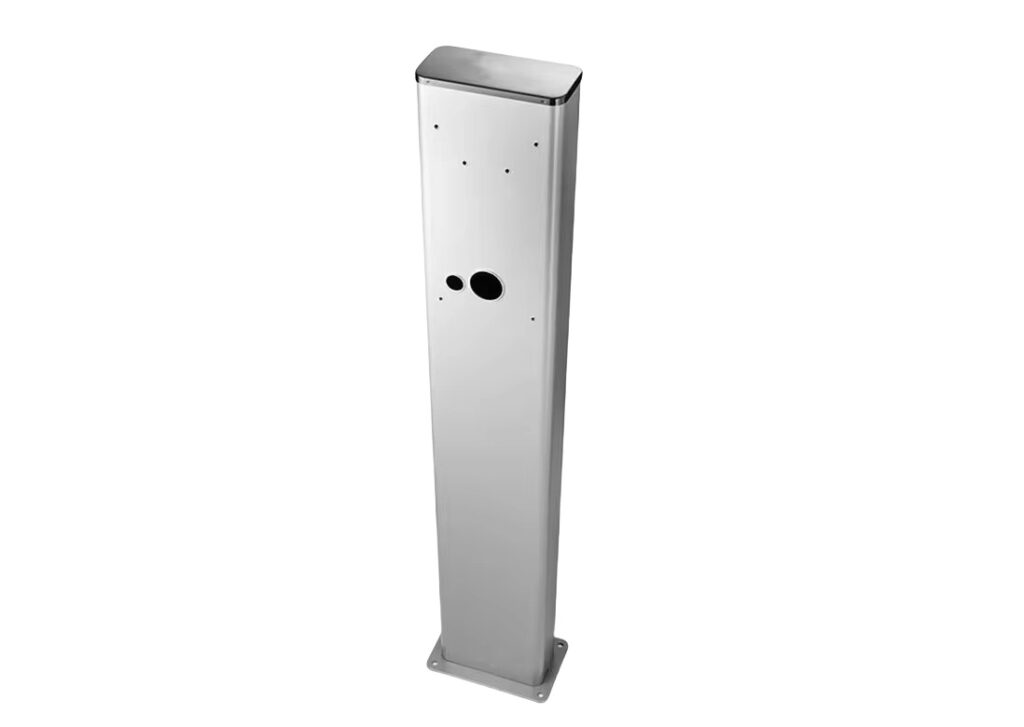
Placing Holes Too Close to Bend Lines
Positioning cutouts, slots, or ventilation holes right next to a bend line leads to severe distortion when the press brake engages.
- The Material Stretching Effect: As the metal is pressed into the die, any nearby hole will stretch into an elongated, useless oval.
- Hardware Hardware Failures: Distorted holes make it impossible to correctly seat pem-studs, rivets, or threaded inserts.
- The Safe Distance Rule: Always position the edges of holes at a minimum distance of three times the material thickness (3T) away from the bend tangent line to ensure complete structural integrity.
Ignoring Environmental Protection and Thermal Management Housing Requirements
For industrial infrastructure deployed in rugged outdoor environments, structural design errors can lead to component failure.
Poor Gasket Design in Outdoor Enclosures
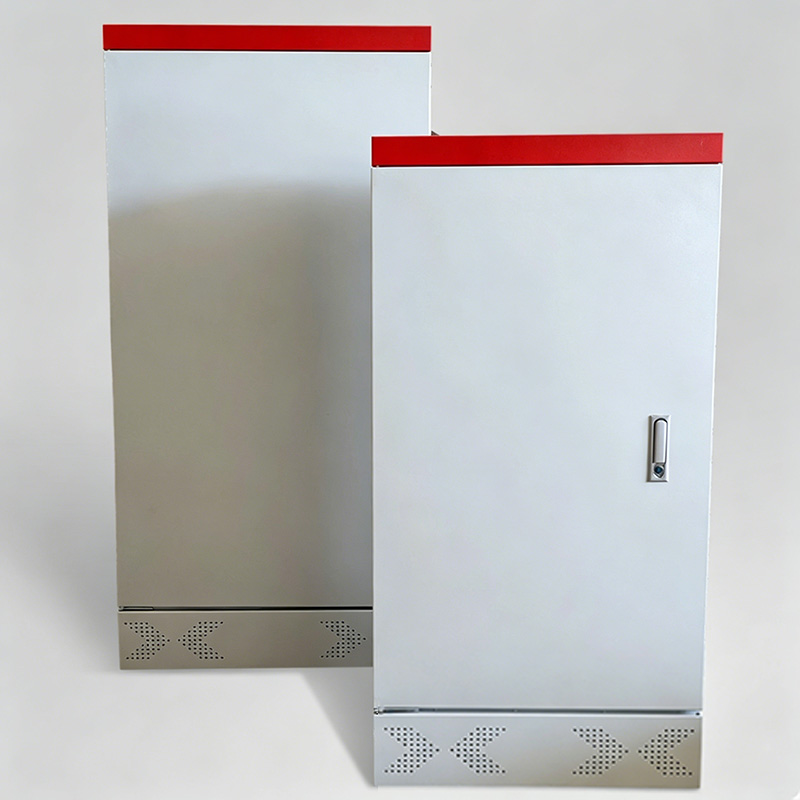
When developing infrastructure like a 直流充电桩外壳, neglecting to build proper structural channels for sealing gaskets compromises weather protection.
- Ingress Failures: Flat metal mating surfaces without integrated compression lips fail to prevent water and dust leakage, failing IP65 or IP66 compliance tests.
- Finishing Complications: Without accounting for the thickness of final industrial powder coatings or silkscreen branding layers, tight door seals can bind or fail to latch properly.
- Our Integration Proofing: At San Jun Hardware, we fabricate dedicated structural return flanges and supply pre-installed, high-durability environmental gaskets alongside the raw metal fabrication to guarantee outdoor safety.
Inadequate Ventilation for High-Power Systems
Heavy industrial systems, such as a large-scale 储能柜(BESS), generate significant internal heat that must be managed through smart enclosure geometry.
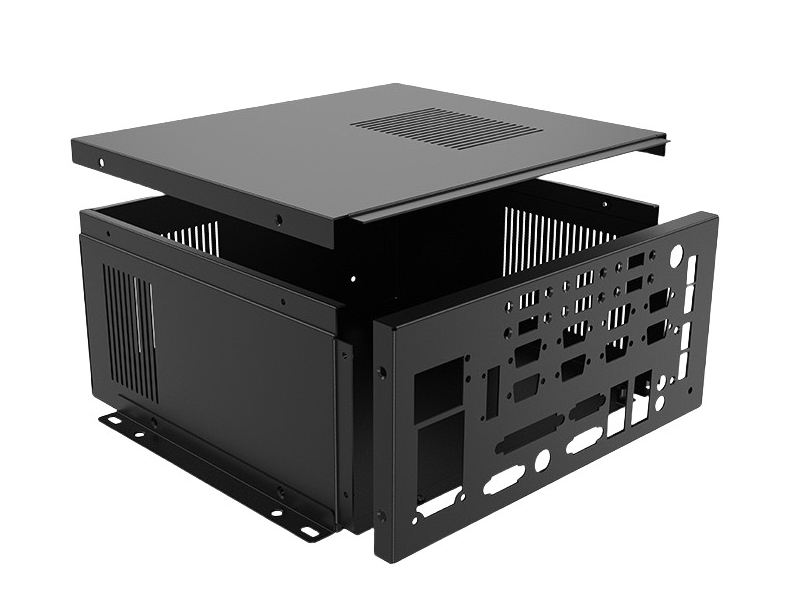
- The Cooling Bottleneck: Restrictive air paths or undersized louvers cause rapid heat buildup, triggering thermal shutdowns in sensitive lithium-battery modules.
- Structural Weakening: Punching massive, dense matrices of ventilation holes can warp thin panels during high-speed CNC punching operations.
- Advanced Manufacturing Remedy: We solve this challenge by using precision automated louvers and CNC-guided honeycomb cooling arrays that maximize airflow while retaining the rigid structural protection required for industrial control environments.
结论
Avoiding these common sheet metal mistakes requires a manufacturing partner who bridges the gap between digital CAD concepts and hard workshop physics. At San Jun Hardware, we do more than just process orders; we actively protect your production schedule. From initial engineering analysis and rapid prototyping to final assembly, packaging, and global logistics, we optimize every step of the journey.
Don’t let design oversights stall your next commercial launch. Contact the San Jun Hardware today at liameranne@gmail.com or call +86 13530826471 to secure a comprehensive DFM review and accelerate your path to market.
常见问题解答
Q: How can we accurately predict and prevent sheet metal distortion around heavily perforated ventilation zones?
A: Distortion shows up less when holes stay at least two times the material thickness apart. Stress-relieving punch patterns help spread the load. Choosing the right material temper early in the design stage also cuts the risk.
Q: What is the most cost-effective material choice for high corrosion resistance and structural durability?
A: Hot-dip galvanized steel (SGCC) and aluminum alloys give the best balance. They resist moisture through natural galvanic action and skip the need for costly extra plating steps.
Q: Why do custom enclosures often experience alignment issues during final assembly?
A: Alignment problems usually trace back to tolerance stack-up. Small variations from laser cutting, bending, and welding build up across parts. These small shifts then affect how surfaces meet at the end.
Q: What is the standard manufacturing tolerance achievable for high-precision CNC laser cutting and bending operations?
A: Standard commercial fabrication reaches ±0.1mm on laser cuts and bends. Advanced setups can hold tighter tolerances of ±0.05mm when material thickness and part geometry allow it.




























发表评论