
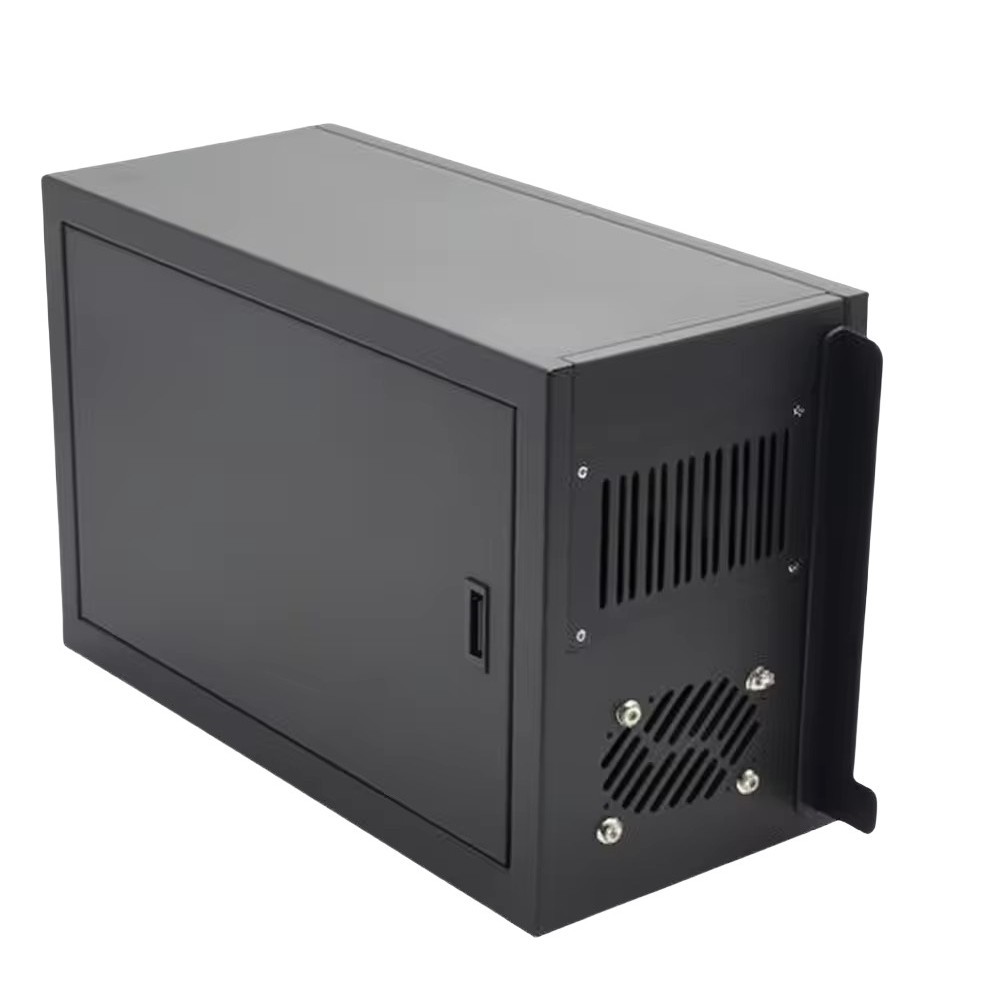
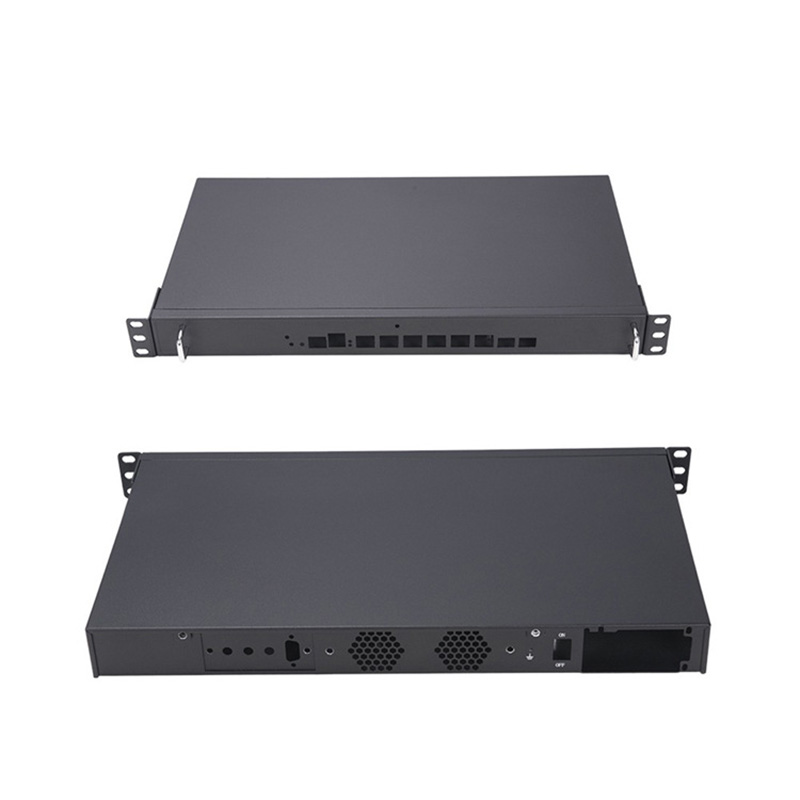
A two-rack-unit enclosure is a low-profile metal housing in which bent sheet metal parts are joined into a frame and panels that carry the power, data, and thermal loads of a mounted electronic device. This article follows one such enclosure through the process chain, from a CAD drawing on the bench to a packed unit ready to ship, showing how it is built for custom 2U rack enclosures programs.
The chain described here is the one that runs at SanJun Hardware, a sheet metal fabrication manufacturer established in 2010 in Guangdong, China with more than 15 years of OEM and ODM work on enclosures of this kind. The factory covers 5000 square meters, the team has 40 people, and 4 of them are sheet metal product engineers. The company is certified to ISO 9001, and 10 percent of the annual profit is invested in research and development.
The chain starts before the material does. A free CAD design review and a DFM analysis run over the drawing first: the bend lines are checked against the sheet, the hole patterns against the tooling, and the panel-to-frame fits against the tolerance the drawing carries.
The answer to an RFQ is given within 24 hours, with the material, the gauge, and the process route stated, so the quote reflects the build rather than a guess at it. If a change is needed, it is made on the drawing while it is still cheap to make it: a correction at this stage costs minutes, and the same correction at the inspection bench costs a set of panels.
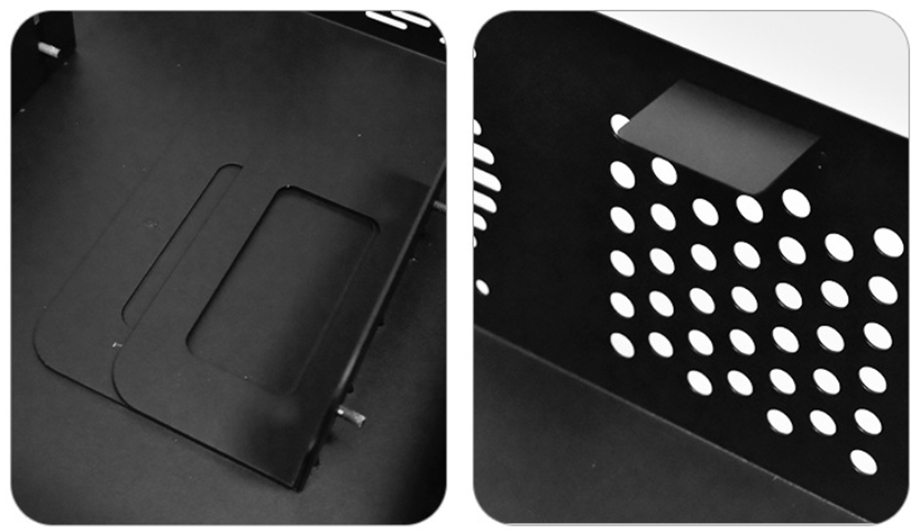
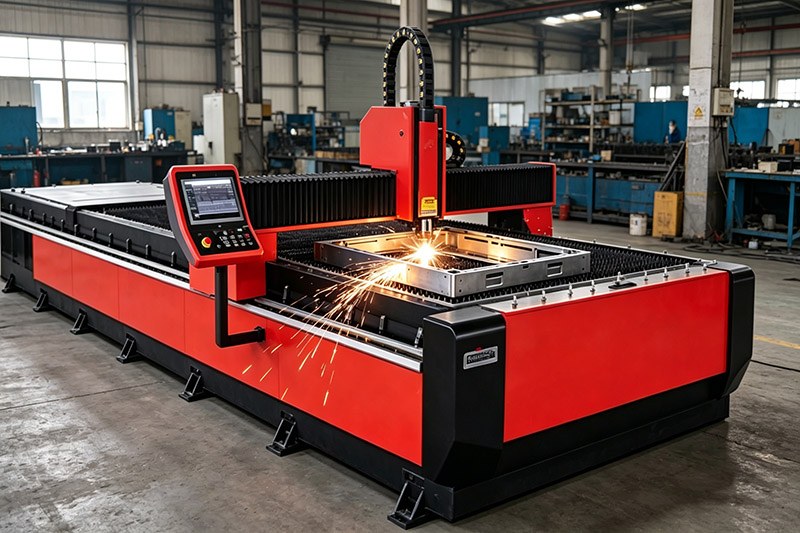
Laser cutting is used for the frame profiles and the perforated ventilation patterns. On the frame profiles the laser gives the edge quality and the corner radii the drawing requires, and on the vent panels the fiber laser holds the perforation pattern to the pitch the design sets.
CNC punching takes the fastener holes and the mounting features where a solid sheet is enough, and the shear handles the long straight cuts. The blank is checked against the drawing before it moves on, so the bending stage does not inherit a cutting error.
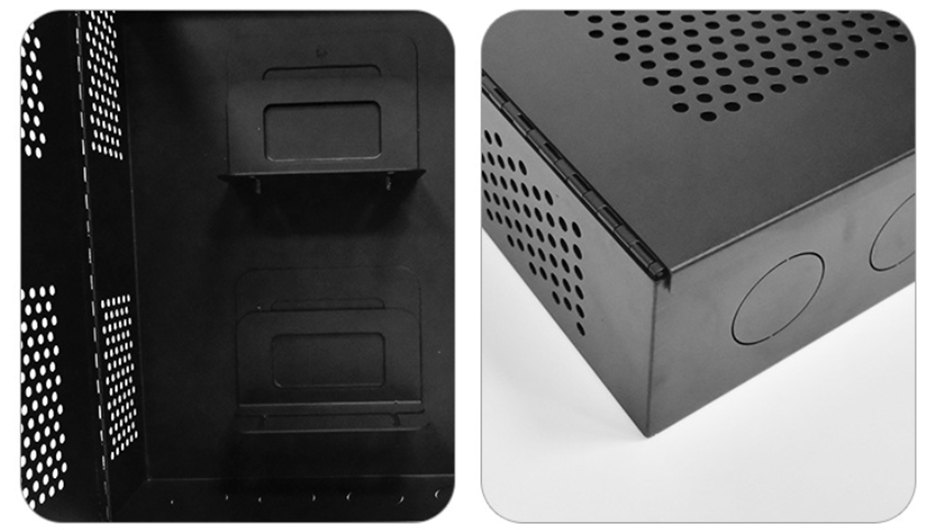
The front and rear rails are press-braked into channel sections on the CNC bending machines, with the bend deductions applied by the programming software. Springback is the reason a formed angle comes out more open than the die angle: the sheet relaxes back after the bend, and the line compensates for it in the program so the finished part lands on the drawing angle.
The bend sequence matters as much as the bends themselves. The sequence is arranged so the tooling can reach every line, so the part does not spring back into a fixture, and so the last bend sets the datum the other dimensions are judged against.
A 2U enclosure is mostly a fastened assembly. The automatic riveting machines take the rivet joints that must stay on through thermal cycling and transport, and threaded inserts take the panel screws that a technician removes and replaces in the field.
The inserts are installed so that their thread axis is normal to the panel within the drawing’s tolerance, since a tilted insert binds the screw of a mounted card or a fan. The door and the faceplate are cycled by hand before the unit moves on, so nothing binds when a customer opens it in a rack.
Where the structure needs a joint that rivets will not hold, the parts move to the welding stations. TIG, MIG, spot, and laser welding cover the range, from the small spot welds that lock a vent mesh in place to the longer seams that carry a structural load.
Welding heat is a geometry problem as much as a joint problem. The fixtures hold the parts square while the weld is made, and the weld sequence is arranged so the heat input does not walk the sheet into a twist that no amount of pressing brings back.
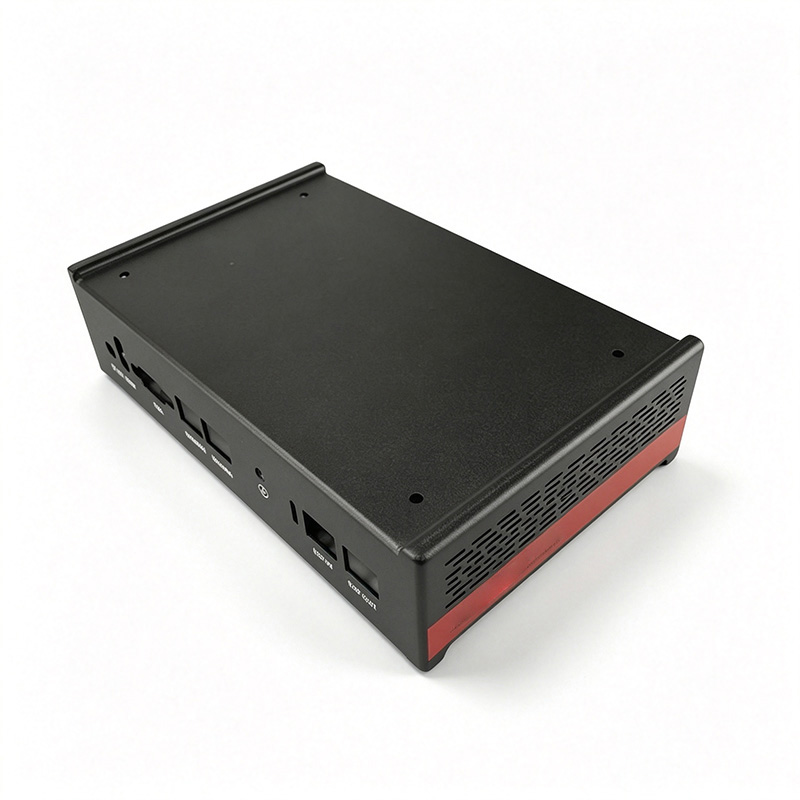
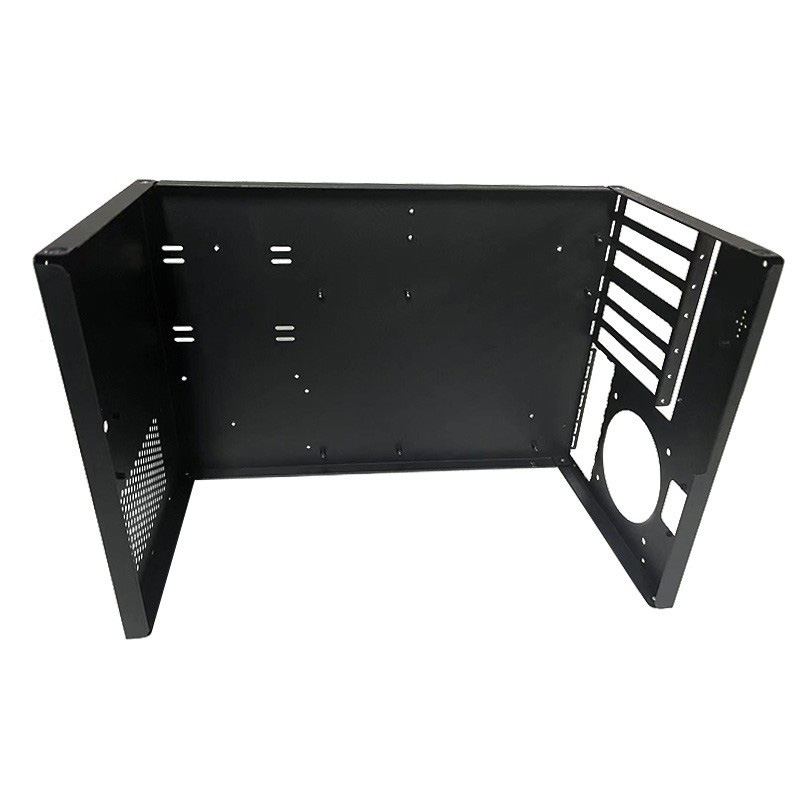
The surface layer is the part of the enclosure that wears. Powder coating, painting, anodizing, plating, and silk screening are the surface finishes the line runs, and the drawing specifies which one the build gets. The matte black finish on the wall-mounted multi-vent server chassis is one of the powder coat builds on the line.
The coating is only as good as the surface underneath it, so the parts are polished before the finish goes on, and the maskings protect the vent holes, the connector openings, and the mounting faces. The coating thickness is checked before the units leave the finishing stage.
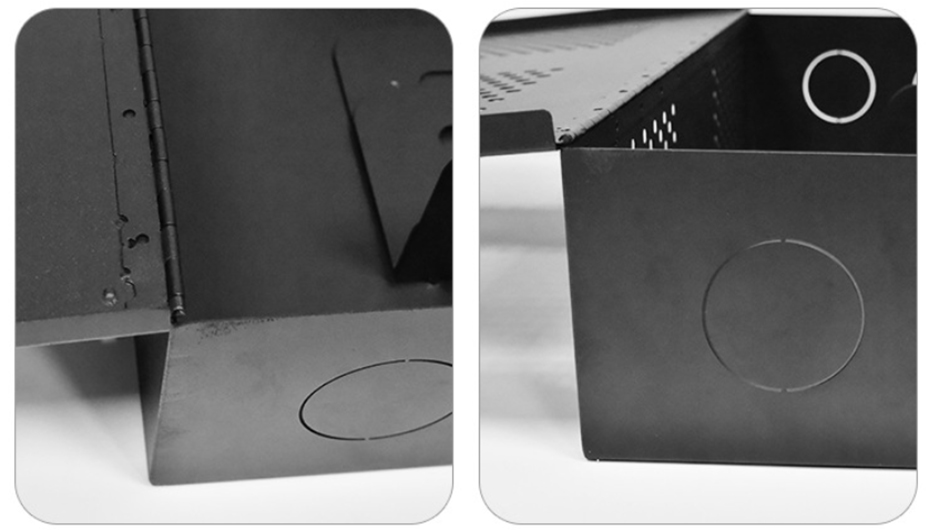
Every unit is checked before it ships. CMM coordinate measurement takes the critical dimensions, projection checking verifies the hole patterns and the vent openings, and the finish gets a coating thickness check and a cross-cut adhesion test. Salt spray testing is run where the specification calls for it.
Standard parts leave the line in 7-15 working days, and a custom structural enclosure takes 20-30 working days or more. The window runs from the approved drawing, which is why the design review at the start of the chain is part of the process rather than a favor: a stable drawing is what keeps a unit inside its window.
The chain is not a row of machines; it is a sequence of decisions, each caught at the stage where it is still cheap to catch. The drawing check happens before the cut, the bend deduction before the brake, the insert alignment before the screw, and the thickness check before the pack. A 2U enclosure that survives the field is one whose geometry was right at every stage of the way.
A sample can be built from a 1-piece order, and the warranty runs 12-24 months. Send your 2U enclosure drawing and we will run the DFM review and give you the quote within 24 hours.
A: Standard parts are produced in 7-15 working days, and a custom structural enclosure takes 20-30 working days or more. The window runs from the approved drawing, and the RFQ answer states the lead time before the order is placed.
A: Yes. A sample can be built from a 1-piece order, so one unit can be checked against the design, the mounts, and the finish before the production run is placed.
A: CMM coordinate measurement on the critical dimensions, projection checking on the hole patterns, a coating thickness check and a cross-cut adhesion test on the finish, and salt spray where the specification calls for it. The unit is checked before it ships.
A: The CAD drawing or the dimensioned sketch, the material and the finish the design calls for, and the quantity. A free CAD design review and DFM analysis run over the drawing first, and the answer is given within 24 hours. Ferretería SanJun works from your drawings, 3D models, or sketches.
























Deja un comentario