
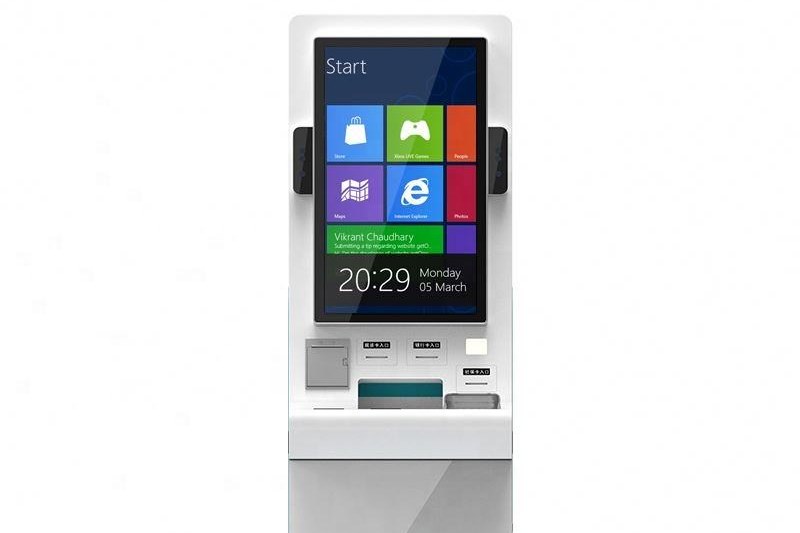
Not every kiosk failure starts with the screen. Why it breaks: because a seam rusts under twice-a-day disinfecting, or that street cabinet develops condensation at night and shorts the card reader, or some technician had to find their way past four disassembled panels just to reach a faulty part. So before writing a custom self-service kiosk enclosure spec, look at the environment: how often it needs to be cleaned, its potential exposure to vandalism and heat (and how often technicians need access inside). The display size comes last.
SanJun Hardware is a sheet metal fabrication manufacturer based in Guangdong province, China with 5,000 m² production area and more than 15 years of OEM & ODM experience. A lot of this work is for kiosk enclosures; i.e. hospital check-in units, banking terminals and ticket machines as well as public-service cabinets. These details change from one setting to another.
The chassis has four jobs. It holds the display & peripherals in position. It guards against unauthorized access and protects the electronics from dust. It moves heat out. It is contacted by the public around the clock. On a July afternoon, heat build up in the sealed cabinet can trip its power supply. A vented cabinet has another problem: dust can build up inside.
Typically, buyers begin with a screen size, and go from there. That matters for the brand in how it is rendered, but as to spec: How many wipe-downs a day; indoor or out; cash on board—or not—and how technicians get access? Those answers affect the material, seal and fastener choices.
Kiosks in hospitals need more frequent cleaning than many other environments. Because the terminals for registration and payment are used by hundreds of people every single day, the units get a periodic quick once-over — in fact, cleanliness on these is scheduled. In a provincial tertiary hospital project, we designed and prototyped 200 units of self-service registration & payment terminal enclosures and supported the client during mass production before installation.
Material selection depends more on the cleaning regime than budget. Light indoor use – cold-rolled steel, powder coat. Also, when surfaces need frequent wiping with disinfectants, stainless steel 304 can be an option, depending on the disinfectant used. It is easy to clean and has no coating edges that will eventually chip off. Galvanized steel falls in the middle of these two for pricing, and aluminum is great on rolling carts if weight is a concern.
Coating life starts with what happens before the powder is applied. The finish stays put depending on pre-treatment (blasting, cleaning and phosphating), film thickness, cure temperature and time. We verify this using cross-hatch adhesion tests and coating thickness measurement, not by eye.
Closest opening for cleaning runoff: bezel seam, receipt cutout, door line. Seams are sealed with a compressed silicone or EPDM gasket in a formed channel, sized to ensure fastener pressure at every point down the length of the door. Receipt cutouts require separate protection. Where significant wet cleaning co-occurs, the product should be validated against an issued IP rating and supporting dust and water test reports substantiating that declaration. Floor-mounted and wall-mounted payment kiosk enclosures are available for the cleaning and access pattern specified by the buyer.
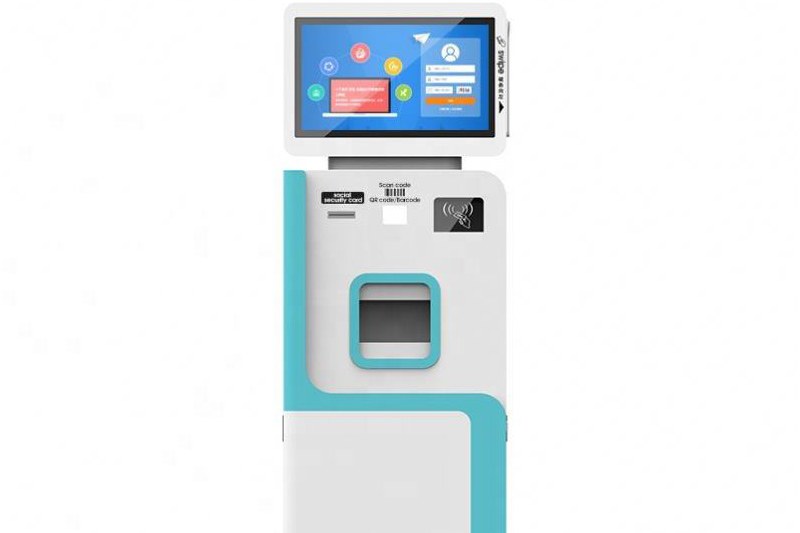
An ATM has a different set of risks. The enclosure protects data and money and must withstand attempts at tampering, as well as the environment. For one banking customer, we made housings for ATMs and cash deposit & withdrawal systems + teller terminals. Those duties dictate that the design trends toward structure: more rigid panels, thicker gauge at door and continuous weld on load-bearing seams as well as multi-bend profiles designed to stiffen a panel but not add weight.
The hardware matters here too. Heavy-duty anti-tamper locks with reinforced hinges make such a door more difficult to pry open. The panels on their own will minimize the likelihood fasteners are exposed, using concealed fasteners and/or tamper resistant screws that resist attack by casual interference at panel line. Layout wise it may be a good idea to keep the cash compartment separate from that of Electronics Bay so if there is a breach in one, the other is not compromised. Wind load and vibration should also have their place in any structural brief for outdoor units.
Even a standard ATM runs hot, and condensation can accumulate in an outdoor cabinet during the winter. Both require air flow planning, thermal control and filtered ventilation when applicable. You size heat load first and then locate fans and louvres so air intake runs across hot components before exit. Filters should be very easy to access without having the need of emptying out the cabinet. Panel surfaces that could fall below the dew point need anti-condensation measures. Our outdoor IP65 sheet metal cabinets conform with that: double EPDM sealing channels, a rain hood, anti-condensation measures and salt-spray tests.
Ticket machines, fare validators, and government terminals run all day with little supervision, and the technician maintaining them often works in public with limited time. Serviceability is a specification item, not a nice-to-have.
A modular interior can make service visits shorter. Features such as removable reader trays, front-opening panels that require minimal tools and swing-out mount plates enable a technician to access one module without taking apart the entire machine. In structural design, you reserve interface cutouts and cable routes in addition to bracket positions early-on rather than patching them later. The operator shouldn’t have to buy a new cabinet if he wants to add a payment module in year 3.
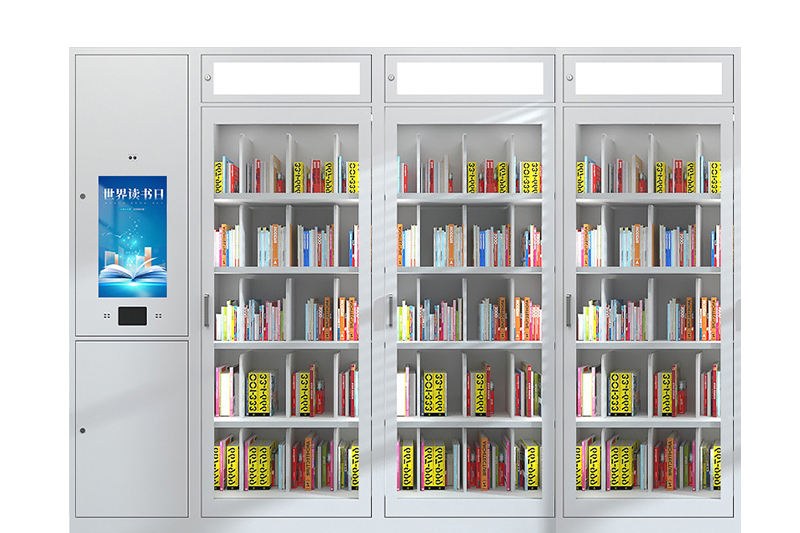
Across all three environments, a custom self-service kiosk enclosure comes down to the same short list.
– Material: cold-rolled steel (SPCC/Q235) to control indoor costs, galvanised steel for light outdoor duty, SS 304 or 316 for heavy cleaning or coastal exposure depending on chemical and corrosion requirements; aluminium where weight is an issue.
– Sheet thickness: 1.0, 1.2, 1.5, and 2.0 mm cover most of the work, selected per structure. Thicker is not automatically better. A formed and hemmed 1.5 mm panel can beat a flat 2.0 mm one on stiffness.
– Thermal path: passive vents and louvers where heat load allows, filtered fans where it does not. Fan placement follows the airflow path, not the empty space.
– Access and security: which panels open, which fasteners are exposed, and what an attacker or a technician can reach first.
– EMI and grounding: shielding where the electronics need it; protective grounding must meet electrical safety requirements.
Sealing and cooling pull against each other. Every opening that helps airflow is an opening dust and water can use. Size the heat load first, then buy only the openings you need.
A drawing alone does not prove the cabinet will work. With its process-oriented QC strategy, the components are inspected on a coordinate measuring machine (CMM) and projector with key dimensions checked at each step rather than only one final inspection. Salt-spray testing, cross-hatch adhesion and coating thickness measurement are conducted on finishes. You perform water spray and dust testing on the sealed designs as per IP level. A sample unit can be used for validation, and the sample fee may be deducted from a production order.
SanJun Hardware carries out a free CAD design review on drawings, concept sketches or 3D models prior to quoting. Savings from the DFM pass: bend radii, holes away from bend lines, rivet nuts with tool clearance and weld seams that reduce grinding. ISO 9001 covers the process.
Standard structures require 7–15 working days, modified housings can take a bit longer – some 20–30 working days or beyond. A sample can also be produced for testing, but small orders will start at roughly 100 units (dependent on structure). Type of packaging: Our enclosures are packed in plywood crates with foam inserts and VCI anti-rust film + desiccant under FOB, CIF or DDP shipping conditions as well as a 12–24 month warranty.
Start with where the kiosk will actually be used. Cleaning method informs material choice; theft risk, structure; heat load and panel layout dictate ventilation, while the service window decides orientation. From here modest changes may allow a single chassis base to do double duty both for the lobby of your hospital and that train station.
Contactez SanJun Hardware to review your drawings, request a DFM assessment, and get a sample built before you commit to a batch.
A: Yes, but it is very rarely needed. For indoor hospital and retail kiosks, these will likely be sealed at the seams to keep out splash or cleaning fluid ingress so an IP65 rating may not even be required. For street cabinets, sheltered platforms and entrance areas, the required IP rating depends on actual dust and water exposure.
A: Panel count and finish can matter more than raw material cost. Each additional formed panel can add tooling, bending, welding and grinding steps. Fewer, savvier bends and a hemmed edge rather than welded rib can lead to lower manufacturing costs and reduce maintenance costs.
A: Sometimes, with changes. The module layout and even internal mounting may be the same, but an outdoor version would likely need a sealed door, rain hood, filtered ventilation and more weather resistant coating system. This can be achieved in one way by reusing the inner components and redesigning the outer shell.
A: Small batch manufacturing around 100 pieces is possible, depending on the structure.
A: Yes. One sample unit can be used for validation, and the sample charge may be deducted from a production order.
























Laisser un commentaire