
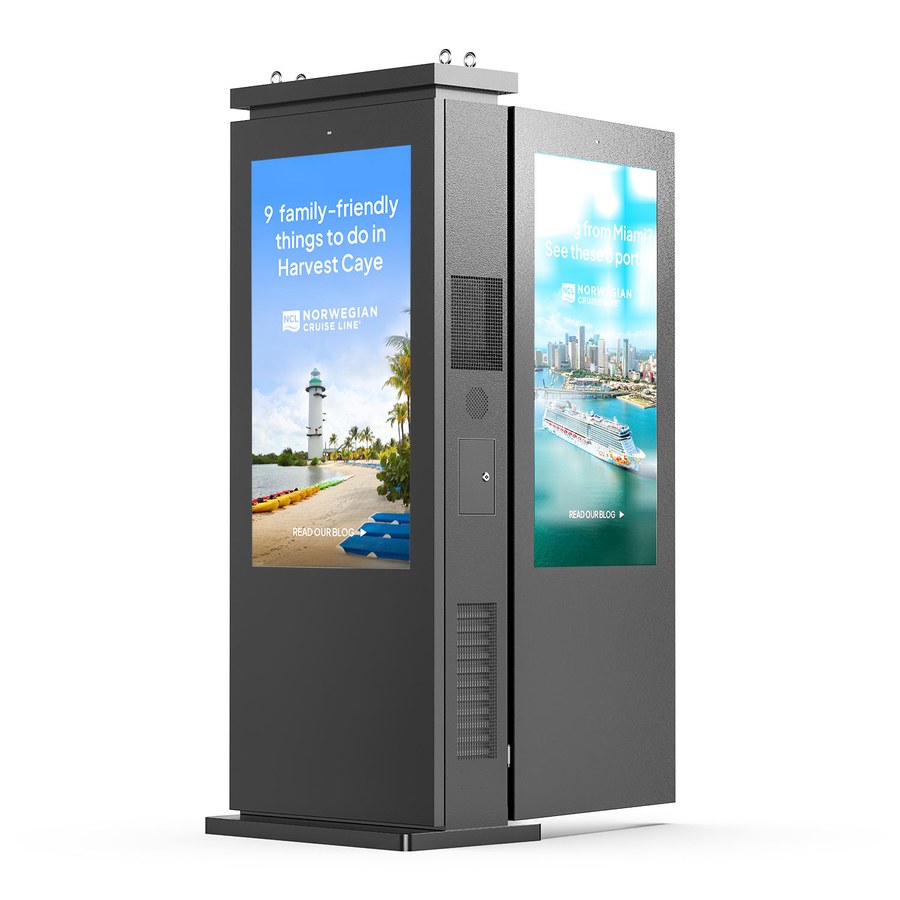
The complaints with an outdoor digital signage enclosure usually center around the chalked panel and a door that can’t be opened. While the display inside the enclosure may continue to function for long after the exterior of the enclosure begins to look tired, the coating, seams, hinges and fasteners all deteriorate over time under the influence of sun, rain, dust and fluctuating temperatures.
Before cutting any material for an outdoor digital signage enclosure, there are three decisions that need to be made. The coating system for the site, the structure’s ability to withstand years of thermal expansion and contraction, and the service access required and how this can be achieved single-handedly by a technician.
We are SanJun Hardware, a professional sheet metal fabrication manufacturer based in Guangdong, China. Our expertise is in designing and manufacturing custom sheet metal cases for display, kiosk, cabinet and control box applications. Our boîtiers d'affichage numérique are used in a city bus and metro network. The following sections explore the three potential failure points in order of their occurrence.
Two cabinets of identical material sprayed with identical powder can develop significantly different appearances after some time – one of them having neglected to apply appropriate pretreatment. Sandblasting the steel surface cleans and roughens it to improve coating adhesion. Cleaning the surface removes oil residues from forming and handling. Phosphating creates a conversion coating which the powder coating can grip, and a primer can then seal this off before the final top coat is applied.
As well as layer thickness, the curing of the powder coat is critical. This requires precise control of temperature within the oven and the length of time that the coat is exposed to heat. It must be neither undercured and soft, with the risk of poor adhesion, nor overcured and brittle. We test our results with a cross-cut adhesion test, a coating thickness gauge and a salt-spray test, with the coating system selected for C4 or C5 environments where applicable.
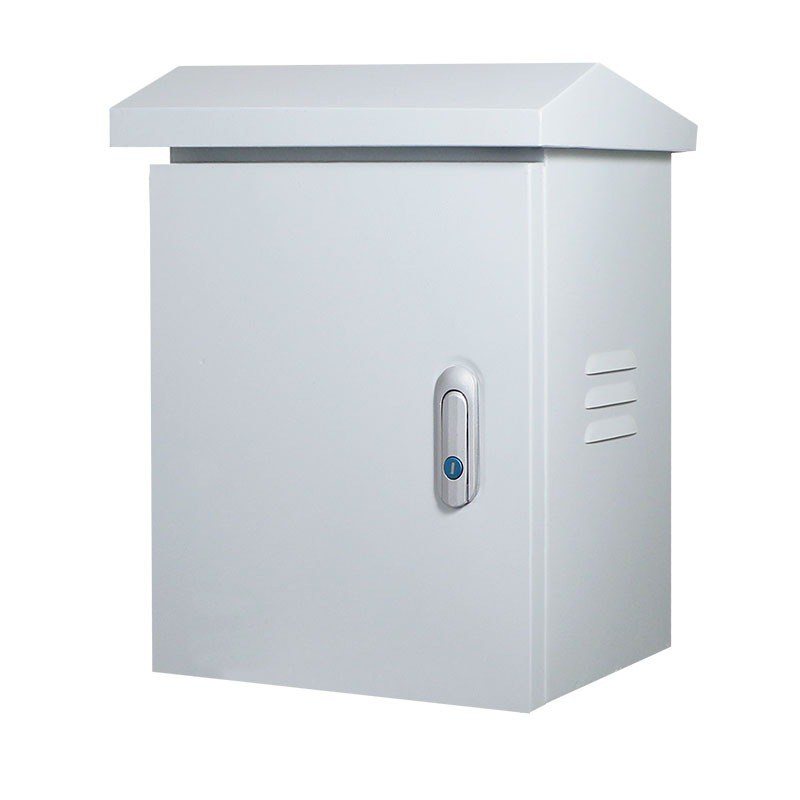
For inland streets, the standard powder coating on prepared steel is the cost-effective solution with any RAL color and good durability against rust in non-sea salt air.
In very sunny locations or where the cabinet will be subject to coastal weather, a high quality fluorocarbon topcoat can provide better resistance to fading and chalking than a standard polyester powder coating. Aluminum components can be anodized to provide a suitable finish for items such as brackets and trim as opposed to large coated panels.
The decision to include graphics will determine whether to use silk screen and/or UV printing to print the brand artwork, or whether to use laser marking to produce a permanent, non-peelable label, as opposed to a sticker.
A steel cabinet on a sunny street expands and contracts tens of degrees between noon and midnight. Thin panels flex with it. Rigid seams, over-tightened fasteners and acutely angled corners translate this movement into cracked paint lines and a door that no longer sits perfectly.
The solution involves mostly geometry: bend reliefs absorb motion at corners, mounting points allow for a floating panel instead of clamping it between two points, and the gasket needs to stay soft within a given range. For that reason, an EPDM held in a double groove will last longer than a glued bead for example. The hole positions are kept within a tolerance of ±0.1 mm to help maintain consistent assembly from unit #1 to unit #500.
In addition to seam loads, the same seams are also subjected to wind and traffic vibration load. A freestanding totem will receive more wind load than the same cabinet installed in a bus shelter. Reinforced bends, rolled hems and brackets within the framework can distribute loads without thickening the panels, keeping weight down to that of the drawn framework.
The display and its power supply produce heat which must be dissipated from a sealed box all day. The design of airflow channels, fan location and size of vents is critical to removing heat from the box or cooking the gasket. The filters must have a cleanable path or they will be ignored by the maintenance crews.
The reverse situation occurs on cold nights when moisture inside the cabinet can condense on cold surfaces. Drainage paths and, where very cold, a small heater on a thermostat can be used to reduce condensation. We design both sides of the cabinet during the design review and use the same design techniques as our IP65 outdoor sheet metal cabinet.
Signage cabinets get opened far more than they get built. The frequent swapping of media players, the re-tightening of loose connectors and the cleaning of blocked filters all require keys, tools and a ladder. If the operator has to retrieve these items with every visit then they are paying for it month after month.
The service side is designed first: which side to open, how wide it will open and what can be removed. A removable side panel and/or hinged rear doors allow for easy access to the inside of the unit without having to remove it from the wall. The modular parts for the internals such as wiring, power supply and player are hidden behind small parts’ covers instead of one large service part.
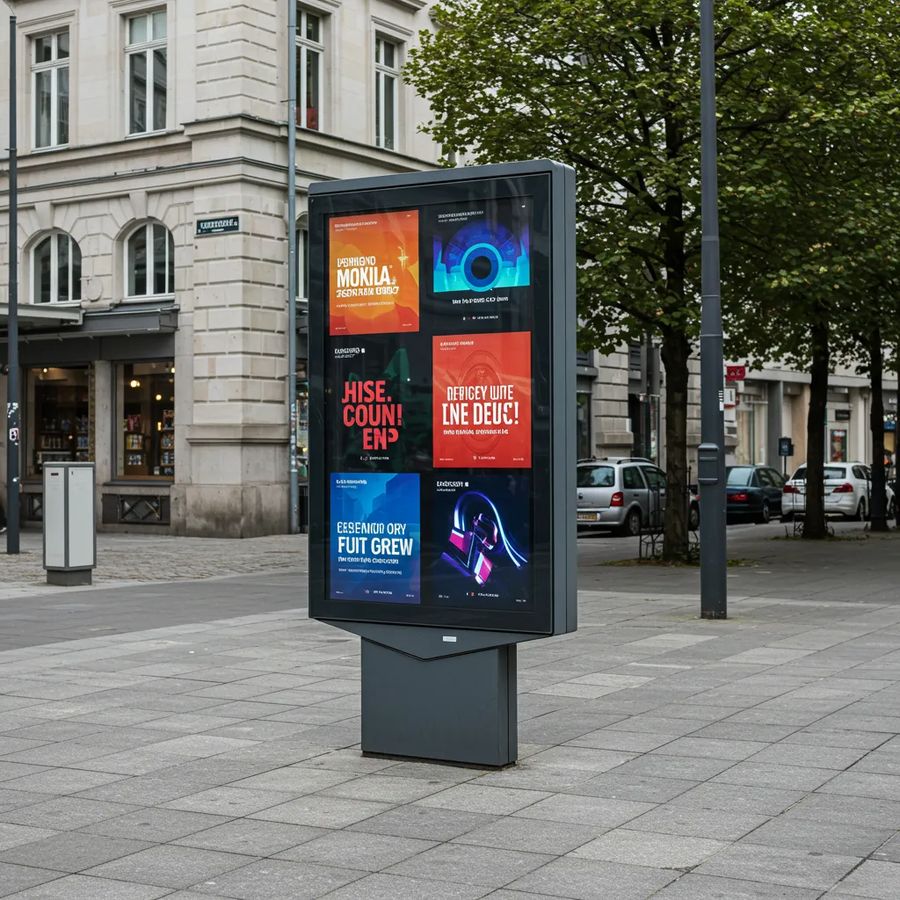
It is so cheap to kill a good enclosure design in the hinges, locks and fasteners. We specify anti-theft bolts behind the door line. Shared lock key profiles throughout a fleet of enclosures allow a single key to be carried by the crews rather than ten. We design the wear in every hinge cycle against the expected frequency of opening by the customer rather than lowest price unit.
Our 5,000 m² plant specializes in custom sheet metal work and has been delivering laser cut, punched, bent, riveted and welded parts for over 15 years. Powder coating, fluorocarbon spraying and silk screen printing are also carried out on the premises. The production process is governed by the requirements of ISO 9001 and the work is checked using a CMM as well as subjecting samples to a salt-spray test. The material most suited to a job is that which is readily available on site, so we use SPCC or Q235 steel for standard cabinets, galvanized sheet when moisture is a problem, 304 or 316 stainless steel near the coast and aluminum when weight is a critical factor.
We conduct a free CAD design review prior to providing a quote to highlight any potential additional costs such as bend radii, hole positioning, coating access and service openings. We offer sampling from as low as one piece with the sampling fee applying to the subsequent batch order. Standard products are shipped within 7-15 working days, custom structures typically within 20-30 working days. Our enclosures are packed in plywood crates with foam, VCI film and desiccant and can be shipped on a FOB, CIF or DDP basis with a 12-24 month warranty.
– Site facts: sun exposure, distance from salt water, prevailing wind, and who opens the cabinet and how often.
– Coating system, Film thickness and color, Adhesion and salt-spray, Both sides acceptance.
– Service side and door geometry are fixed by the external building form before the internal layout can be considered.
– Cable entries, port cutouts, and mounting hardware to be shown on drawing and not solved on site.
– Marking method: silk screen, UV print or laser marking, depending on the intended aging of the artwork.
An outdoor digital signage enclosure is to remain dull. Coating systems, expansion paths and the service door are cheap to negotiate on paper, but very expensive to fix on a street corner. Most of the field failure are caused by one of these three points.
Contactez SanJun Hardware to send in drawings for your signage project or to set up a design review.
A: A good powder coat will last years on inland streets. However near the coast or in very sunny areas a topcoat of a fluorocarbon can resist fading and chalking better than a polyester powder coat. Surface preparation and curing are more important than the brand of paint you use.
A: Panels and frames expand and contract daily. In order to avoid cracking paint and warping doors, the seams and mounting points must be able to travel with the metal. Bend reliefs, floating mounts, and elastic gaskets enable this movement.
A: Yes. We support one piece prototypes. The sampling fee for a prototype will be offset against the subsequent batch order. Stock parts typically ship within 7-15 working days. Custom structures take 20-30 working days after approval of drawings.
A: The path can be sized during the design review of the display heat load versus local climate. For low power displays Passive airflow channels may be sufficient whereas brighter displays may require fans. A fully sealed cabinet needs its heat load checked against that sealed design. In very cold locations a small heater may be required.
























Laisser un commentaire